


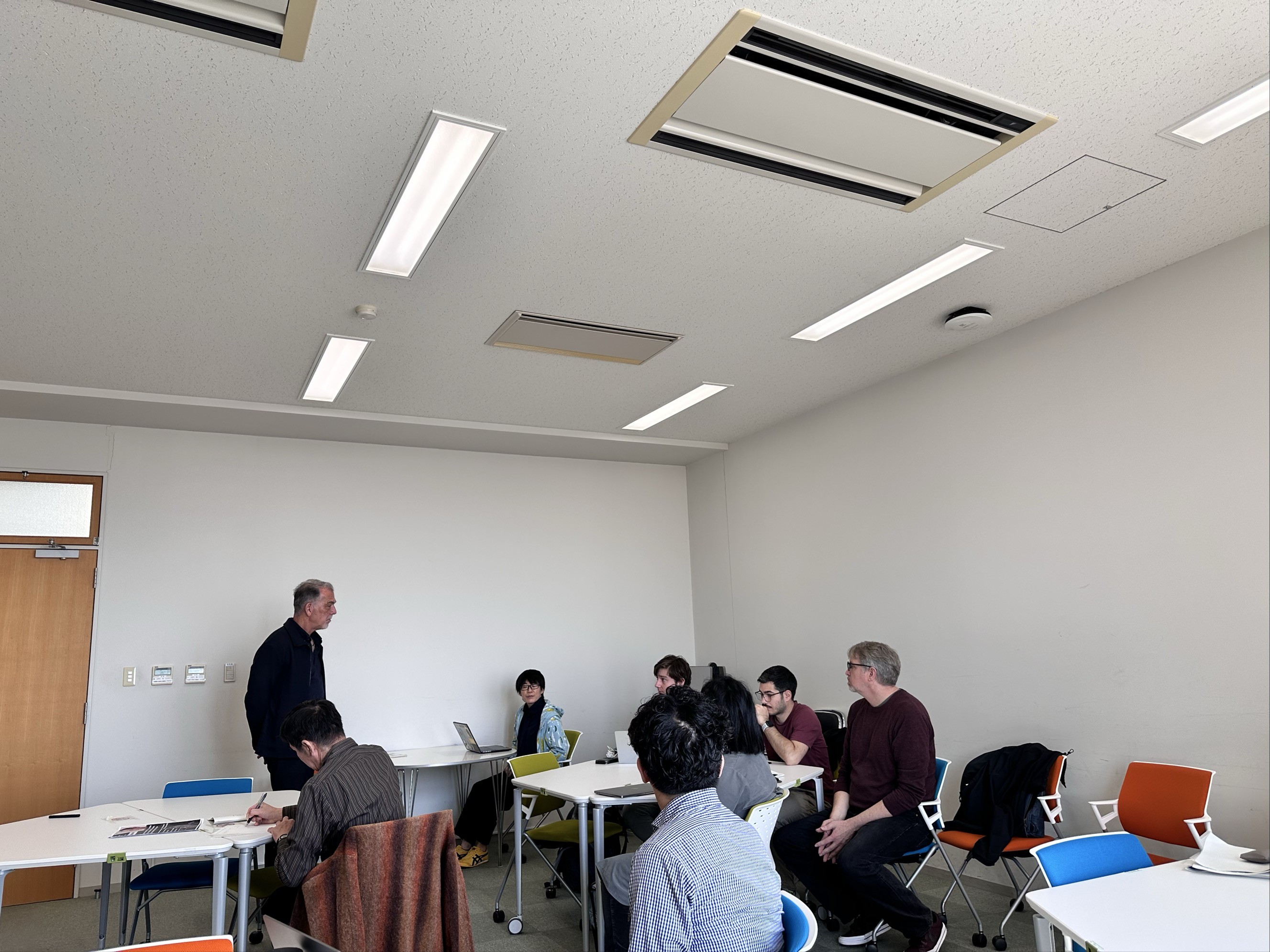
On November 17, Kobe University’s Global Education Center, Institute for the Advancement of Higher Education, hosted an FD seminar entitled “Building Core Vocabulary for Global Readiness: Practical Strategies for Using the NGSL and NAWL Word Lists.” Dr. Charles Browne of Meiji Gakuin University was invited as the lecturer.
Global Education Center provides study abroad advising for students across all faculties and graduate schools, and receives numerous consultations related to English proficiency tests, English training and language study abroad programs, preparation for exchange programs, and the use of English skills in future career development. In response to these needs, the seminar aimed to support students preparing for short- and long-term study abroad as well as future international engagement by addressing challenges in vocabulary acquisition and introducing effective, research-based approaches to vocabulary instruction. On the day of the seminar, in addition to faculty and staff responsible for study abroad advising and related administrative work, graduate students and international students also participated.
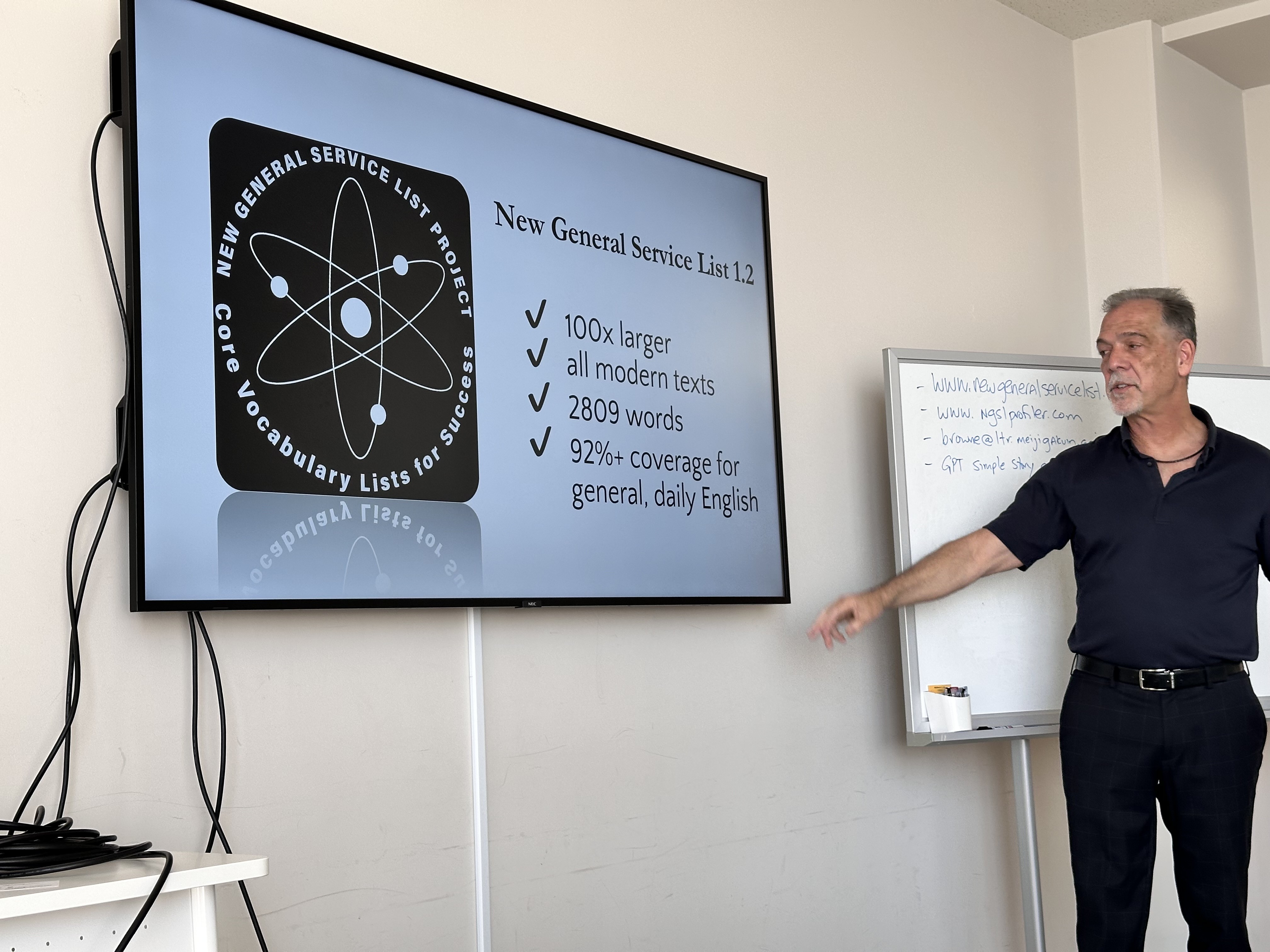
At the beginning of the seminar, Dr. Browne explained that insufficient vocabulary knowledge is one of the primary barriers to reading comprehension, emphasizing that understanding written English becomes significantly more difficult when vocabulary coverage falls below 90%. He also presented examples demonstrating that many traditional English textbooks used in Japanese secondary education cover only about 75–80% of the vocabulary required for comprehension, highlighting the necessity of more efficient vocabulary learning strategies.
Dr. Browne then introduced the New General Service List (NGSL) and the New Academic Word List (NAWL), which he helped develop. The NGSL consists of approximately 2,800 high-frequency words that cover more than 92% of everyday English, while the NAWL includes around 960 words designed to supplement academic English. He demonstrated that combining these two lists enables learners to achieve vocabulary coverage exceeding 90% in academic texts and university lectures. In recent years, specialized vocabulary lists have also been made publicly available, including lists focusing on medical English.
The seminar also showcased a range of practical tools for educational settings, including online vocabulary diagnostic tests, AI-based sentence generation tools with adjustable difficulty levels, video concordancing tools, and gamified learning support systems. Throughout the session, Dr. Browne emphasized the importance of viewing vocabulary instruction as a strategic approach to maximizing comprehension through a limited but essential set of words.
Participants commented that the seminar was helpful in understanding international research trends in vocabulary acquisition and provided concrete ideas for applying instructional materials in practice. Overall, the seminar offered a valuable opportunity to enhance English education and strengthen support for students preparing for study abroad.
Reference
New General Service List Project(External Website)
(Study Abroad Section, Global Education Center)