


Overview
On March 4 and 6, 2025, members of the Hasunuma Laboratory at Kobe University conducted a research exchange program in South Africa with Stellenbosch University (SU) and the University of the Western Cape (UWC). The program was built on the existing collaborative relationship between Prof. Hasunuma and Prof. Den Haan, who joined SU in 2025, and also aimed to share information regarding the planned short-term research stay of SU students at Kobe University.
Tuesday, March 4 — Visit and Meeting at Stellenbosch University
A research exchange meeting was held at SU between faculty and students from both universities (SU: Prof. Den Haan, Prof. Volschenk, Prof. Görgens, and one student; Kobe: Prof. Hasunuma, Prof. Asamizu, and three students). While the Hasunuma Laboratory focuses on experimental metabolic engineering, the SU group — predominantly chemical engineers — conducts techno-economic and environmental modeling of yeast-based 3-hydroxypropionic acid production. This application-oriented approach offered a valuable new perspective for the Hasunuma Laboratory. Also noteworthy was how local context shapes research: given South Africa's active sugarcane industry, the SU group utilizes molasses as a fermentation substrate. Relevant publications and materials were exchanged, and both parties agreed to strengthen future collaboration.The subsequent laboratory tour provided an opportunity to observe automated research equipment and a Fast Protein Liquid Chromatography (FPLC) system not currently in use at the Hasunuma Laboratory, offering valuable insights into potential expansions of the laboratory's experimental capabilities.
Tuesday, March 4 — Visit and Presentations at the University of the Western Cape
One faculty member and one student from the Hasunuma Laboratory presented at UWC. The faculty talk introduced a cell surface display technology for antibody proteins in lactic acid bacteria without genetic modification, while the student presented on PHBH production using purple non-sulfur bacteria capable of anaerobic photosynthesis and wastewater utilization. The presentations were followed by a laboratory tour and active discussion.
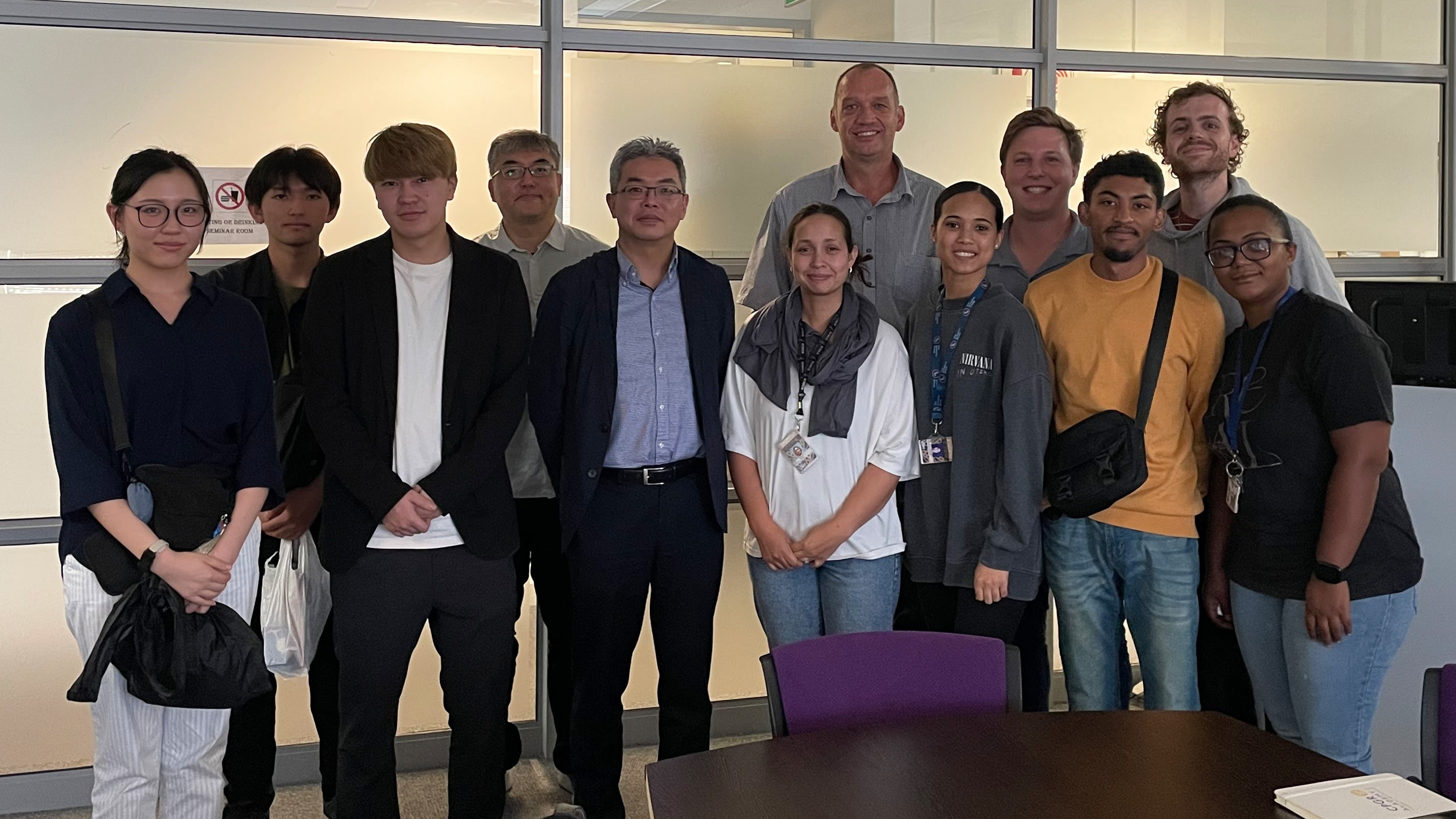
Thursday, March 6 — Visit and Presentations at Stellenbosch University
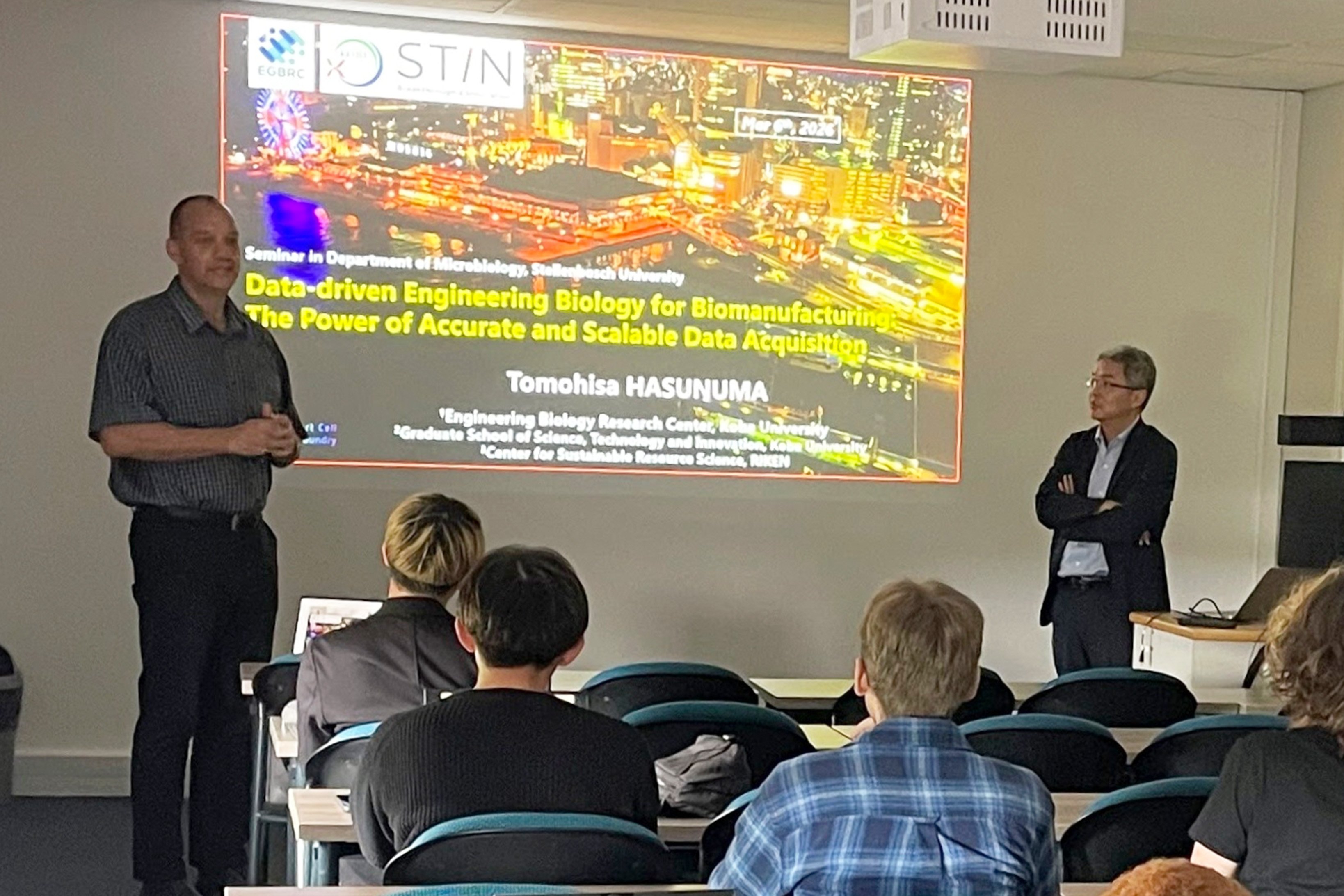
One faculty member and two students presented at SU. The faculty talk covered data-driven bioproduction engineering integrating automated data acquisition, metabolomics, and enzyme screening. Student presentations addressed the construction of an orsellinic acid microbial production platform in Escherichia coli, and the development of a cellulase surface display system in stress-tolerant yeast for lignocellulosic biomass utilization. The chemical engineering expertise of the SU audience generated stimulating discussion on process applications and translational potential.
Conclusion
Through this research exchange program, the academic connections between Kobe University and its South African partner institutions have been meaningfully strengthened, and a solid foundation has been established for the planned student visit and future collaborative research. Overall, the program served as an invaluable opportunity for knowledge sharing and the development of an international research network.
(Engineering Biology Research Center)