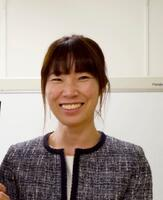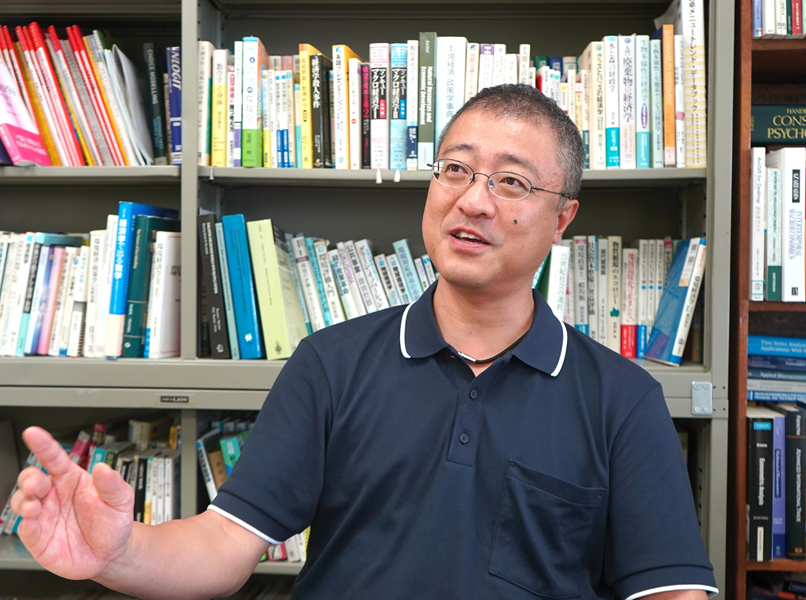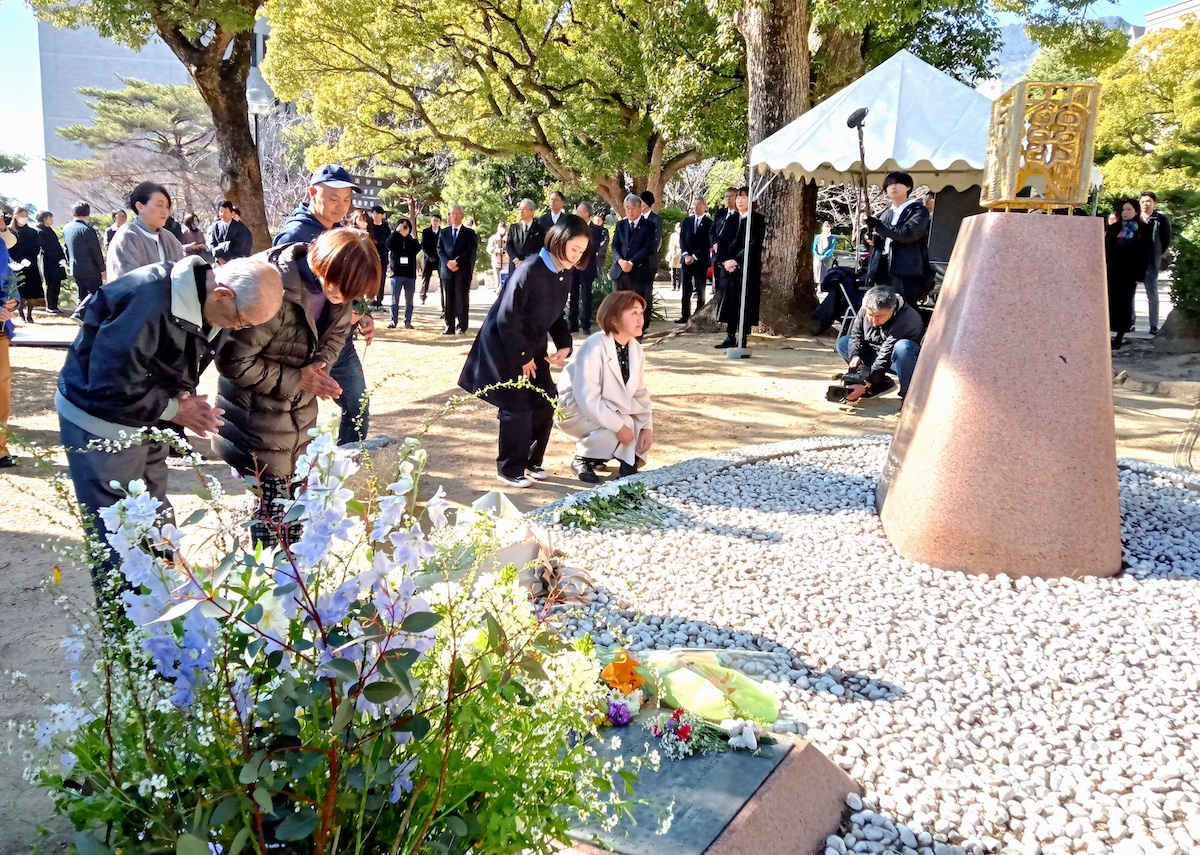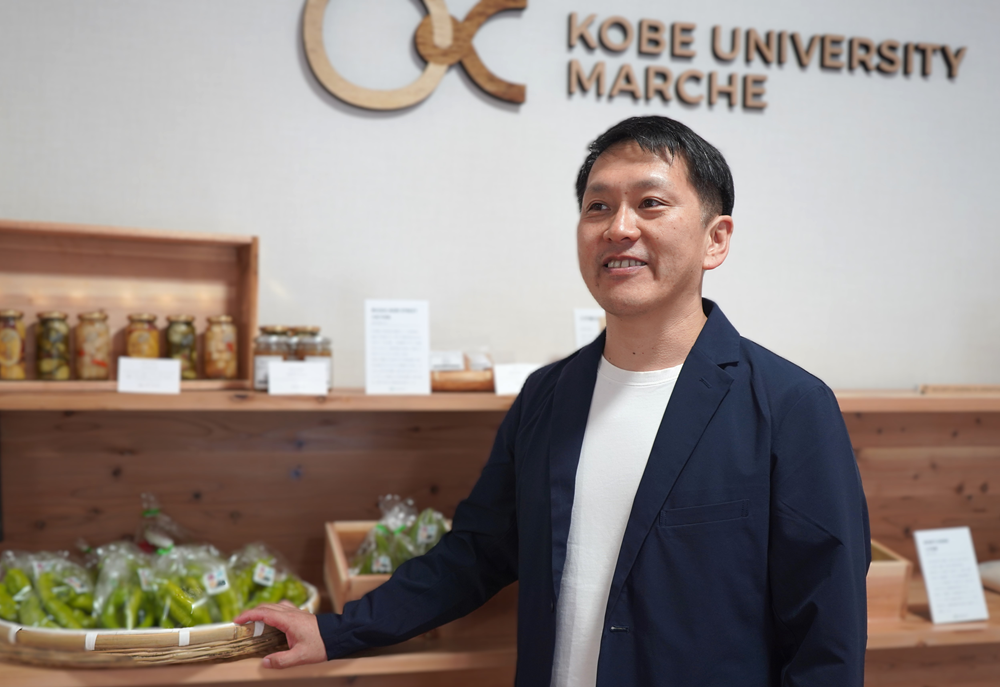


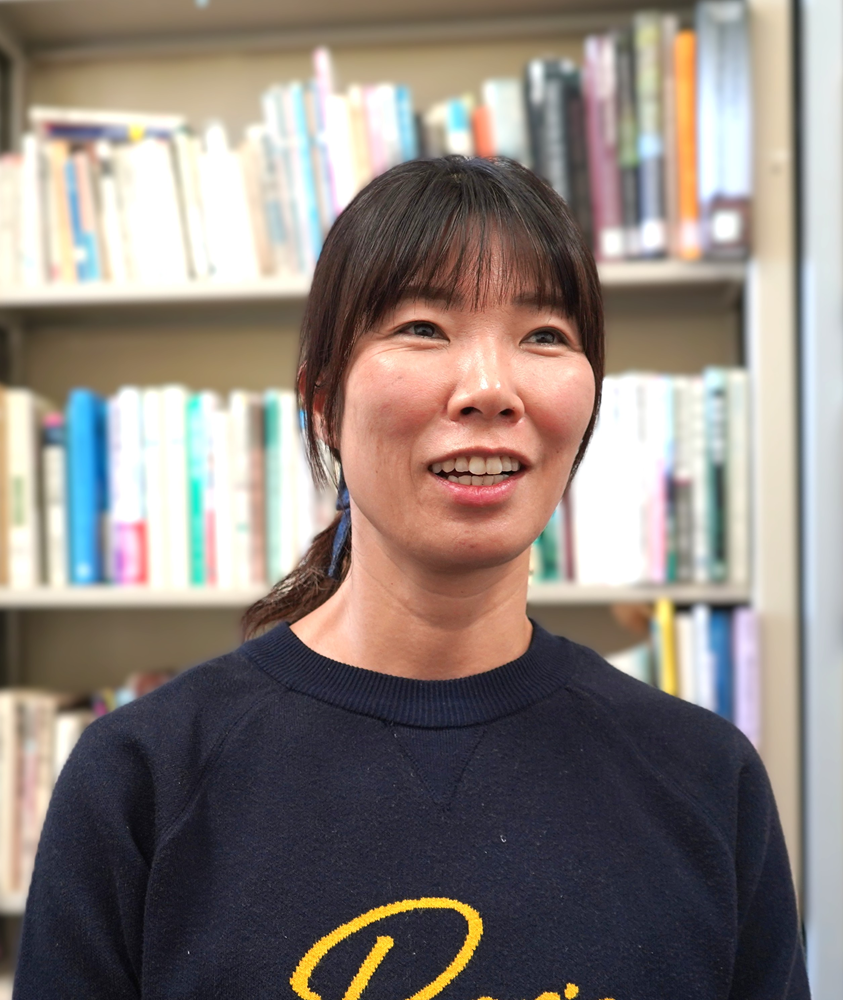
Incidents that make us consider the relationship between humans and wild animals are happening all over Japan, from bear attacks to crop damage by wild animals. How should we interpret the current situation, and how should we respond? We sat down to talk about coexistence between humans and wild animals with KIYONO Mieko, associate professor at the Graduate School of Human Development and Environment, who primarily performs research on the ecology of the Japanese macaque, a species of monkey, via surveys and practical activity in agricultural regions.
Seeing things from the macaques’ perspective
What made you start your research on Japanese macaques?
Kiyono:
Japanese macaques are endemic to Japan, found all the way from Aomori Prefecture in the north to Yakushima, Kagoshima Prefecture in the south. But wild primates are exceedingly rare in developed countries; in fact, Europe and the United States don’t have any.
What first piqued my interest in this topic was the Yakushima macaque, a subspecies of the Japanese macaque found on the island of Yakushima, which I first heard about while studying at Kagoshima University. As an undergraduate student, I had been performing research on insects, but after I learned of the Yakushima macaque, I switched the focus of my research to performing surveys on what types of insects the Yakushima macaque eats.
The Japanese macaque is omnivorous, eating insects, acorns, fruit, leaves and all sorts of other things. From even before I began my research, damage done by Yakushima macaques to Yakushima’s specialty Ponkan and Tankan orange crops had become a serious issue, causing friction between the macaques and humans. I decided to continue my research at graduate school so that I could work on solving these kinds of issues.
What have you learned through your research?
Kiyono:
Japanese macaques efficiently take in animal protein by ascertaining the types and locations of insects and the differences between the seasons. This behavior is similar to what humans do when we capture insects.
Japanese macaques do something really interesting when they eat captured praying mantises. Living inside many praying mantises are parasites called hair worms, which instinctually exit the bodies of praying mantises to lay eggs in the water, where they were born. Japanese macaques know of the hair worm’s instincts and submerge the praying mantises they capture in the water to eat them once the hair worms have left.
While I was in graduate school, I was taught to consider things from the macaques’ perspective when thinking about the friction between humans and macaques. It’s important to continue to ask yourself how the macaques would see things, even if it’s to the detriment of human society.
Looking at it from the perspective of a macaque living in the mountains, farms are places that are both easy and desirable to enter. Like I mentioned earlier, macaques want to acquire food effectively. Given the choice between a place where food is gathered in a single location and a place where food is spread out, macaques will of course choose the former. It’s also more effective to choose a place that is closer to the mountains. Conversely, they won’t choose to go to places that don’t have those kinds of attractive qualities.
Combining fun events with wildlife damage prevention
You continue to hold all kinds of activities in Tambasasayama City in Hyogo Prefecture.
Kiyono:
I’ve been engaging in wildlife crop damage prevention since 2013. At Kobe University, our students go out into the region and take classes taught by farmers. During one of those sessions, we heard from people living in a district called Hata that they were “having trouble with damage from macaques,” which drove me to hold these activities.
There are three ways to deal with wild animals. There’s “damage control,” in which a fence is set up to physically stop them from entering, “population control,” which manages population numbers and “habitat management,” in which things like fruit-bearing trees are cut down to control the animal’s habitat. Of the three, habitat management is the most difficult and thus is rarely seen in Japan.
When it comes to wildlife damage prevention, most regions take a more passive stance, thinking that the administration will take care of things, but in the Hata district, residents, students and local vitalization cooperators have created a system in which they undertake this damage prevention proactively.
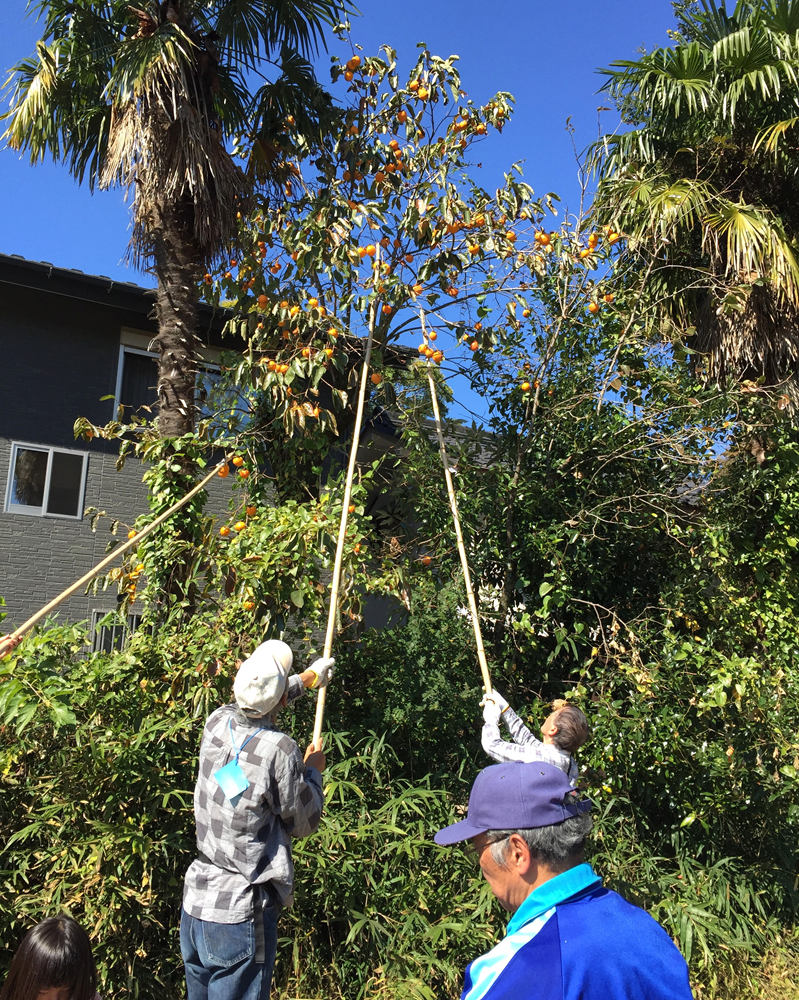
In the fall, residents and other participants come together to harvest persimmons through an event called the “Battle of Hata and the Monkeys,” a reference to the folktale entitled “Battle of the Monkey and the Crab.” Macaques come down from the mountain to eat persimmons, but if they’re harvested early, the macaques won’t come to those places anymore. This event has brought more visitors to the Hata district and has motivated area residents, gathering attention from all over Japan.
I’ve also helped popularize the use of electric fences around farmland. Macaques can break through even tiny holds in electric fences, which has caused many farmers to feel as though they aren’t really working. But if we make effective use of wire mesh to eliminate these gaps, we can make fences that are both cheap and highly effective. We’ve also turned the maintenance of these fences into an event all its own, the “Battle of Hata and the Fences,” to which many participants have come and enjoyed. This activity has led to a significant increase in the number of electric fences in Tambasasayama City, enhancing wildlife damage prevention.
Additionally, researchers and administrators have worked together in Tambasasayama City to discover that there are five groups of macaques and learn where they are most active. They also run an email system in which users can share information on macaque sightings.
Both bears and macaques want to acquire nutrients efficiently
Attacks by bears are popping up all over Japan. Why do you think this is happening?
Kiyono:
There are regions in which sightings have increased, and some in which they have not. However, what’s striking about this year is the increase in the number of attacks as compared with recent years. I think that the poor turnout of forest resources like acorns in eastern Japan, which in turn has made food scarce for the bears, has had something to do with it.
Both bears and macaques want to acquire nutrients efficiently. It doesn’t really matter if it’s in a residential area; they’ll go to places where they think they can acquire food efficiently and prepare a place to sleep nearby. On top of that, global warming has caused their hibernation period to shorten, which means they need more nutrients to move around. If they don’t have enough food, they’ll show up in human settlements despite the risks.
Bears also like animal-based food. In fishing regions, they’re drawn by fishy smells to places where humans live, while the garbage that humans dispose of has a similar effect. And if they can get food by attacking humans, I’m thinking that they’ll learn to do that and attack again.
What kinds of measures can we take to prevent bear attacks?
Kiyono:
It’s difficult to directly observe bears, which makes it tough to ascertain their origins and behaviors. Ideally, we should have exterminated bears that enter human settlements sooner, but I hear that was made difficult due to the strong public opinion that we “should preserve them.”
Just like macaques, it’s important to not let bears eat things they’ve already eaten once to prevent them from coming back. For instance, if you find bear claw marks on a persimmon tree, you need to either gather all the fruits or cut the tree down. In regions where bear sightings could occur, people need to be aware that bears could show up there at any time and make sure to keep their distance. Using things like bells to make noise is a simple way to avoid bear encounters.
As the population decreases and ages in agricultural settlements, it will be harder to secure people to prevent wildlife damage, an issue that may continue to worsen. More people may even quit farming altogether. Thus, it’s important to emulate endeavors by Tambasasayama City to increase the number of individuals coming to help from outside of the city and not rely entirely on residents of the area to prevent wildlife damage.
Aiming to establish multispecies studies
You’re also planning to create a new course that has students consider coexistence between animals and humans.
Kiyono:
We’re moving forward with plans to open a course on coexistence in rural satoyama areas next spring as an endowed chair using external funding. Based in the Tambasasayama region, this course is intended for a wide range of individuals, from students to working individuals to children, and we intend to eventually develop the human resources of the future.
The establishment of “multispecies studies” is another major theme of this endeavor. Multispecies studies go beyond anthropocentrism to grasp the relationship between humans and animals or among animals themselves while taking a close look at the individual agency of each living being. This has been gathering attention both in Japan and around the world in recent years, and I think it will become an important concept moving forward.
The COVID-19 pandemic drove home the importance of that perspective. The virus used our bodies to spread itself. We weren’t controlling nature, but rather, we experienced firsthand that we were the ones being controlled.
When we look at the relationship between animals from multiple angles, we may also discover connections that we hadn’t even imagined. Looking at the relationship between humans and animals also requires us to consider the mutual relationship between humans and all animals, rather than one specific animal. This then leads to changes in thinking that may allow us to find previously undiscovered potential in humans.
How will research in your field contribute to solving global environmental issues? Also, are there any topics you wish to pursue further?
Kiyono:
The biggest destroyer of the environment on earth is war; it alters absolutely everything. In wartime Japan, the trees on the mountains were cut down for lumber and wild animals were captured for food, so there was no wildlife damage during that period. Since then, it’s taken decades for the environment to get to its current state.
Thinking about wild animals and thinking about the human condition and the state of society are closely tied with global environmental issues. Friction between humans and wild animals have become large problems even in Southeast Asia and Africa, so there might be cases in which we can make use of research performed in Japan.
What I’ve begun to engage in now is research that puts a focus on “dialogue.” How friction with wild animals is perceived varies from person to person, but everyone is uncomfortable with exterminating animals. Even people living in rural areas that are dealing with wildlife damage would have trouble hurting or exterminating animals; one could say that they’ve been suppressing those feelings.
Moving forward, I think it’s important to approach those feelings carefully through the use of dialogue. Kobe University is a comprehensive university with researchers in a wide range of fields, so I’d like to use this environment to carry out research that is both interdisciplinary and practical.
Resume
In 2003, graduated from the Faculty of Science, Kagoshima University. In 2007, received her master’s degree from the Graduate School of Science, Kyoto University and finished the doctoral program at the same graduate school in 2009. In 2013, received her doctoral degree in science from Kyoto University. After serving as a researcher at the Graduate School of Human and Environmental Sciences, Kyoto University, in 2013, became project assistant professor at the Center for Regional Partnerships, Graduate School of Agricultural Sciences, Kobe University. In 2015, became project assistant professor at the Graduate School of Human Development and Environment, Kobe University, and has served as associate professor at the same graduate school since 2018. From 2018-2019,also served as policy planning officer in the Department of Agricultural Environment, Sasayama City (now Tambasasayama City).