

A Kobe University study shows that small aquatic beetles survive catfish attacks by resisting ingestion inside the catfish’s mouth and being spat out alive. This research contributes to a deeper understanding of size-dependent predator-prey relationships in aquatic insects and fish.
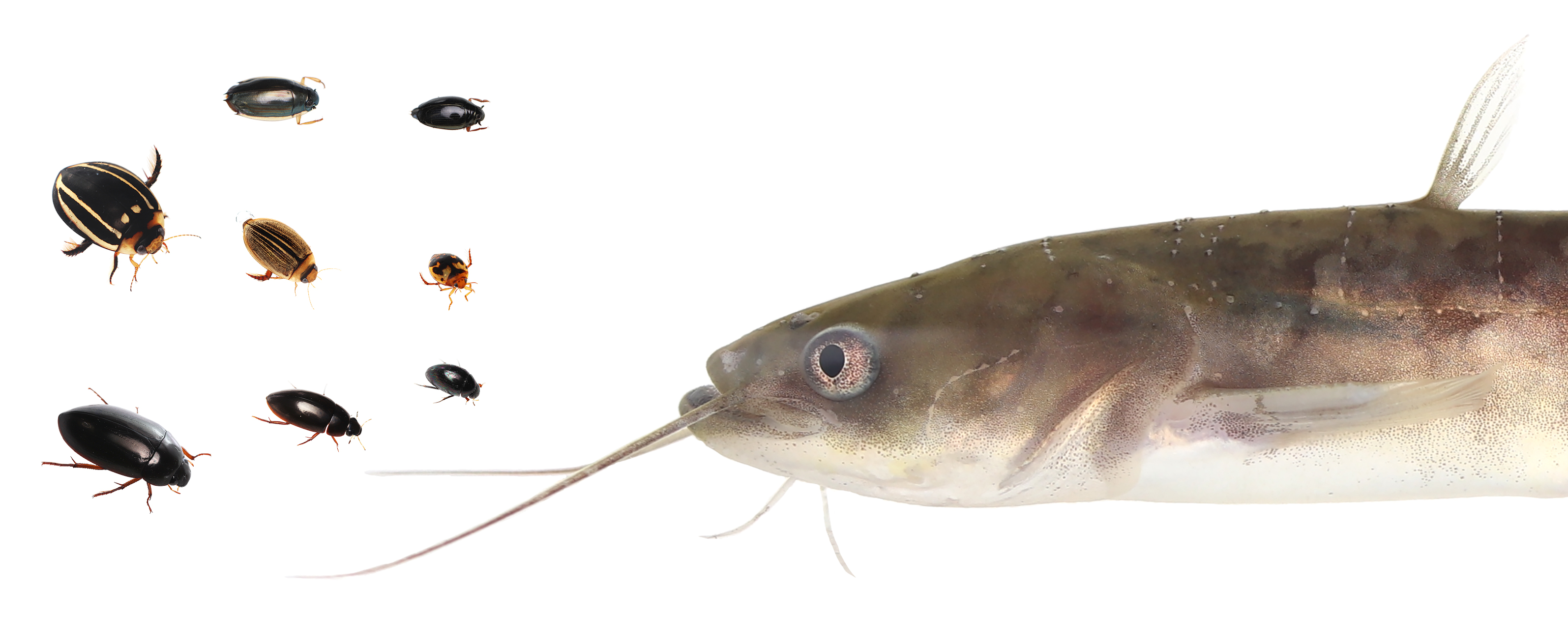
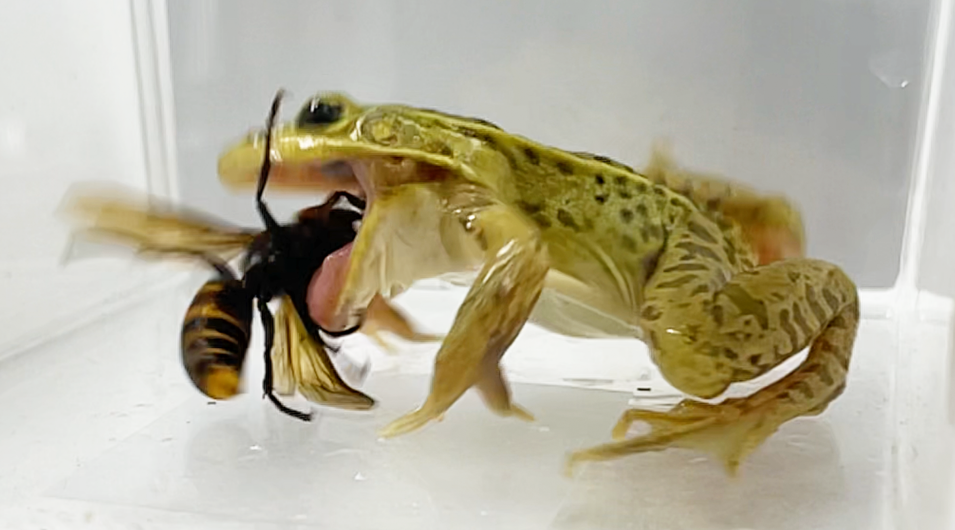
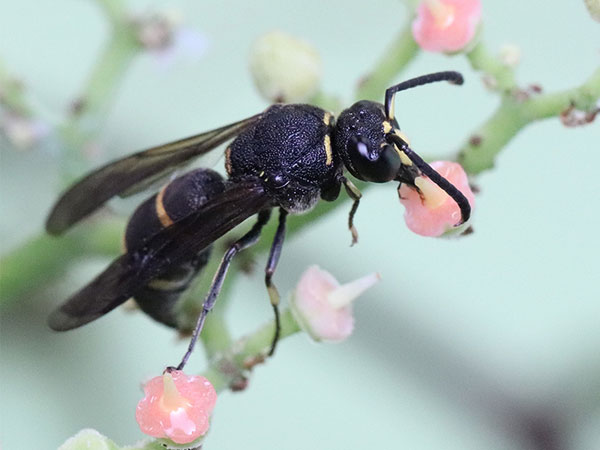
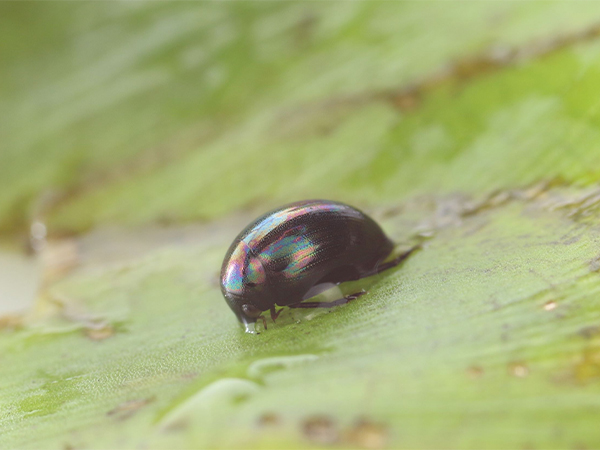
The catfish Silurus asotus was fed eight aquatic beetle species of varying body sizes of the families Gyrinidae, Dytiscidae and Hydrophilidae, including Regimbartia attenuata, to examine their escape strategies against predatory fish. © Shinji Sugiura, Scientific Reports (2026) (DOI: https://doi.org/10.1038/s41598-026-39251-7) (CC BY-NC-ND)
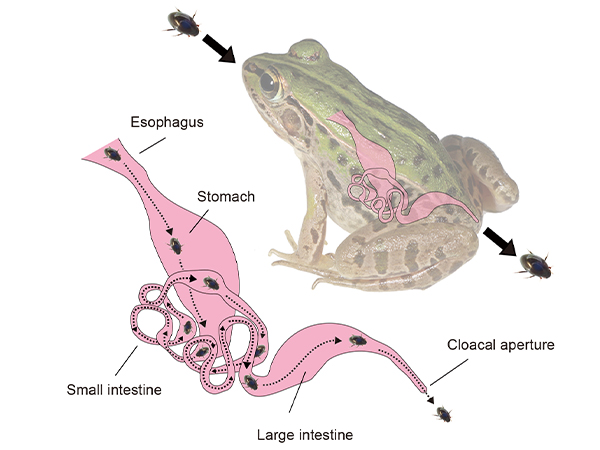
Once prey is captured by a predator, it’s easy for us to think of it as a death sentence. But in certain predator-prey relationships, the fight is far from over. For example, Kobe University ecologist SUGIURA Shinji revealed in a previous study that a small aquatic beetle, Regimbartia attenuata, can survive frog predation by escaping alive through the frog’s vent. He explains, “Whether this species uses a similar escape strategy after being captured by other predators, for example fish, has remained unclear.”
Sugiura sought to answer this question by feeding catfish eight aquatic beetle species of varying body sizes, including R. attenuata. A total of 17 catfish and 20 individuals of each insect species were used in these tests, with one predator and one prey placed in an aquarium for each test.
In the journal Scientific Reports, Sugiura now publishes the results of these tests, reporting that the catfish consumed and digested significantly fewer individuals of the smaller beetle species when compared to the larger species. However, unlike the previous study which featured the beetle escaping through the frog’s vent, unconsumed beetles in this study were rejected through the mouth of the catfish. “Our study shows that small aquatic beetles have a high probability of surviving catfish attacks by actively resisting ingestion and being spat out alive after capture,” says Sugiura.
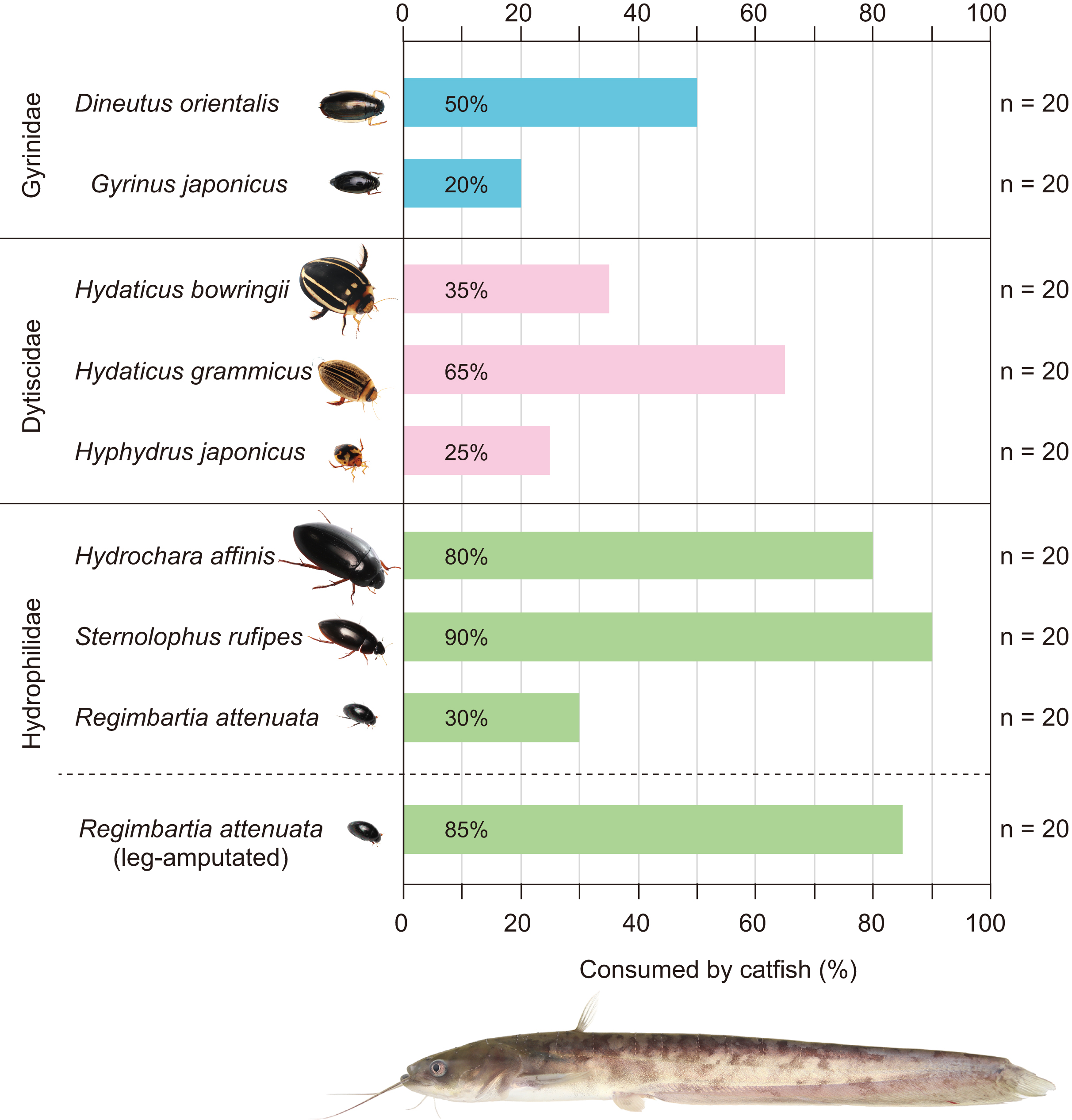
The results of the tests performed in this study revealed that individuals of the smaller beetle species were consumed and digested less often than their larger counterparts. Additional studies using R. attenuata with their legs experimentally removed revealed a jump in beetle consumption rate from 30% (control) to 85% (leg-amputated). © Shinji Sugiura, Scientific Reports (2026) (DOI: https://doi.org/10.1038/s41598-026-39251-7) (CC BY-NC-ND)
As to why these beetles are able to resist capture so effectively, defense strategies vary by species. Individuals in some families discharge chemical secretions to deter predators. Others have no such defense mechanism, instead relying on an active behavioral strategy. This led Sugiura to hypothesize that these beetles either move their legs rapidly or cling to internal surfaces to induce the catfish to spit them out. Additional studies using those beetle species with their legs experimentally removed revealed a jump in beetle consumption rate from 30% to 85%, further backing Sugiura’s hypothesis.
Moving forward, this research is expected to eventually contribute to a more mechanistic understanding of the size-dependent predator-prey relationship in aquatic insects and fish. “By extending this approach to other aquatic insects and fish species, future work will allow more accurate predictions of how the presence of fish affects aquatic insect communities in ponds and lakes.”
Acknowledgements
This research was funded by the Japan Society for the Promotion of Science (grants JP19K06073 and JP24K02099).
Original publication
S. Sugiura: Small prey fight back: post-capture defences shape prey–predator size relationships. Scientific Reports (2026). DOI: 10.1038/s41598-026-39251-7
Release on EurekAlert!
Smaller insects more likely to escape fish mouths
Inquiries
For inquiries, please contact gnrl-intl-press[@]office.kobe-u.ac.jp