

“It's not every day that you have the opportunity to learn theater in Japan.”
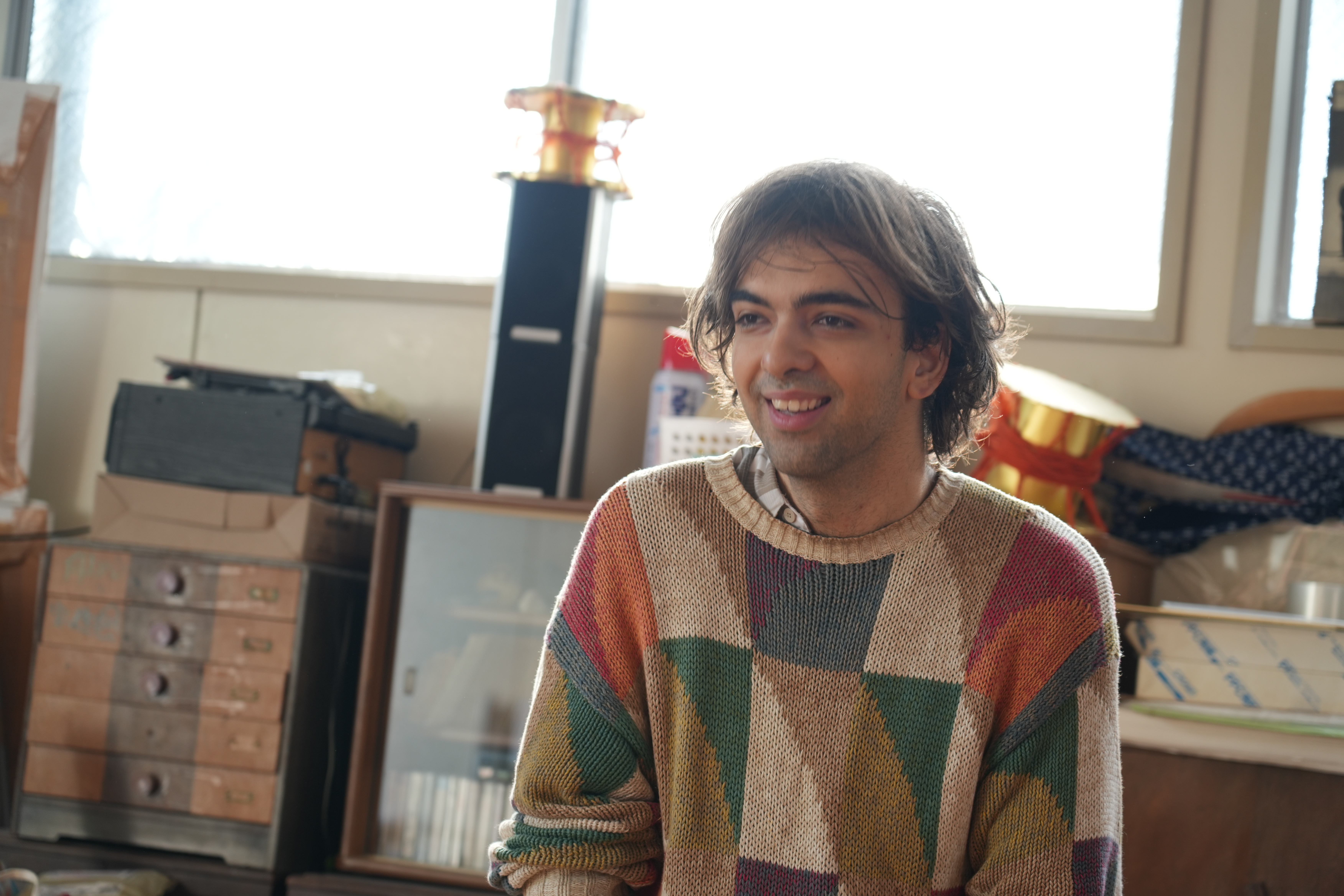
It’s certainly not an everyday opportunity for a Japanese native, let alone a student from overseas. And it’s not every day that you get a front row seat to a live theater performance either, but Noh drama club member Maximo Bruke treated us to just that. We sat down with Maximo to talk about his experiences both leading up to and during his time as a student at Kobe University, as well as some advice for prospective students wishing to follow a similar path.
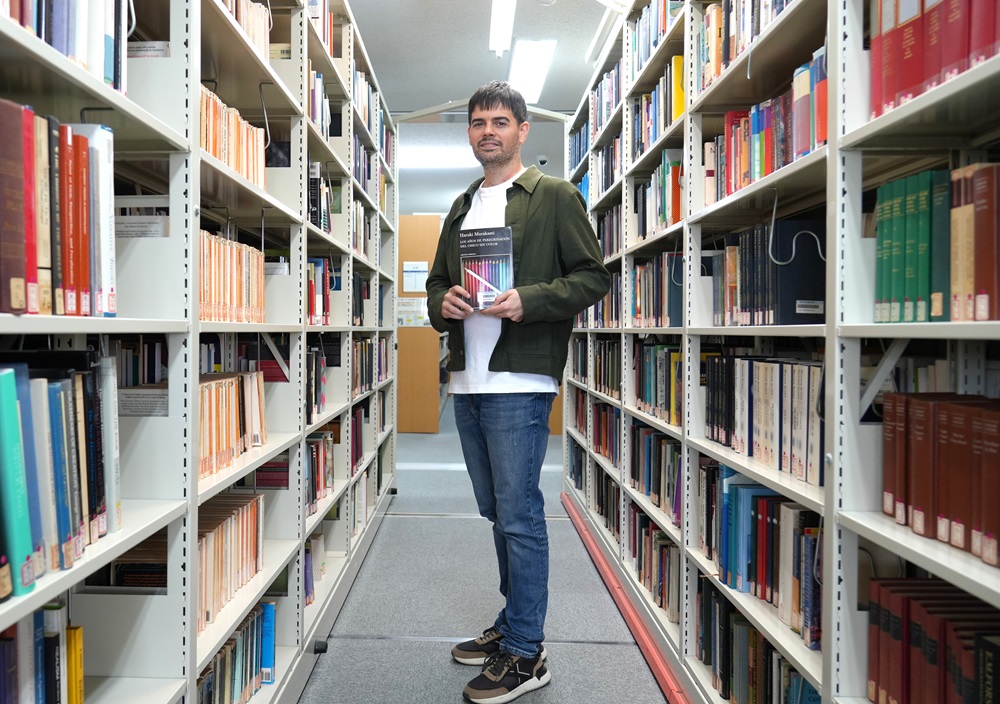
Originally from Argentina, Maximo began his Japanese journey at Instituto Privado Argentino-Japonés, known in Japanese as Nichia Gakuin, a bilingual school in Buenos Aires and the only one in the Argentinian school system to require students to take Japanese language lessons. Fascinated by the language and culture, he continued to immerse himself in Japanese literature. “Knowing what kinds of things people read is a very good starting point to understanding their culture.” His remarkable progress was noticed by his teachers, who recommended that he apply to receive the Ministry of Education, Culture, Sports, Science and Technology (MEXT) scholarship, for which he was accepted. He initially came to Japan for one year at Tokyo University of Foreign Studies.
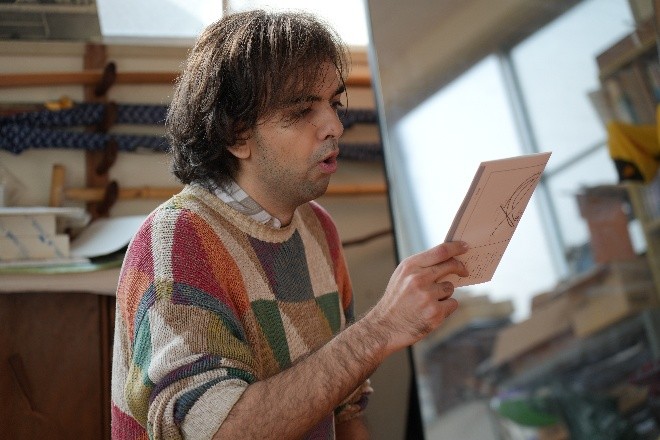
Despite his linguistic and cultural prowess, Maximo wasn’t initially involved with cultural club activities in Japan; in fact, he was actually a runner during his year at TUFS. “I really liked the experience, but I felt like I would have liked to have more communication with the other club members. We were running a lot, but we didn't really have time for conversations or expressing ourselves in other ways.” After mulling over a few other options in the Kansai area, he decided to enter Kobe University to receive his bachelor’s degree.



“Knowing what kinds of things people read is a very good starting point to understanding their culture.”
With a new university came new opportunities, and Maximo was raring to get involved. “I was excited to join a more cultural club. I really like music, like listening to opera, which was probably influenced by my family as we had lots of musical recordings at home.” After having a look at some pictures of activities in the Noh drama club, Maximo decided to give it a shot.
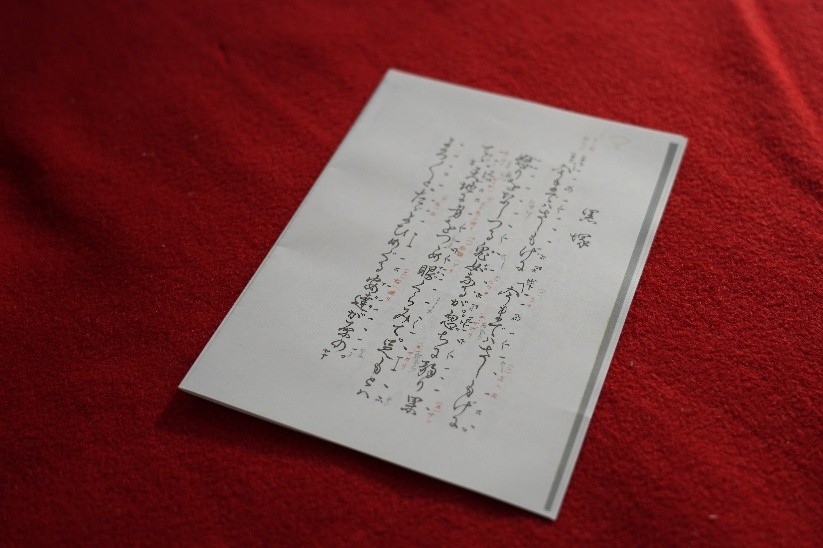
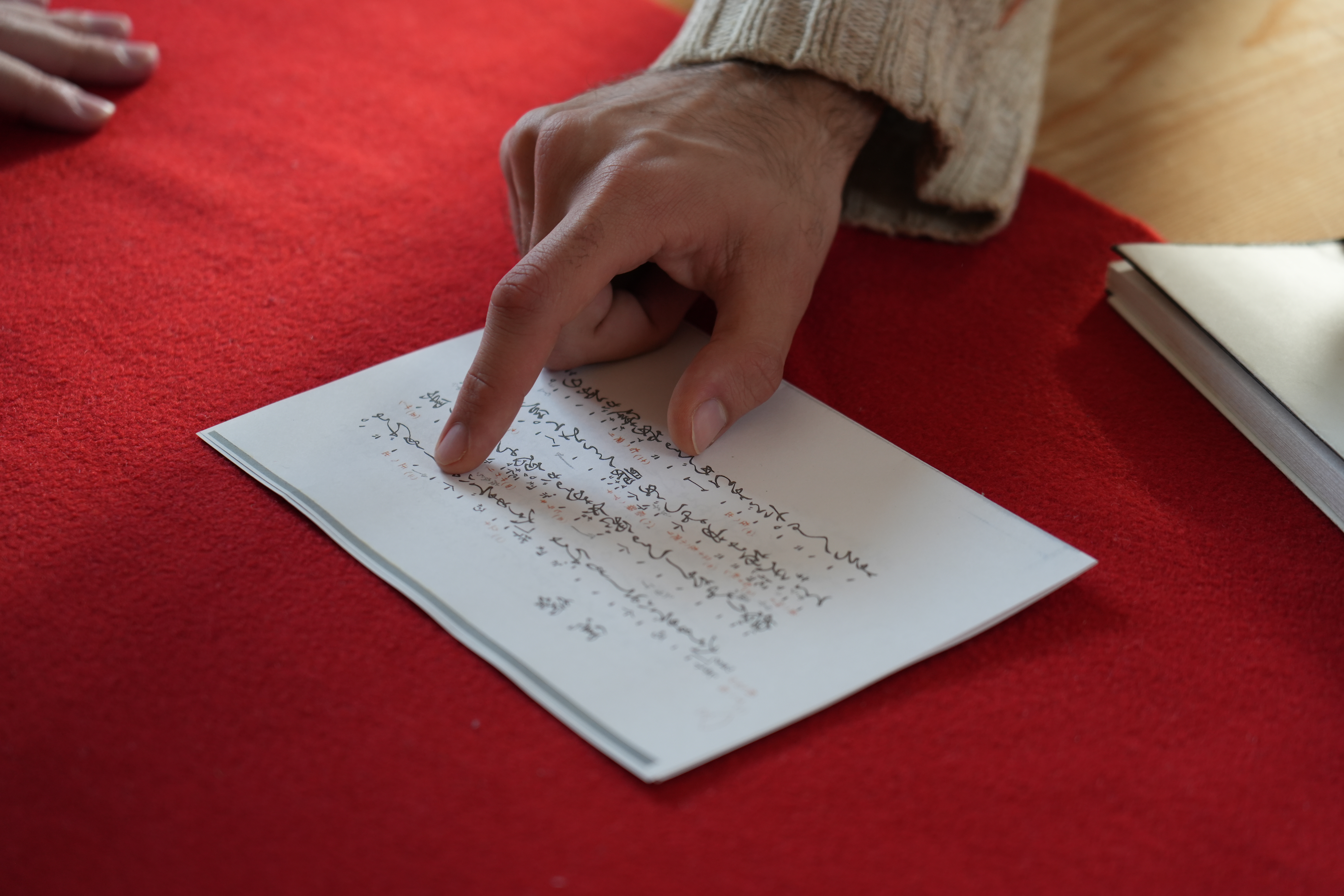
A typical day for Maximo looks similar to most university students in Japan: get up, get breakfast, get dressed and get to class. But once the evening rolls around, Maximo is focused on refining his Noh performances. “On club days, we practice from 5-8 p.m. either in the club room or at Rokko Yahata Shrine, where two tutors that graduated from Kobe University come to teach us.” And it’s a good thing, too, as Maximo tells us that even just the climaxes of these performances, which the club members primarily focus on, can be quite lengthy. These can be so difficult to perform that the club occasionally heads to Osaka for special training, sometimes several times a month leading up to a performance. While the texts and notations that the club uses to practice are even daunting to native Japanese speakers, Maximo told us with a grin, “You get used to them.”
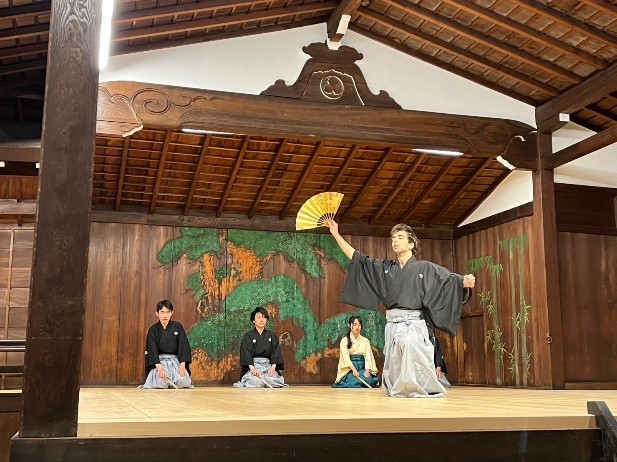
And he certainly did, and then some. This fall, at the Kobe University Noh Drama Club Revival 10th Anniversary Performance, Maximo delivered an aikyogen, an interlude performance between Noh plays. This is a phenomenal achievement, as not only is it exceedingly rare to have a foreigner participate in a Noh performance, Maximo’s part was a solo act. That said, after getting just a taste of what he can do, we’re not surprised he was given the nod.

All that remained in his four-year tenure with the club was his graduation performance in December, where Maximo performed a scene from “Makiginu,” a mystic play filled with tension, intrigue and deity-possessed dancing. It’s a story that teaches us not to judge by appearances, as the imperial guard in the story doubts the silk bearer’s ability to read poetry, so it’s no surprise that Maximo chose this for his graduation dance. In a performance art largely practiced by Japanese natives, his inspiring dances and powerful singing break the mold for anyone from overseas looking to follow in his footsteps.
When we asked him if he had any advice for students aspiring to be a part of more culture-oriented clubs, like the Noh drama club, during their time at Kobe University, Maximo told us: “Look for how open the club is. I consider myself lucky that this club is so open; there are a lot of people ready to help with anything.” While a certain level of Japanese always helps to get involved, Maximo’s continued success is both a testament to his own talent and to the openness of the entire Kobe University community.