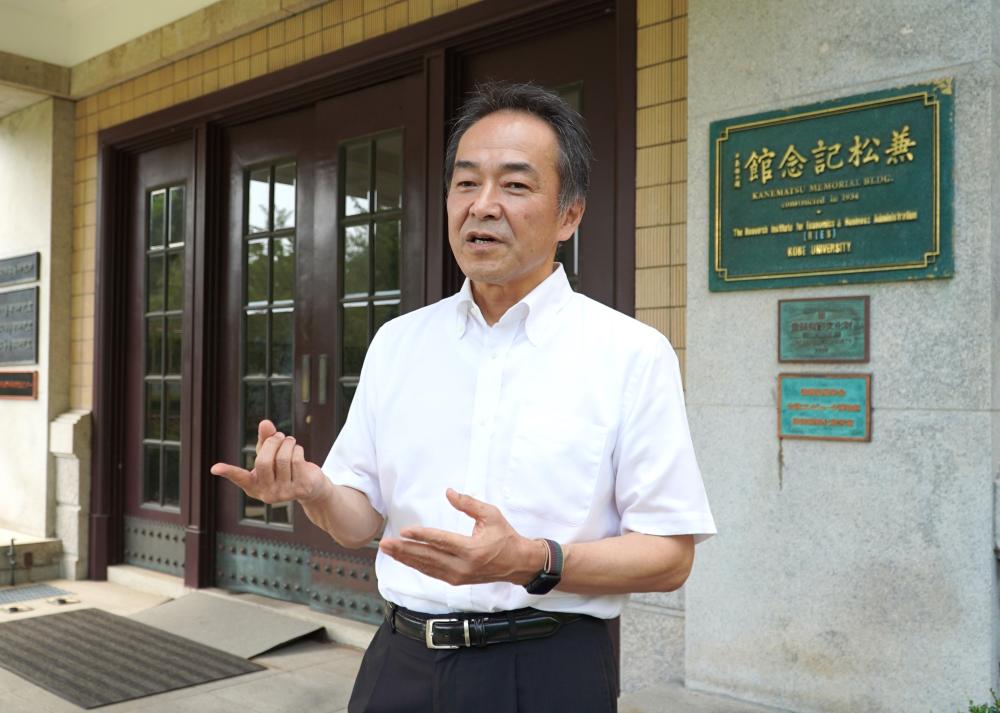


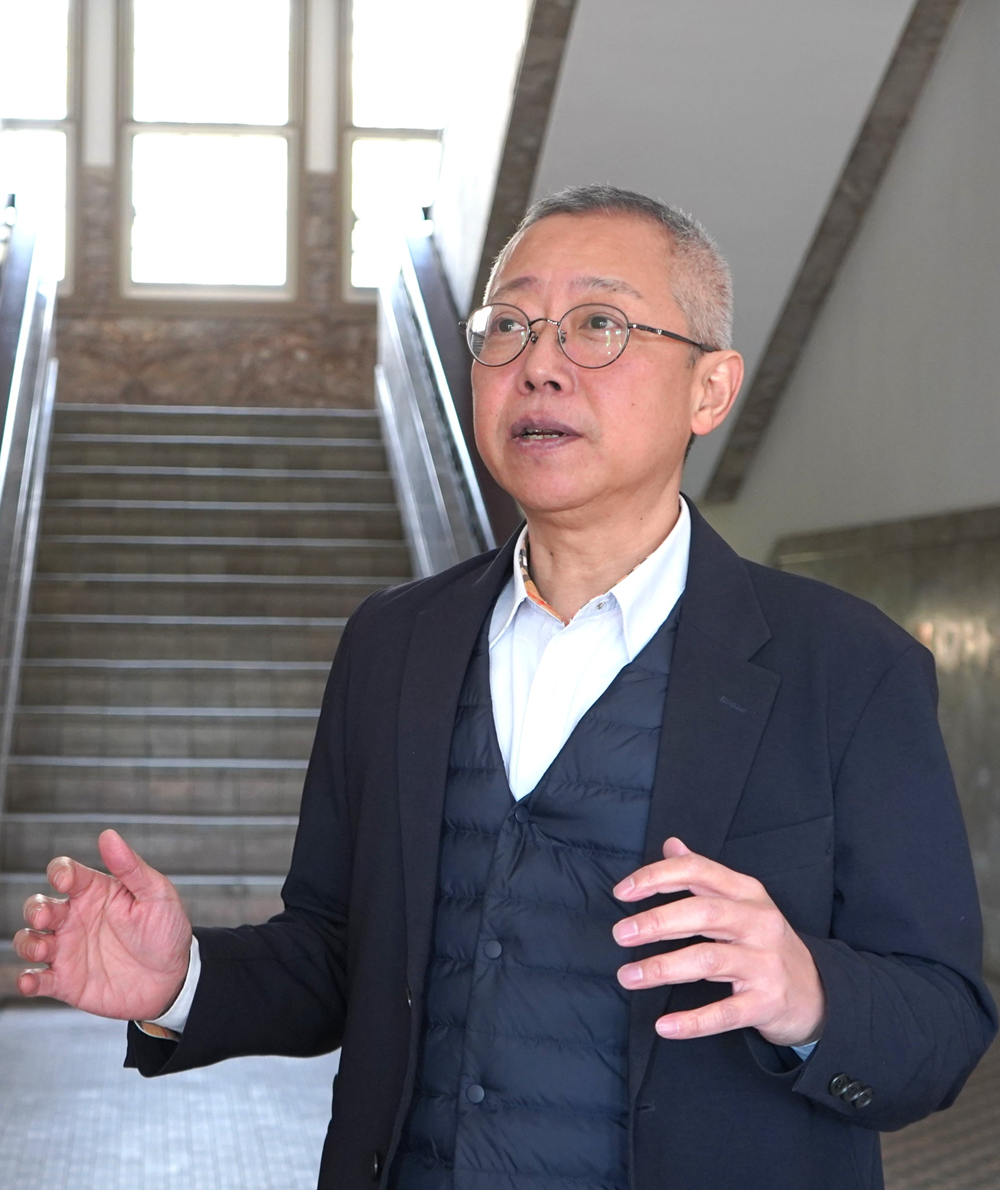
India is set to overtake Japan as the fourth strongest economic superpower as early as this year. With a population of over 1.4 billion, India is known around the world for producing talent in information technology, with many Japanese corporations now heading to India as well. What is behind this growth, and what are some potential problems for sustainable development? We sat down with Professor SATO Takahiro, deputy director of the Research Institute for Economics and Business Administration and an expert on the Indian economy and development economics, to talk about the present and future of India, a global growth engine.
India, the final piece to globalization
What made you want to perform research on India’s economy?
Sato:
It all started when I spent a month traveling as a backpacker back in February and March of 1991, my second year at university. I wasn’t particularly interested in India, but I decided to go after I was invited by a friend of mine at university. It was my first time traveling abroad.
I’ll never forget the sights when I first arrived in Kolkata. Beautiful museums from the British colonial era lined streets filled with potholes. Dirt was piled on the sides of the streets, and people were living their lives right on top of it. I actually found out later that the piles of dirt were due to metro construction.
I also visited other cities like Delhi, where I saw things like large scale slums, ascetics called Sadhus begging for charity and all kinds of other shocking things.
Before setting off on this trip, a professor at my university who was researching the Indian economy introduced me to one of my seniors studying abroad in India. That led me to enter that professor’s seminar and start studying the Indian economy.
1991 was the turning point when India changed course toward economic liberalization.
Sato:
Right after my trip, in May 1991, shocking news came out of India when former prime minister Rajiv Ghandi was assassinated during the general election. Following the election, Manmohan Singh, who would later become prime minister, took his post as finance minister, hammering out reform after reform towards economic liberalization.
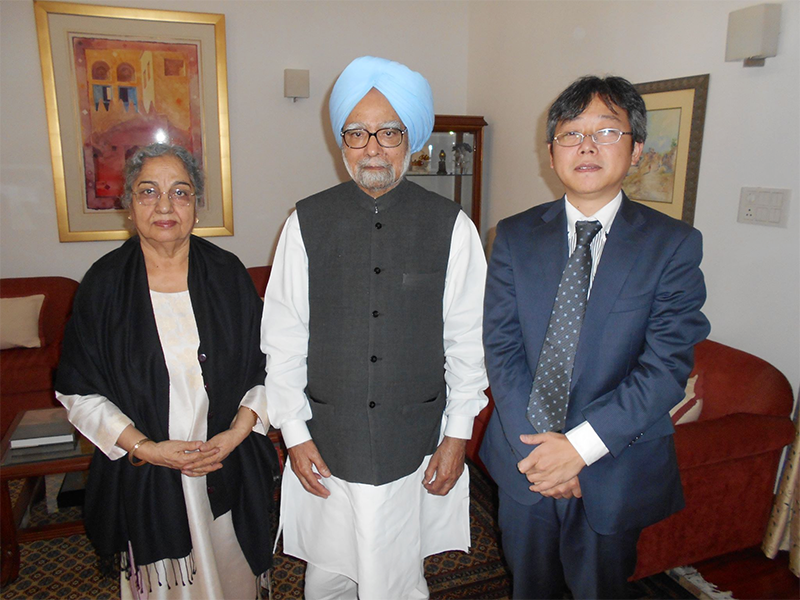
While India wasn’t socialist at the time, it was a government that enforced strict regulations, and it plunged into a serious economic crisis. As Post-Soviet Russia, former socialist countries and China advanced economic reform, India was the last major country to begin work towards liberalization. You could say that the economic reform taken by India from 1991 was the final piece to globalization.
As the state of the Indian economy changed from moment to moment, experts in the field, including my advising professor, found analyses and outlooks to be quite difficult. So, I gathered all the documents from the Indian government and local newspapers that I could to write papers using the latest information. It’s a research style I still utilize today.
Seemingly rapid growth as other emerging countries mature
Why has the Indian economy experienced such rapid growth in the past 20 or so years?
Sato:
The scale of the population, the number of young people and the presence of human resources in higher education that can use English are all factors. Also, due to economic liberalization, the activity of private corporations has expanded, strengthening ties with foreign and multinational corporations.
But I think that it should have been able to grow even more. What really should have been about 9~10% yearly growth is now a bit sluggish at around 6%.
What makes India look as though it’s experiencing rapid growth is the fact that China and other emerging countries have used up a certain portion of their growth potential. In other words, it simply looks like it's experiencing rapid growth relative to those other countries.
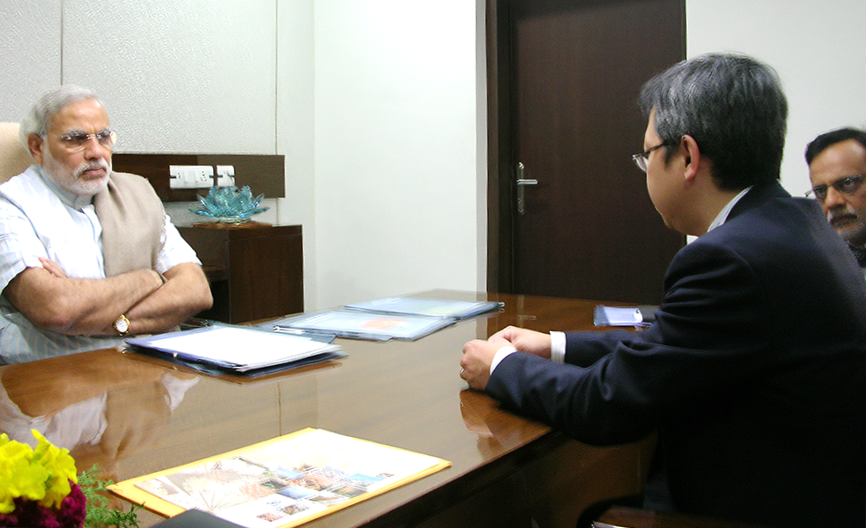
As to why India hasn’t been growing as much as expected, some reckless policies carried out in the last decade are to blame. Prime Minister Narendra Modi, who took office in 2014, has shown his intent to engage in all kinds of reform, but his sudden demonetization of large bank notes in 2016 sent shockwaves through society. The intent was to stamp out black money and terrorist funding, but very little black money circulates as cash in the first place. On the other hand, since many small, medium and micro businesses rely on cash payments, the effects of this policy led to many of them going bankrupt.
When it comes to foreign relations, I think Modi achieved a certain level of success. As chief minister of the state of Gujarat, he deepened friendly ties with Hyogo Prefecture since both areas had experienced major earthquakes, and after taking his post as Indian prime minister, he built a close alliance with Japan and late former Prime Minister ABE Shinzo as a crucial partnership in “Free and Open Indo-Pacific” strategies. However, within India, he took some conspicuously short-sighted policies, such as overprotection of non-competitive manufacturers as an election ploy. The logical reforms that he initially aimed to implement haven’t seen much progress, so it wouldn’t be an exaggeration to call this a “lost decade.”
A foundation that prioritizes higher education nurtured IT professionals
How would you assess India’s output of talent in information technology?
Sato:
India’s ability to develop IT professionals is fantastic. India’s first prime minister, Jawaharlal Nehru (1889-1964), placed an emphasis on science and technology, developing a social infrastructure for education in science and engineering.
Development patterns seen in East Asian countries place an emphasis on primary and secondary education to develop talent that will work in labor-intensive industries like manufacturing, but India placed an emphasis on higher education. As a result, the country has developed a large number of IT and engineering professionals, many of whom are remarkably active overseas in countries like the US.
Even India itself has become several times more digitized than Japan. There’s an official government infrastructure system called “India Stack,” which is used for personal identification, managing bank accounts and more, so even among the poorest groups in India, each family has at least one cellular phone. If you can’t use this system, you can’t receive aid from the government. Even street stalls are starting to accept digital payment. India is even performing a field trial on the digitization of currency itself.
The construction of this platform was led not so much by the government, but by private corporations that got on board. While the platform does face things like privacy issues, there’s also a lot that Japan could learn from it.
How do you feel about the problems facing Indian society?
Sato:
While India’s emphasis on higher education and nurturing talent in the IT sector has been its strength, on the flip side, it also represents a distortion of Indian society. Primary and secondary education are under the jurisdiction of the state governments, but in impoverished areas, there are people who can’t even read. Issues like educational disparity and unemployment of young people have become factors for slowed economic growth, which could affect the stability of society moving forward.
Also, a look at foreign relations reveals border problems with China, the largest threat to India’s security. However, since China is also one of India’s trade partners, they’ve formed an inseparable relationship. Without imported materials and semi-finished goods from China, manufacturing at Indian corporations just wouldn’t be viable.
India’s drug manufacturing industry, which has seen remarkable growth, depends on China to provide all kinds of drug ingredients. They also depend on China to provide rare earth elements. But this isn’t solely an India problem; Japan and the US are in a similar situation. These countries look at the costs and environmental effects of manufacturing domestically and, instead, leave it to China to take care of, which is now an urgent issue.
India as a base for developing into Africa
What does the future hold for India’s economic relationship with Japan and Japanese companies in India?
Sato:
In the 1980s, Suzuki began manufacturing automobiles in India, and since then, Japanese-style business management and manufacturing have earned a great deal of respect in the country. Honda, too, has entered the motorcycle market, and air conditioning manufacturer Daikin Industries and disposable diaper giant Unicharm have also made their presence felt in the country.
Infrastructure improvement by Japan’s Official Development Assistance has also been highly praised. In addition to roads, port facilities and thermal/hydroelectric power plants, it’s well-known that the Delhi Metro project was made possible through support from Japan. In fact, the female engineer who orchestrated it all is an alum from Kobe University’s Graduate School of Engineering.
Moving forward, I think strategy for Japanese corporations should utilize India as a base for exporting to Africa. Africa and the Middle East are right next to India. Japanese companies like Suzuki are already making moves to develop in Africa together with the Indian people.
India will come to maturity in about 20 or 30 years. From the perspective of developmental economics, my field of research, Africa is the only region left in terms of eliminating absolute poverty in the world. India will serve a crucial role as a hub for this activity.
Wisely navigating deglobalization
What about prospects in terms of India’s relationship with the rest of the world?
Sato:
India’s foreign policy is “strategic autonomy,” which means that it doesn’t form alliances with any specific countries. Though it doesn’t get into territorial disputes with the former Soviet Union and has had long-standing amicable relations with Russia, it maintains a neutral attitude toward the US, Russia and Israel. Many countries condemned the invasion of Ukraine by Russia but refrained from doing the same to the US following its attacks on Venezuela. However, by refraining to issue clear condemnations of either country, India showed that it holds no such double standards; in that sense, they’re quite a reasonable country. I think the reason behind this is that historically, they refused to use weapons in their struggle for independence against the UK and have since upheld their tradition of non-violent resistance.
The future of India will hinge on how the country leverages this strategic autonomy in their economy. They need to think about how to handle problems facing economic security while also maintaining economic efficiency.
Just as we’ve seen with the nationalism of the Trump administration in the US, the world has now taken a course away from globalization. Now, India, which has pushed forward towards market liberalization, needs to be able to wisely navigate this “deglobalization,” become economically independent and get along with the rest of the world. In fact, they’ve already started to come up with policies that incorporate that perspective.
We as researchers need to take a close look at this complex state of affairs. The issues facing India overlap with those facing Japan, so I’d like to work together with early career researchers to analyze the situation carefully and systematically.
Resume
In 1993, graduated from the Faculty of Commerce, and in 1995, received his master’s degree from the Graduate School of Commerce and in 1999, completed the doctoral program at the Graduate School of Commerce, Doshisha University. Also in 1999, became full time lecturer at the Faculty of Commerce, Fukuoka University. In 2001, became assistant professor at the Graduate School of Economics, Osaka City University. In 2002, received his doctoral degree in economics from Osaka City University. In 2007, became associate professor at the Graduate School of Economics, Osaka City University. In 2008, became associate professor, in 2012, became professor and in 2023, became deputy director at the Research Institute for Economics and Business Administration, Kobe University. Also served as visiting researcher at the Department of South and Southeast Asian Studies, University of California, Berkeley (USA) and as research fellow at the Jawaharlal Nehru Centre for Advanced Scientific Research, Jawaharlal Nehru University (India). In October 2025, published a book entitled “Shinshinbouekiriron to Indo Keizai (The new new trade theory and the Indian economy)” which he wrote and edited. Also serves as coach for the Kobe University Cheering Squad.