

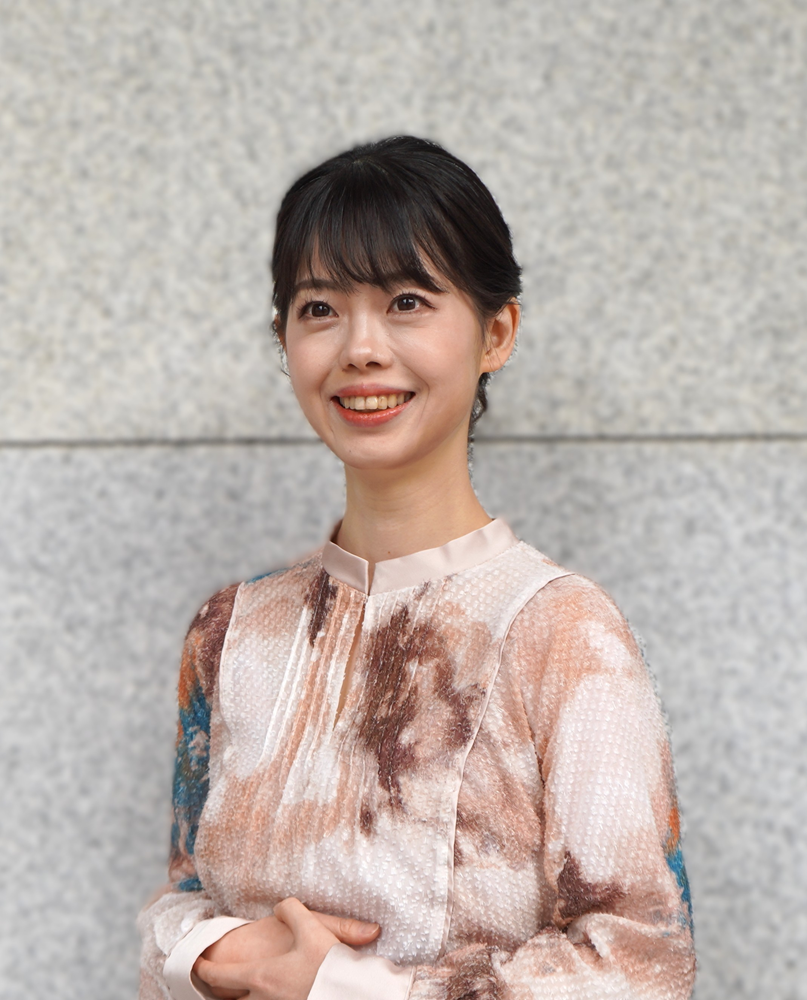
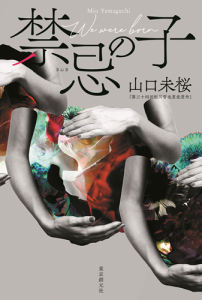
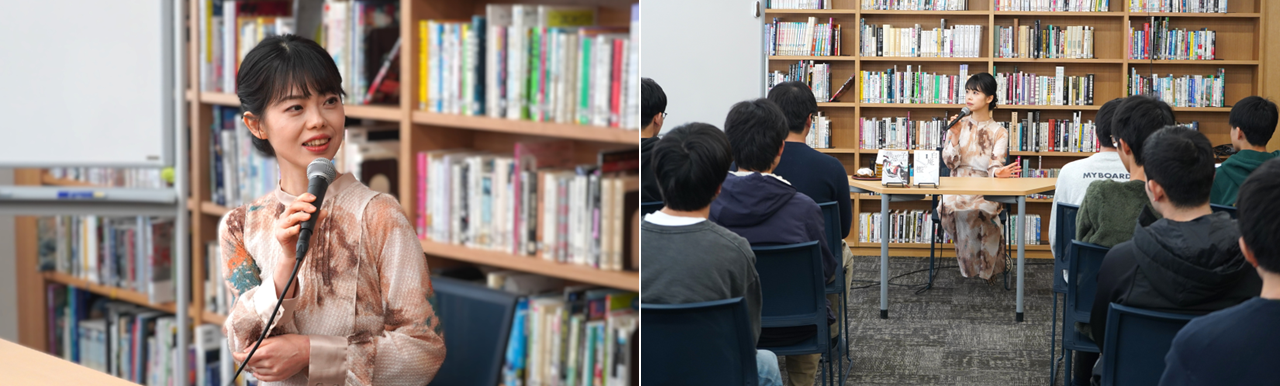
Kobe University School of Medicine alum YAMAGUCHI Mio is a physician, an author and a mother raising her five-year-old daughter. In 2024, her debut novel entitled “We Were Born” won the 34th Ayukawa Tetsuya Award and placed fourth in the Japan Booksellers’ Award in 2025. Along with her second novel “They Were Gone,” she’s breathed new life into the medical mystery genre. We sat down with Yamaguchi to talk more about what drives her as she balances her career both as a physician and as an author, as well as the messages she imbues in her works and her thoughts about her Kobe roots.
Giving up her dream of becoming an author to enter medical school
Even after her debut as an author, Yamaguchi continues to work as a gastroenterologist at a hospital in Osaka Prefecture. She’s on call for emergencies outside of her normal working hours, and she also works night shifts. The only time she gets to write her novels is at night when her daughter has gone to sleep. “My day-to-day is a bit of a shoestring operation,” she said jokingly.
As a child, Yamaguchi loved coming up with stories. “My imagination was constantly running wild.” In high school, an invitation from a friend to join the short-staffed literature club got her started writing novels. The mystery stories she published in the club’s magazine were well-received, so she branched out into other genres. She even received prizes from competitions outside of school, which made her dream of becoming an author grow even bigger.
“When I was in my third year of high school, I told my parents that I wanted to become an author. Of course, they were strongly opposed to this idea, so I entered medical school just as I had been recommended to do. While at university, I distanced myself from even reading books, which completely closed off my route to writing.”
Yamaguchi entered the School of Medicine at Kobe University after letting go of her dream. She chose the university because it was “a national university that I could commute to from home.” She didn’t really have a strong desire to become a physician. Her days were busy with club activities and part-time work such as private tutoring. During her third year at university, however, she began to be interested in a profession as a physician.
“In my classes on physiology and pharmacology, it was fascinating to me that bodily systems, causes of diseases and effects of medicine could all be explained by logic. Perhaps it was because I’ve always liked solving puzzles logically, even since I was a child,” Yamaguchi reminisced.
After graduation, she spent five years as a resident and specialty resident, which saw her swamped with work. Following that, she got experience as a specialist in pancreatic and biliary tract diseases, and was even active in writing research papers. Her daily life was completely removed from writing novels.
COVID-19 and childbirth brought her back to writing
What drew her back to the world of writing were COVID-19 and childbirth. In 2020, as COVID-19 was beginning to spread, the presentation she was preparing for a conference was cancelled, which caused her motivation for writing papers to fade as well. She also gave birth the same year, which led her to reexamine her own career.
“So then I thought, I never really wanted to write papers in the first place. If I was going to write novels, it had to be now.”
To start, she read all kinds of books, and from the spring of 2022, she began participating in the “Sosakujuku” creative writing workshop headed by ARISUGAWA Alice, an author whom she greatly respects. Luckily, since the workshop was held online due to the COVID-19 pandemic, she was able to get working on her writing while raising her daughter.
Her debut novel, “We Were Born,” begins with a shocking twist as the main character of the story finds that a drowned body that was brought to the hospital where he worked as an emergency physician looked exactly like him. Together with a rich human drama, this novel features some emerging challenges of reproductive medicine.
On her emotions when receiving word that she won the Ayukawa Tetsuya Award, Yamaguchi told us: “It was similar to how I felt when I found out I was pregnant. I was happy but also nervous about what the future would hold.”
Those feelings of nervousness were completely blown away as the novel flew off the shelves; for a time, it was difficult to even find a copy in stores. The novel placed highly on several rankings, including third on the Shukan Bunshun Mystery Best 10, fourth in the Japan Booksellers’ Award 2025 and third in the KONOMYS Award 2026 (Japanese Edition).
The pressures of clinical settings and the delicate emotions of medical workers are featured in her work, which seem to greatly reflect her own experiences as a physician.
“The experiences that are reflected are more about how I view life and death rather than the technical aspects of medicine. When we get sick, not all of us will be saved. Individuals who used to be healthy will grow weaker by the day. This sense that our lives are limited, this impermanence forms the basis of my work. But even so, I don’t want to forget about the hope that lies within. Even if the stories are tragic, I want to continue to create worlds where the ending has that one glimmer of hope, like a single flower blooming through scorched earth.”
Her experiences during the Great Hanshin-Awaji Earthquake shaped her view of life and death
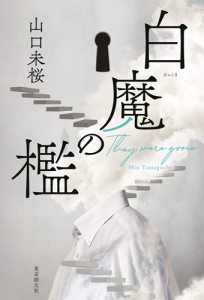
Her second novel published last year, “They Were Gone,” was another hit. This is part of a series following her debut novel about a hospital in the mountains of Hokkaido where crimes happen one after another after the hospital becomes isolated due to dense fog, a major earthquake and toxic gas. The mysteries themselves are engaging to solve, but what’s more, the novel paints a detailed picture of the realities facing rural healthcare and healthcare following disasters.
Yamaguchi’s experiences as a first grader in elementary school during the Great Hanshin-Awaji Earthquake are also reflected in the novel. The earthquake hit at 5:46 am on a winter morning 31 years ago, but on that day, Yamaguchi woke up at 3 am to sleep in her parents’ room. After the earthquake, a large bookshelf fell where she usually slept. “If I had been there, I probably would have lost my life,” she told us.
Some of her elementary school classmates lost their lives in the earthquake, and many others lost their homes. She remembers the rippling asphalt, the smoke billowing from the burning houses and the parking lots where she and her neighbors covered themselves with blankets after they evacuated the area.
“Lately, I’ve begun to feel that there are parts of my views on life and death that were fundamentally installed within me during the Great Hanshin-Awaji Earthquake. As the impact felt from a disaster differs depending on the area, so too do one’s views differ depending on their situation. This moves our lives in all sorts of ways, and I think that this way of thinking is reflected in ‘They Were Gone.’”
Despite her hectic day-to-day, Yamaguchi is readying her next novel. As her experiences as a physician, author and mother intertwine to bring her latest work to life, only she knows where her new story is headed.
“Essentially, I want to write a human drama. I want to create a story about humans without limiting myself to mysteries. And even if I do write on topics like life, medicine and social issues, I don’t want it to sound preachy; rather, I’d like to make sure it’s still enjoyable to read as its own work of entertainment. If I can manage that, I think I can get lots of people to give it a read.”
Resume
In 1987, born in Kobe City. In 2012, graduated from the School of Medicine, Kobe University. She currently works as a gastroenterologist at a hospital in Osaka Prefecture. In 2024, received the 34th Ayukawa Tetsuya Award for “We Were Born.” In 2025, published her second novel, “They Were Gone.”
Yamaguchi’s message to her juniors at Kobe University: “Treasure the seeds of curiosity within you. The time you spend at university is all yours. Don’t worry about efficiency; I want you to try to do the things that you want to do.”