

A plant uses a rare scent to guide its pollinator to male flowers first and to female flowers later. The Kobe University study uncovers a precise chemical system that not only keeps this partnership specific but also helps ensures it remains beneficial to both parties.

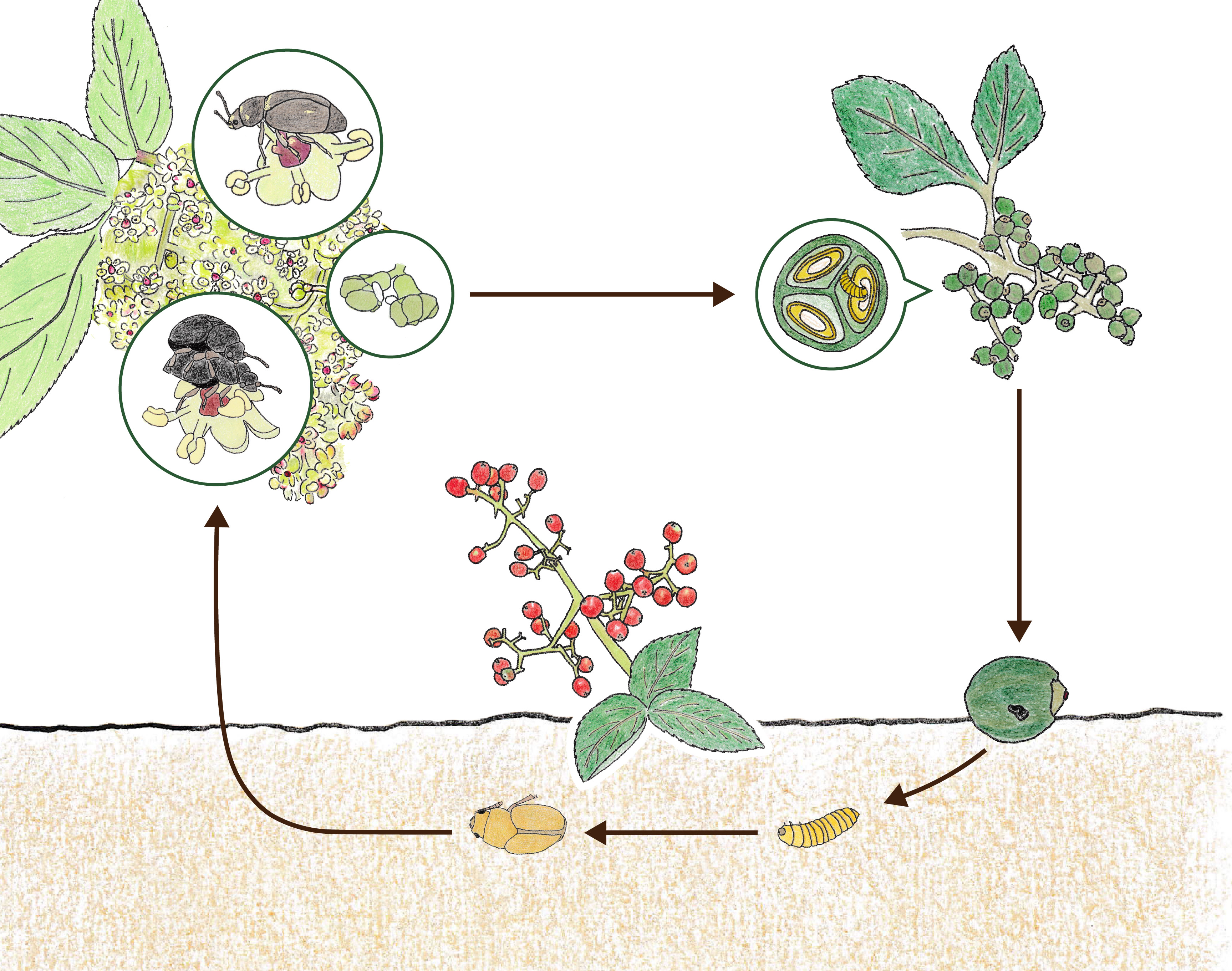
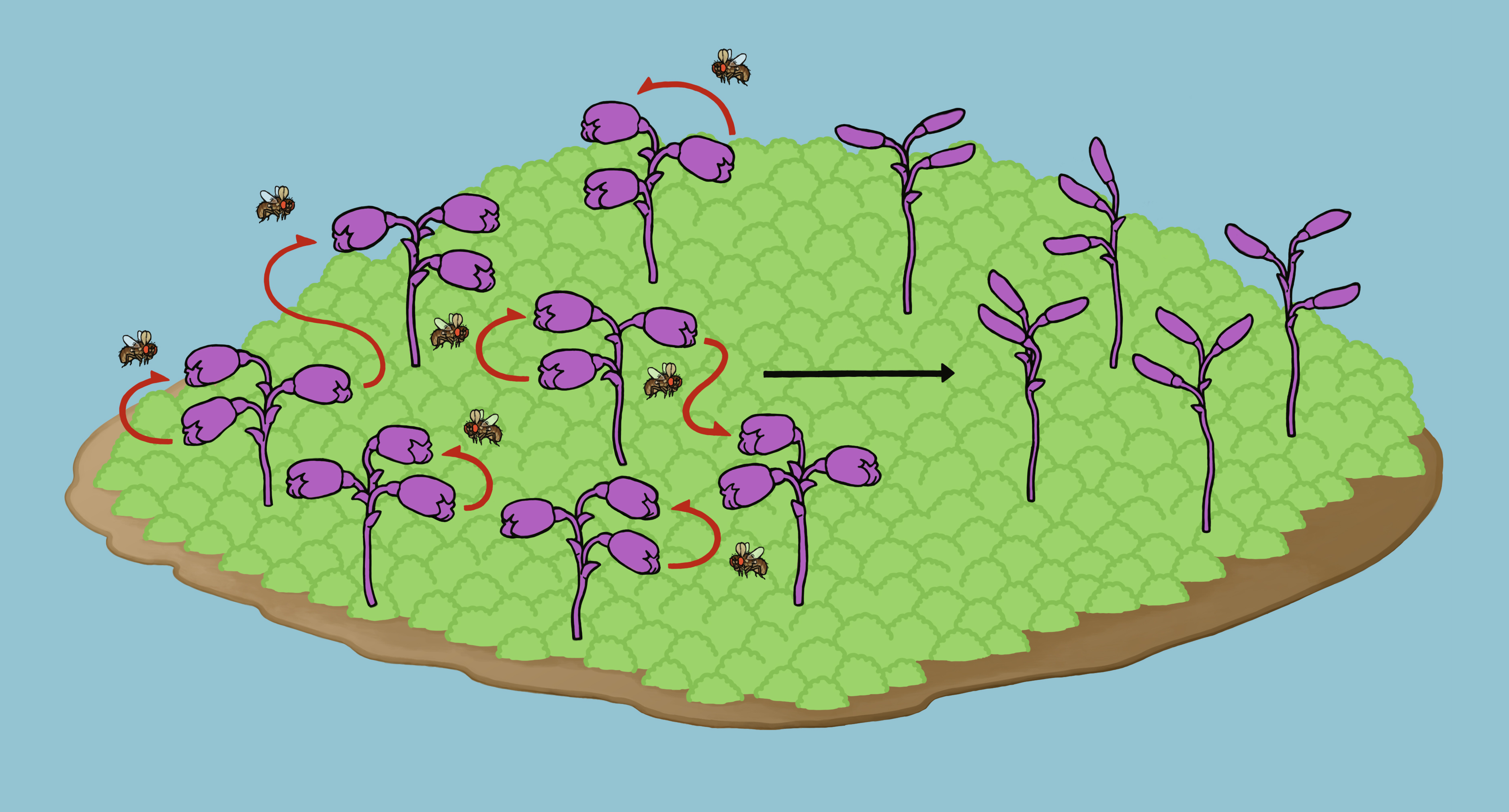
The gall midge Dasineura heterosmilacicola is attracted first to male flowers of the climbing plant Smilax insularis (left) by the chemical dihydroedulan I. Laying its eggs into the flowers, the insects pick up pollen, which they carry to the female flowers (right) that open and emit the same scent a few hours later in the day. However, the insects rarely lay eggs there and the few larvae that hatch do not eat the developing seeds, dying of food scarcity or desiccation. The larvae in the male flowers, however, feed on the surplus pollen and emerge from the dropped flowers. © ANZAI Shun, SUETSUGU Kenji (CC BY)
Many plants recruit insects to carry pollen from flower to flower, and in return some offer a part of their body as a brood site for the insects’ young. Take for example the climbing plant Smilax insularis, growing on islands from Okinawa to Taiwan. Recently it was found that a gall midge, Dasineura heterosmilacicola, lays its eggs into the male flowers and carries pollen from the male to the female flowers, while the developing larvae in the male flowers feed on surplus pollen. This system constitutes a classic example of what biologists call “brood-site pollination.” Kobe University botanist SUETSUGU Kenji says: “The larvae were reported only in male flowers. So how do the female plants remain part of the system? And what keeps the system specific to this insect? I felt there must be some hidden mechanism governing this interaction.”
Biologists have been discussing that a “private channel,” an unusual odorant that is sent and received by only the intended partners, might be at work in some such relationships. However, field studies that explicitly search for such secret codes have been rare. “Our group is in a special position to tackle this issue. We are willing to spend the time needed to search an obscure plant and observe it for long periods across five islands. So, we have the field perspective, but we also have collaborators who can synthesize candidate compounds so we can test them under natural conditions. Connecting such very different approaches is why we are able to move from a fascinating observation to understanding its mechanism,” explains Suetsugu about his group’s research approach.
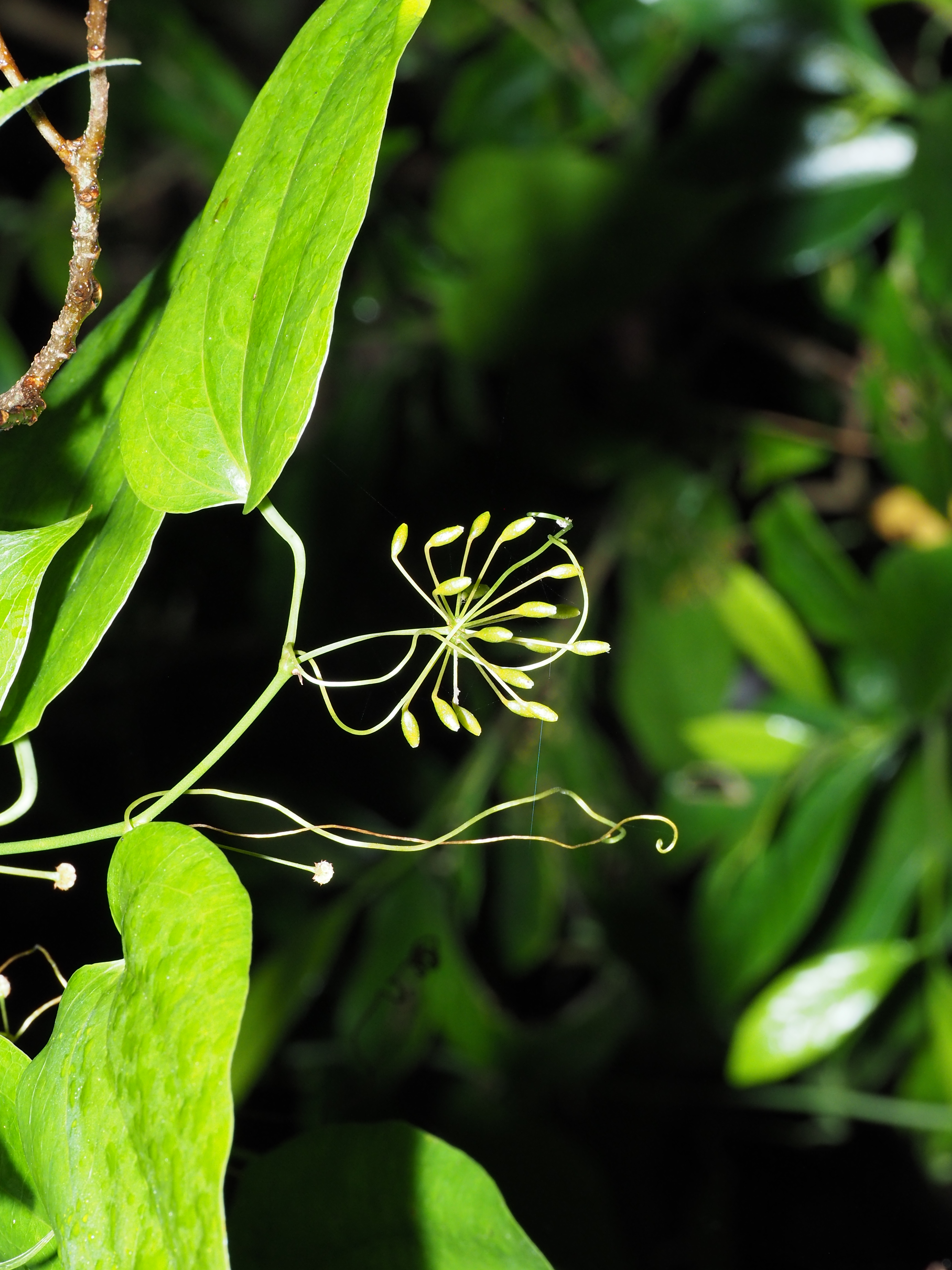
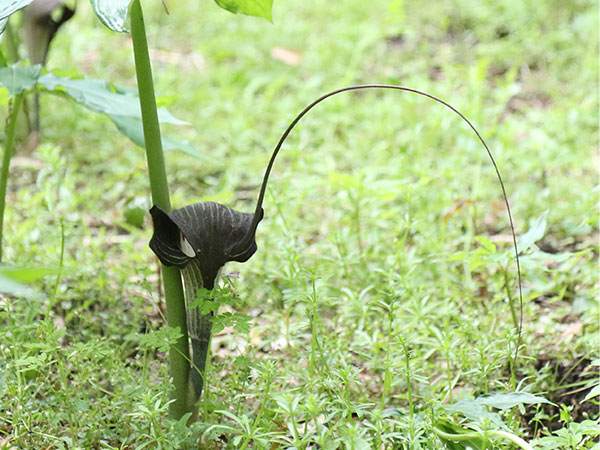
Smilax insularis is “dioecious,” that is, it has male flowers (pictured) containing the pollen and female flowers receiving pollen and developing seeds on separate individuals. © SUETSUGU Kenji (CC BY)
In the journal Current Biology, the Kobe University team now publishes that they identified dihydroedulan I as the main component of Smilax’s scent, a rare compound not previously known as the dominant floral scent component in any plant, and that it is also able to attract the gall midge specifically. No other insect was attracted by the chemical in their field tests, and if the chemical was even just slightly different, for example, twisted in different ways, the gall midge could also not be attracted. “It is a private chemical password,” remarks Suetsugu.
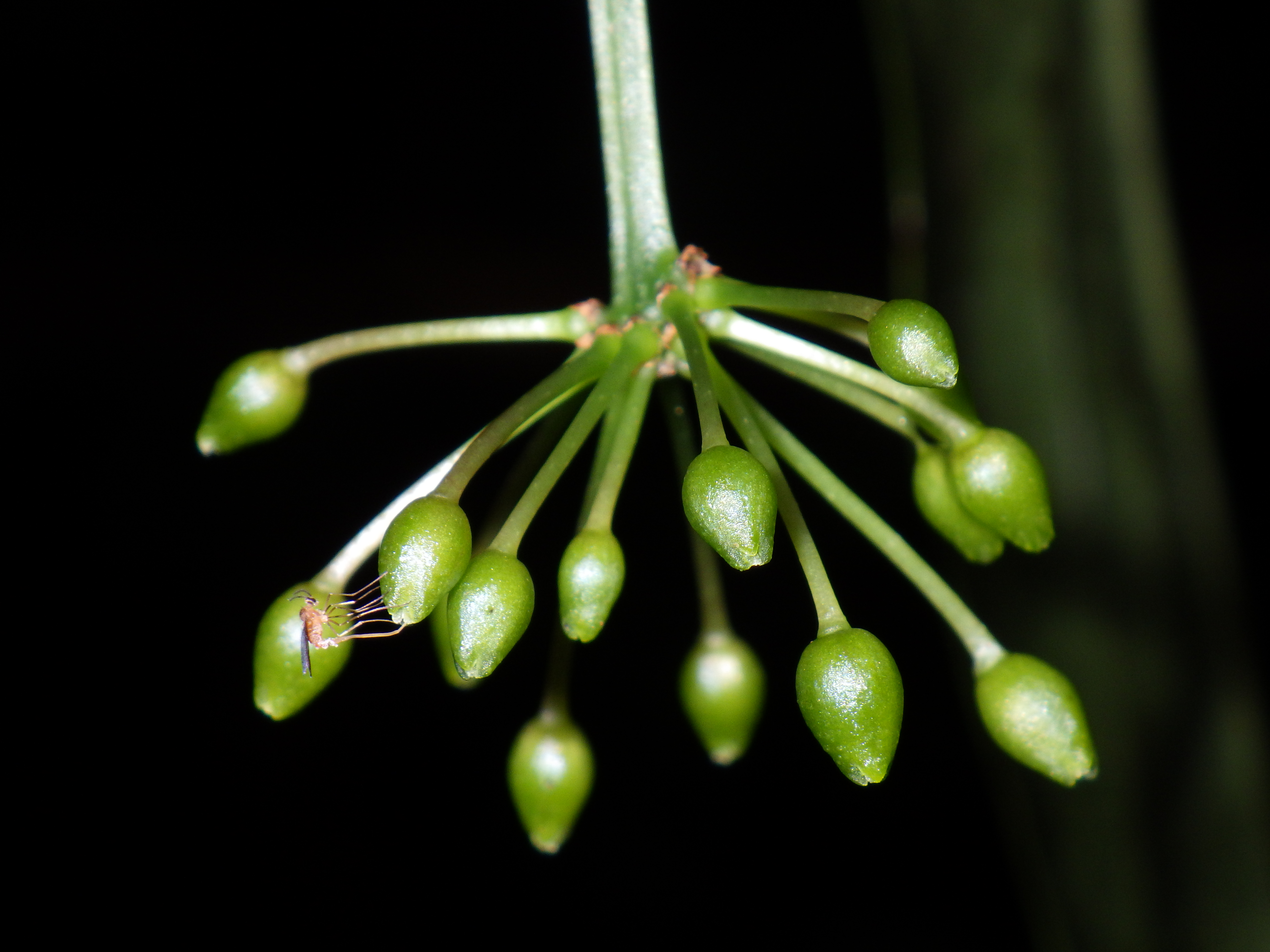
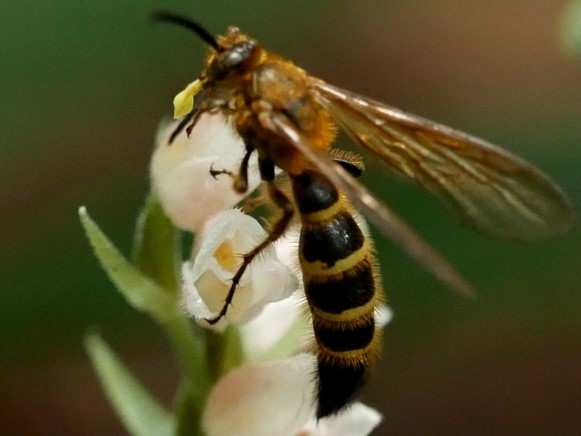
Females of the gall midge Dasineura heterosmilacicola are attracted to flowers of Smilax insularis by the scented chemical dihydroedulan I, which is emitted by both male and female (pictured) flowers. However, the insects lay eggs mostly into male flowers. © SUETSUGU Kenji (CC BY)
Crucially, the same chemical is emitted by both the male flowers and the female flowers, but at different times of the day. The male flowers containing the pollen open and emit the scent in the early morning, attracting the insects. And while the female insects stick their abdomens into the flowers to lay eggs, they collect the pollen. The female flowers open only a few hours later, in the late morning up until around noon. The insects, attracted by the same scent, again stick their abdomen into the flowers, depositing the pollen, but only rarely lay eggs.
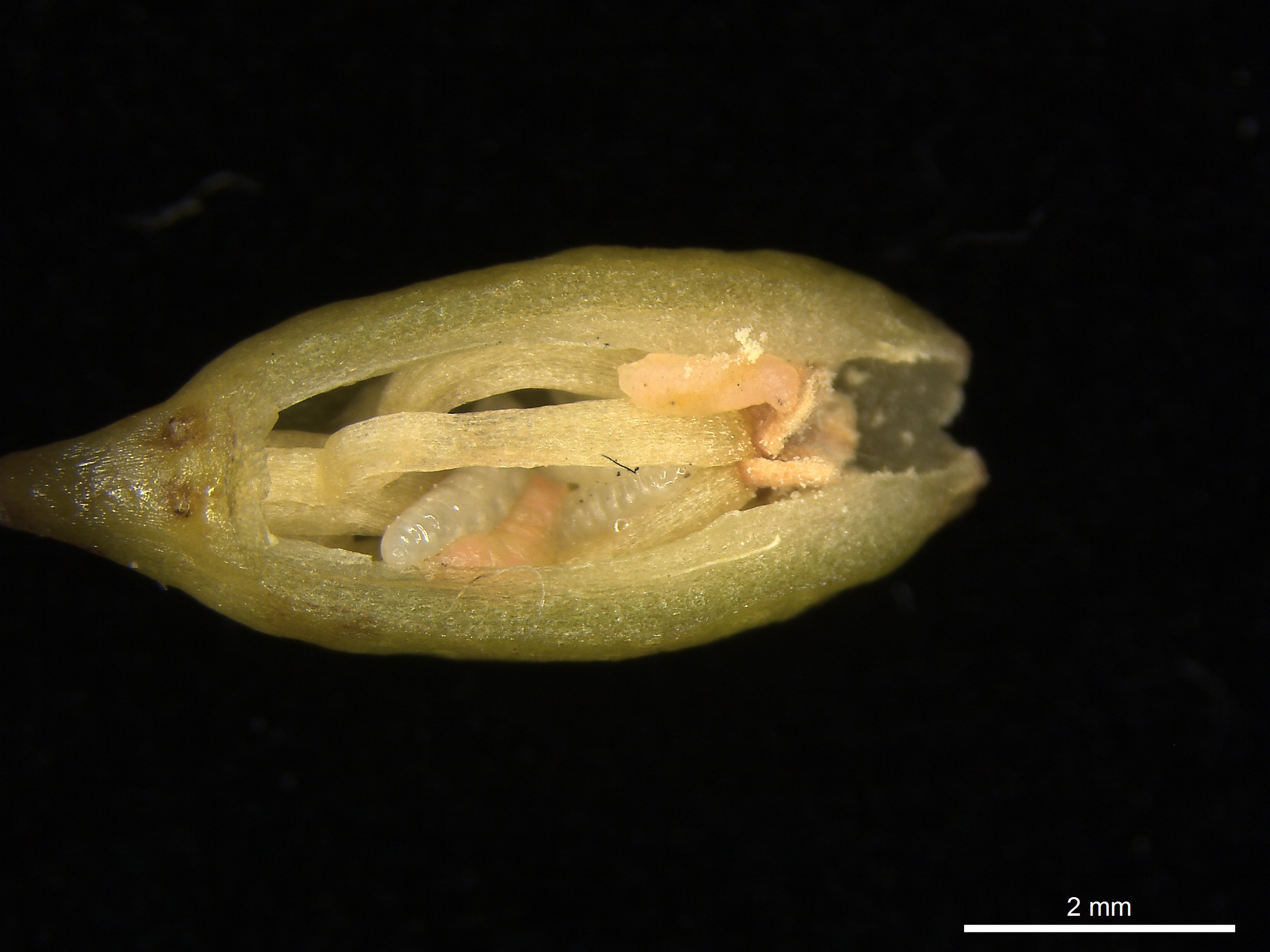
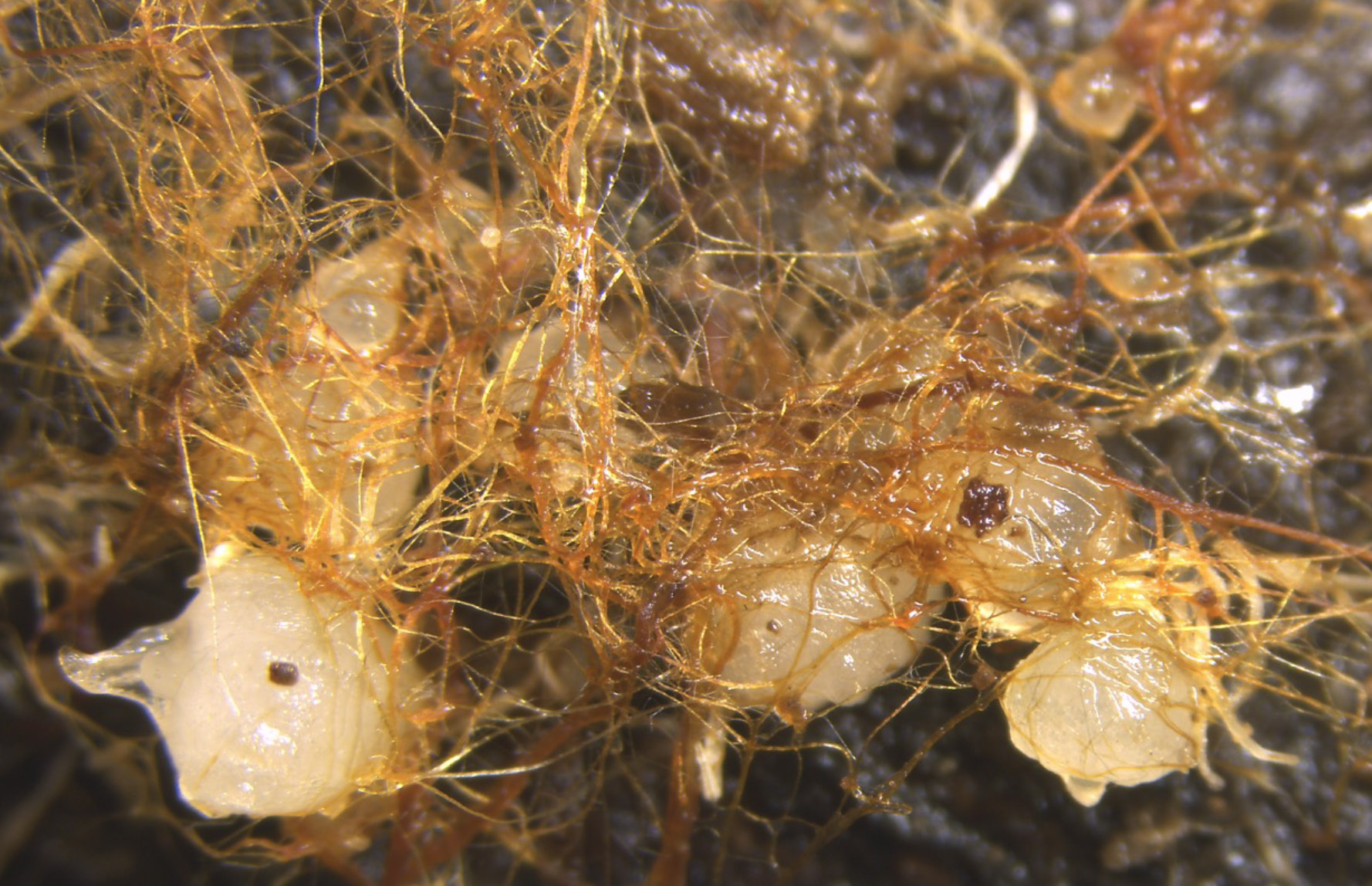
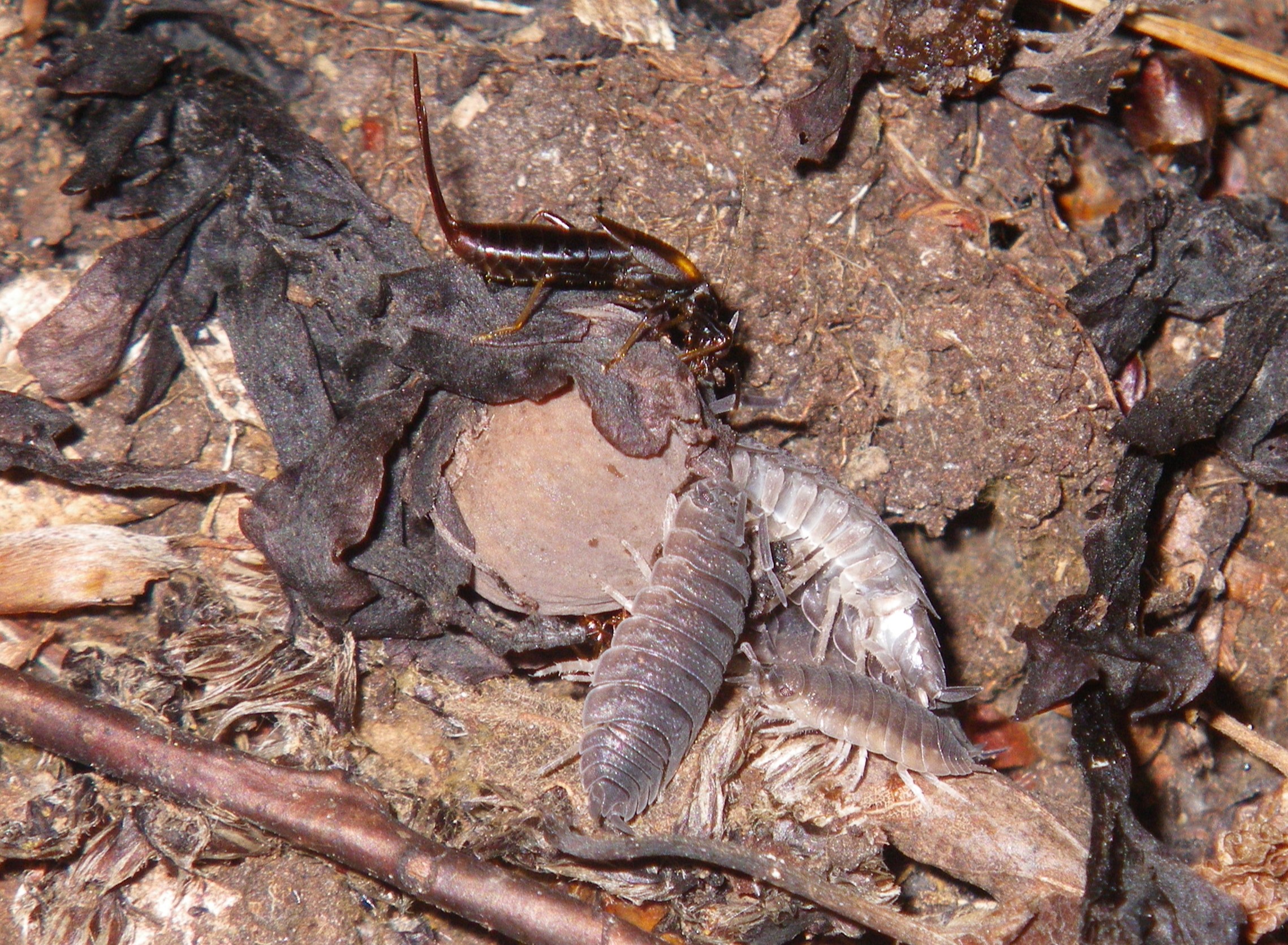
Larvae of the gall midge Dasineura heterosmilacicola develop in the male flowers of Smilax insularis, feeding on surplus pollen. Since the tissues of the male flowers are not needed further by the plant, its cost for providing a brood site to the insect is limited. © SUETSUGU Kenji (CC BY)
We don’t know exactly which cues cause the midges to avoid laying eggs in female flowers. Likewise, when larvae do occur in female flowers, they do not consume developing seeds, and the reason for this is also still unclear. What is clear, however, is that the scent common to male and female flowers and released at slightly different times promotes reliable pollen transfer and so keeps the female flower as part of the system. Suetsugu says: “I am really excited about this combination of chemical precision and ecological balance. One more thing I want to cover in future studies is how Smilax can produce a floral scent so strongly dominated by one compound, especially since this particular one may originally have functioned as an insect repellent. If we can thus connect ecology, behavior and biosynthesis, we will be much closer to understanding how plants evolve what is essentially a chemical language only the right partner can read.”
Acknowledgments
This research was funded by the Japan Society for the Promotion of Science (grants JP25H00944, JP24H01749) and the Japan Science and Technology Agency (grants JPMJPR21D6, JPMJPR21D3, JPMJFR2339). It was conducted in collaboration with researchers from Chiba University and the University of Tokyo.
Original publication
K. Suetsugu et al.: Single-compound floral signaling stabilizes cooperation in an obligate brood-site pollination mutualism. Current Biology (2026). DOI: https://doi.org/10.1016/j.cub.2026.03.002
Release on EurekAlert!
A secret code that patches a problematic relationship
Inquiries
For inquiries, please contact gnrl-intl-press[@]office.kobe-u.ac.jp