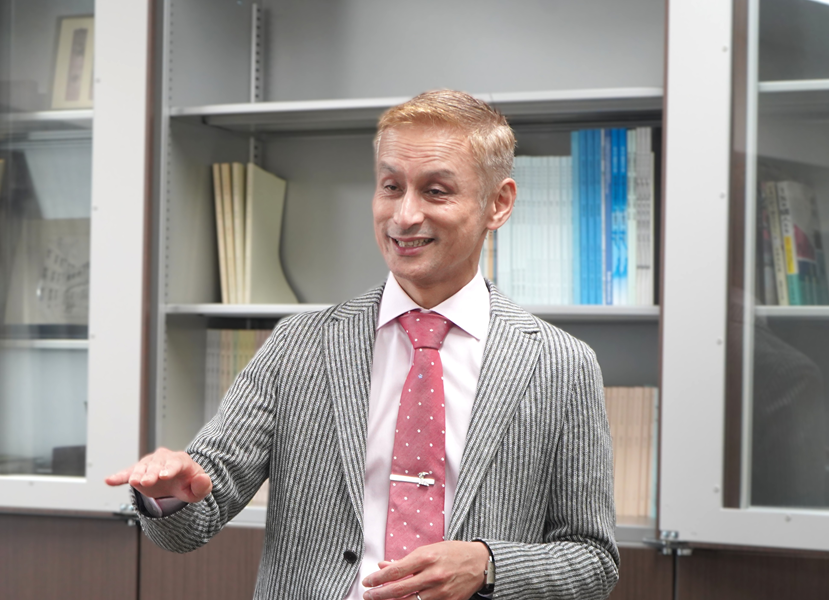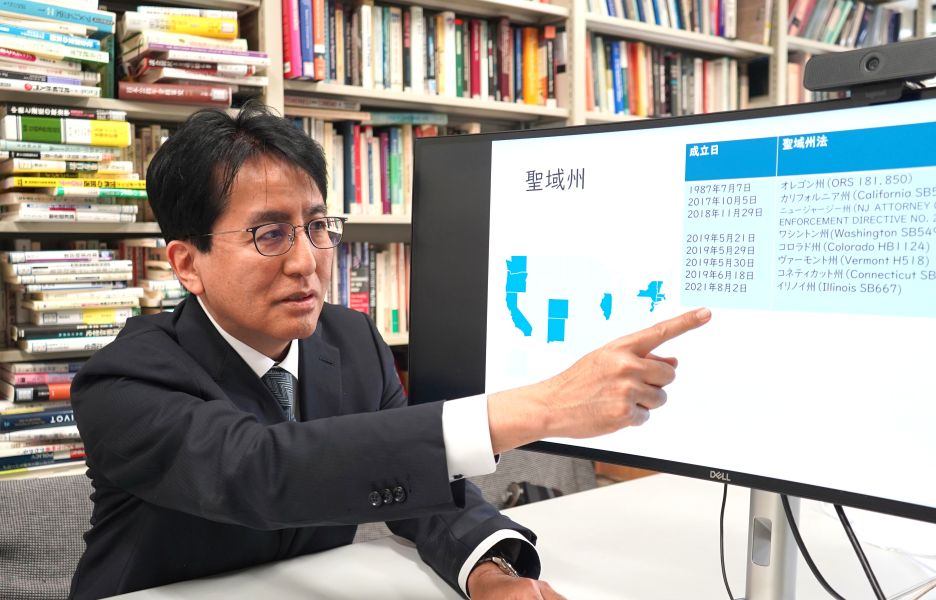


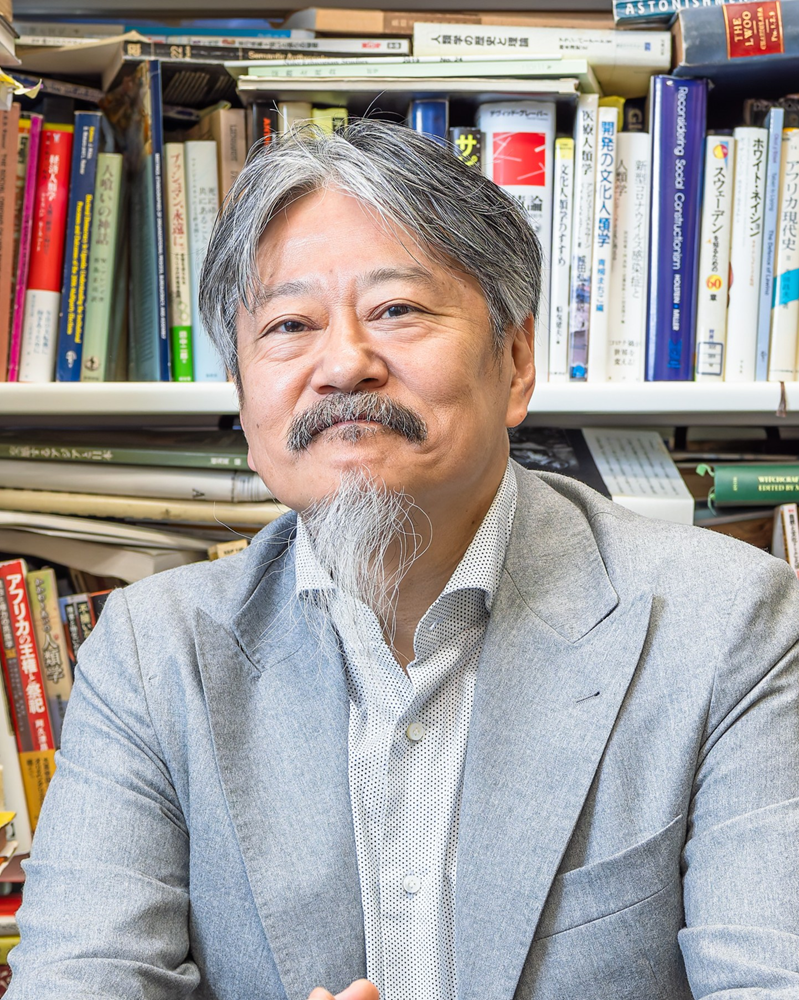
In the spring of 2025, the African Conviviality Center was established in Kobe University’s Graduate School of Intercultural Studies. Established to more consciously promote exchange between African researchers and students, this organization, which has incorporated Africa into its name, is a rarity in Japan. After nearly a full year of activity at the center, we sat down to talk with Professor UMEYA Kiyoshi, dean of the Graduate School of Intercultural Studies and a major promoter of the center’s creation, to talk about the role of the center, what can be expected from the university and Africa’s current situation and position in international society.
A research hub as a conviviality
What kind of organization is the African Conviviality Center? What kinds of activities go on there and what role does it fill?
Umeya:
Kobe University has some international students from Africa, but there still aren’t very many. My personal research target is the cultures and societies in sub-Saharan Africa, so I wanted to create a hub to support people from the region when they come to Kobe, be they researchers, graduate students or undergraduate students.
There are only about 10,000 Japanese language learners on the entire continent of Africa. Offering courses in English here might allow international students to learn, but there would still be some difficulties in their daily lives. Thus, those who earn degrees here tend to just return home. We need to provide even closer care for them while they’re living here, which includes Japanese language education.
Nationwide, the number of international students from Africa only comes to about 2,500, which is 1% of the total number of international students in Japan. There is a high level of trust for Japan and Japanese products, so I think, potentially, there are many students who would like to study in Japan. However, even though the yen is weak right now, there is still a good deal of economic disparity between Africa and Japan, which acts as a hurdle for African students trying to study abroad here.
As far as I know, of the 1,500 or so researchers at Kobe University, only 2 or 3 perform research on Africa, so I have to take deliberate action. As there’s a limit to how much researchers can achieve on their own, we established this center with the concept of providing backup for these researchers as an organization.
The term “conviviality” means “festivity.” This center is named after this concept, one used deliberately by Professor Francis B. Nyamnjoh of the University of Cape Town, a Cameroonian and a collaborator of mine as well as a visiting professor at Kobe University. Professor Nyamnjoh approved of the objective behind the establishment of the center and now also serves as an advisor there.
Festivities are when people come together and share the good things they’ve brought. There, you won’t find the kind of zero-sum game our modern society tends to fall into, where winner takes all through excessive competition and winners and losers are cleanly divided. This center was established under the concept of inviting the people of Africa to study abroad at Kobe University, where everyone can share intellectual resources that will build towards the future. What we’re trying to do isn’t so different from a support center for international students, but just as we have to emphasize how little information there is about Africa in Japan or else there won’t be any more, we are quite intentionally and specifically an organization that promotes the appeal of Africa.
Providing the center with continuity and a role as a hub
It’s been a full year since the center was established. What sort of tangible results have you seen?
Umeya:
This first year, as researchers have come and gone, we’ve concluded an academic collaboration agreement, with student exchange with Makerere University in Uganda set to begin from academic year 2026. We’re also on a similar course with the University of Cape Town. The South Africa-Japan University Forum will be held in Japan this year, so I expect that the African Conviviality Center will play a certain part in that as well.
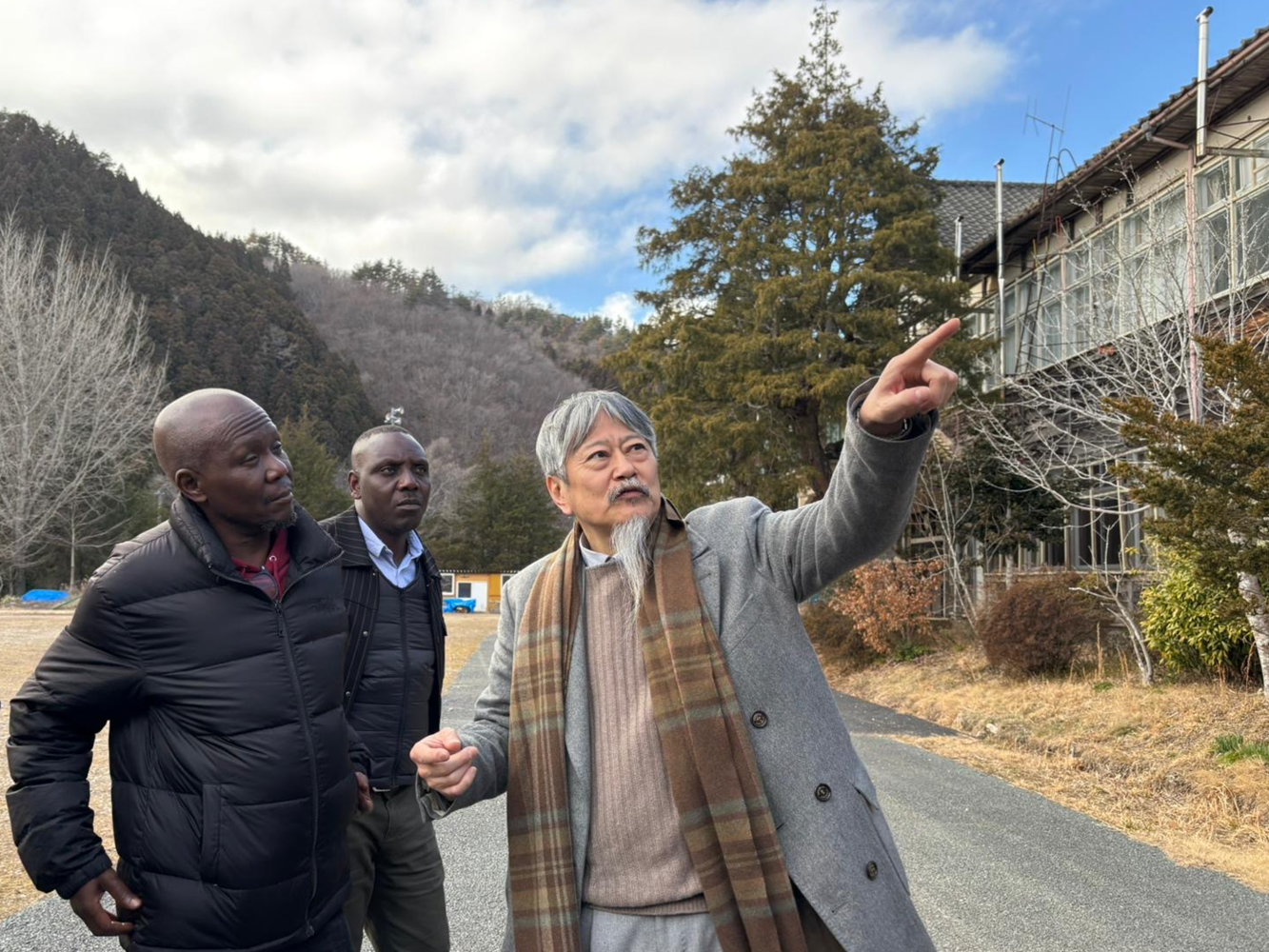
As far as universities in Japan go, Akita University is performing research on underground materials and has a deep relationship with Botswana, even having established an office there. Nagasaki University has had a research center in Kenya for many years for researching tropical diseases. Up until this point, there have been many cases where the relationship between individual researchers ties universities together, but what would be ideal is if we could go even beyond that level and collaborate at the organizational level. The establishment of our center is a big step towards achieving this.
What kind of development do you expect from the center moving forward?
Umeya:
First off, I’d like to get more Kobe University researchers performing research in Africa. Next, I’d like to think about how we can get the center to stabilize as an organization. Right now, we’re one of three organizations at the Research Institute for Promoting Intercultural Studies, but once we attain some level of achievement at the center, I think I’d like to upgrade to an independent organization. There are already international students from Africa at the Graduate School of Agricultural Science and others. The reasons we need the African Conviviality Center, among others, are the disproportionate lack of information in Japan and at the university, the underdeveloped support system and just not having companions; it’s a university-wide issue. I hope it will function as a hub for the entire university.
What is demanded of incomplete people
Why Africa, and why now? Also, what sorts of ideas does Nyamnjoh have, as an advisor for the center and a key individual regarding its research and activity?
Umeya:
Nyamnjoh himself is a dedicated teacher who is always surprising me. I carried out joint research with him for 10 years from 2015, and he built an environment for conviviality during that time with absolutely no self-interest. I learned a lot from him in terms of being someone that embodies their thought and beliefs.
Nyamnjoh sees the essence of the world in the incompleteness of all that exists within it. In this world, 'incomplete' humans have created an incomplete world by facing and drawing from incomplete things and supernatural forces. He says that people accept each other’s dissonance and negotiate to reach comprises all while resisting division and isolation to finally mutually share profits in an expression of conviviality.
Momentum built to promote exchange while cherishing this kind of indigenous knowledge in Africa and the philosophy that rests upon it and to learn more proactively from outstanding African researchers, all of which led to the establishment of the African Conviviality Center.
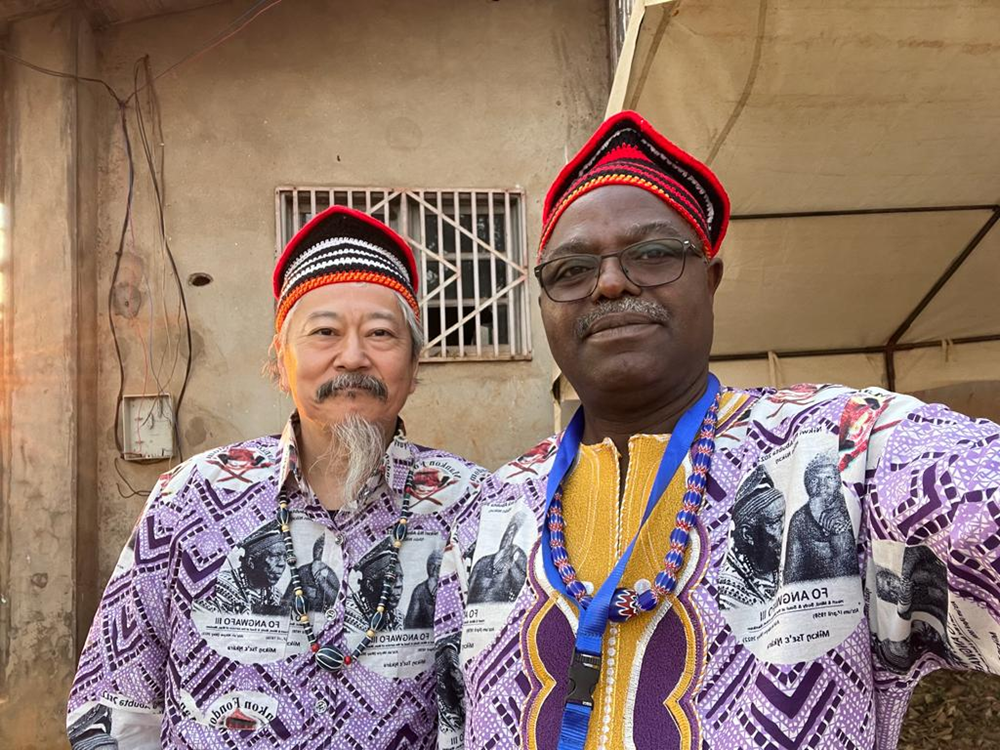
One result of this was being selected to the Japan Society for the Promotion of Science’s 2026 Core-to-Core Program. For three years starting from AY 2026, we will be carrying out research under the theme of “The future of African conviviality: Co-existence with AI and Nyamnjoh philosophy.” First, we’ll analyze the content of Nyamnjoh’s ideas and think about possible solutions to handling issues involving AI and the environment in the Anthropocene, an era in which human activity has left its geological mark on the world. His ideas have been indicated as having an affinity with Eastern philosophy, so we’re going to specifically verify their affinity as well as the differences between them. I’d also like to involve experts in modern literature, movies and art and explore their relationship with Nyamnjoh philosophy.
Leapfrogging, and the remarkable evolution of cities
What have you learned from Africa in your many years of research?
Umeya:
Japan has only ever had their eyes on the West. Even in newspapers, Africa is only ever covered when it’s the target of development aid or when there are ethnic conflicts or diseases; there’s a lot of negative coverage. What I think we should be learning from Africa, namely literature, philosophy and language, just aren’t things that most Japanese people think about, unfortunately. I think that people have forgotten that there are valuable things like human essence and morality in Africa, things that connect to the Eastern philosophy that we also have at our roots, and they aren’t trying to see it. To put it lightly, the current situation is such a waste, and to put it not so lightly, that way of thinking is flat out wrong. Africa is, in a sense, a region in which human essence is apparent, or rather, that essence is easily visualized.
I was in Uganda during the 9/11 terrorist attacks, so I was able to watch CNN, BBC and Al Jazeera simultaneously. Each of them had slightly different things to report, but after coming back to Japan, I got the impression that the Japanese media was only broadcasting information from the western perspective. In that sense, there was a good balance of information coming into Africa. There is a term called the “Third World,” and there was a time in which liberalists and communists fought over which side the newly independent Africa would align with, so I felt that Africa, which sided with neither of the two at the time, had a better view of the macroscopic power dynamics and international conflicts. I think that the situations in Ukraine and Iran look different from Africa, which historically receives aid from North Korea and China. Regardless of these individual examples, it’s true that the way Africa sees the global climate is different.
The nations of Africa are so far away from Japan. What sort of state are they in now? As someone whose research focus is Africa, how have they changed?
Umeya:
Thanks to development aid, capitals and other cities have changed, but the rural areas haven’t changed much since I began my research. However, in conjunction with that, urban residents have stopped teaching their children the native languages and instead are teaching them the English used during colonial times. I feel as though they’re beginning to lose that native language and culture. I think that, to some extent, this was naturally bound to happen, but I do think it’s unfortunate. Even now, in this very moment, there are many languages and cultures that are disappearing. In 2022, I published the English version of a book I authored in 2018, and, thankfully, it has been read by many people within Africa. At the moment, however, much of the feedback I’ve received has centered on that point, namely, the documenting of cultures and languages that are bound to disappear.
In terms of infrastructure, jumping over a phase of technology to proceed directly the following phase is called “leapfrogging.” In Africa, communications technology has leapt over normal phones, with smart phones now becoming widely used. There has also been some financial leapfrogging, with people jumping past bank accounts and going directly to mobile money. Only the elites had bank accounts in the first place, and without sufficient yearly income, it’s not even possible to hold one. In such a setting, mobile money has spread among the public much, much faster that we’ve seen in Japan. With wi-fi now available, even those living in rural areas without electricity use smart phones.
How should Japan get along with Africa moving forward?
Umeya:
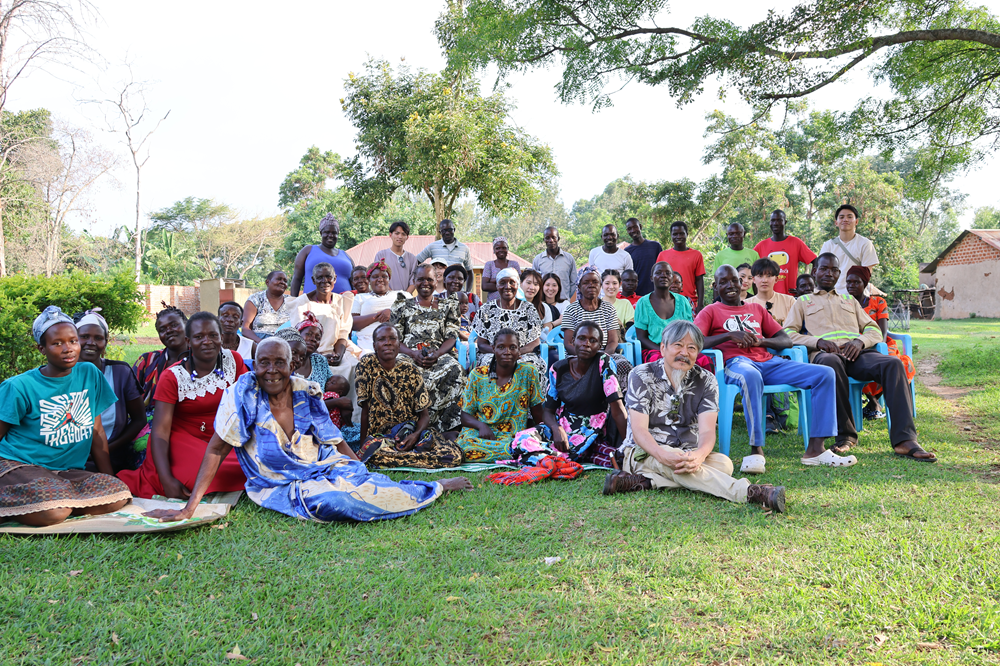
First off, I just want people to go to Africa. I want them to experience it. In Japan, there’s almost no information about Africa, so I want people to learn about it. Even if I were to teach them about Africa in classes at university, I can’t convince them with words alone, so I’ve just got to do what I can to increase the number of students going to Africa to learn for themselves. At Kobe University, 50 students have come into contact with the African continent, culture and society under my supervision. Students nowadays are even less biased when interacting with Africa than when I was a student. I also feel that this program is quite influential on participants’ outlook on life and how they think about their plans for the future. I want the African Conviviality Center to increase those opportunities and fill that role. By having researchers come from Africa and interact with our students, I hope to make it easier for students to study abroad in Africa.
Africa’s growing international presence
How do you feel about Africa’s global presence?
Umeya:
Globally, the only areas that are seeing their birth rates rise and populations grow are Africa and South Asia. Certain calculations state that in the near future, 25% of the entire population of the world will be African. In terms of population ratios, Africa will gradually become the majority. Within Africa, a bunch of highly populated countries have begun to emerge and make their presence felt. In the 2010s when bluefin tuna fishing became an international problem, Arab and African countries took the side of Japan. To put it bluntly, the fact that we can enjoy tuna sushi as a matter of course is partly thanks to Africa. I suspect very few people outside the fishing industry are aware of this. In global society, Africa’s presence may very well increase moving forward, but it will never decrease.
One more point is that we’re in an era in which our global society must begin to clear the negative debt legacy left during the colonial era. A characteristic of that is the decolonization of museums and universities. Many of the items collected from Africa and put on display at places like The British Museum and museums in France were, from the African point of view, stolen. It’s possible that even items which museums claim were acquired for a fair price could have very well had their prices set during discussions held at gunpoint. Now, African nations have begun their appeals to get those items returned. How will the issues involved with getting these items returned from museums get resolved? I consider it a serious problem for all of global society related to Africa. Returning these collected items to their original context and deciding how the next generation will make use of them is something that not only African nations, but all of us, need to consider.
In today’s global society, the methods employed by President Trump and President Putin are typical power politics. Rather than someone who’s never had their toes stepped on steer our global society, it’d be better to have someone, such as sensible individuals from Africa who have faced awful experiences in the past, use their experiences to lead the world. This may allow us to apply our dark history as something useful for the future of humankind.
I remember the wonderful speech given by the Kenyan representative to the United Nations when Putin invaded Ukraine. He said that Africa has had its borders redrawn, it’s been divided up and it’s been colonized, and through it all, what they’ve learned is that ruling through violence will never create a prosperous society. If Africa understands so well that payback isn’t productive and thus refrains from doing so, why do major nations continue that cycle? That’s what I think he was expressing through that speech. I don’t see a very bright future for a global society driven by leaders who want to rule by force. I want people whose words carry weight to become leaders, like the representative from Kenya. There’s still so much to learn from Nyamnjoh philosophy and from Africa as a whole.
Resume
In March 1993, graduated from the Faculty of Letters, Keio University. In March 1995, completed the master’s program at the Graduate School of Human Relations, Keio University. In March 2002, withdrew with completed credits from the doctoral program at the Graduate School of Social Sciences, Hitotsubashi University. Received his doctorate in sociology. In October 2005, became associate professor at Tohoku Gakuin University, and joined Kobe University as an associate professor in 2009. in April 2016, became professor and in April 2024, became dean at the Graduate School of International Studies.