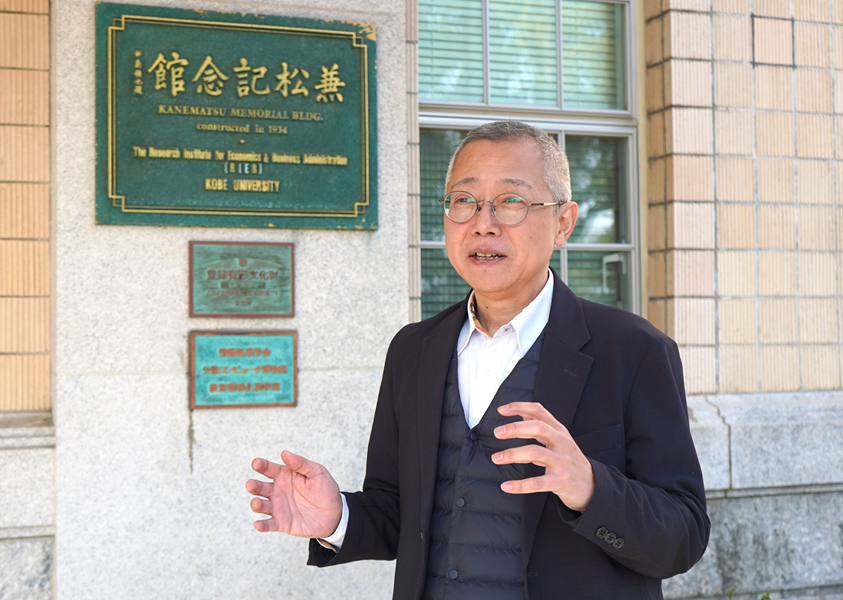


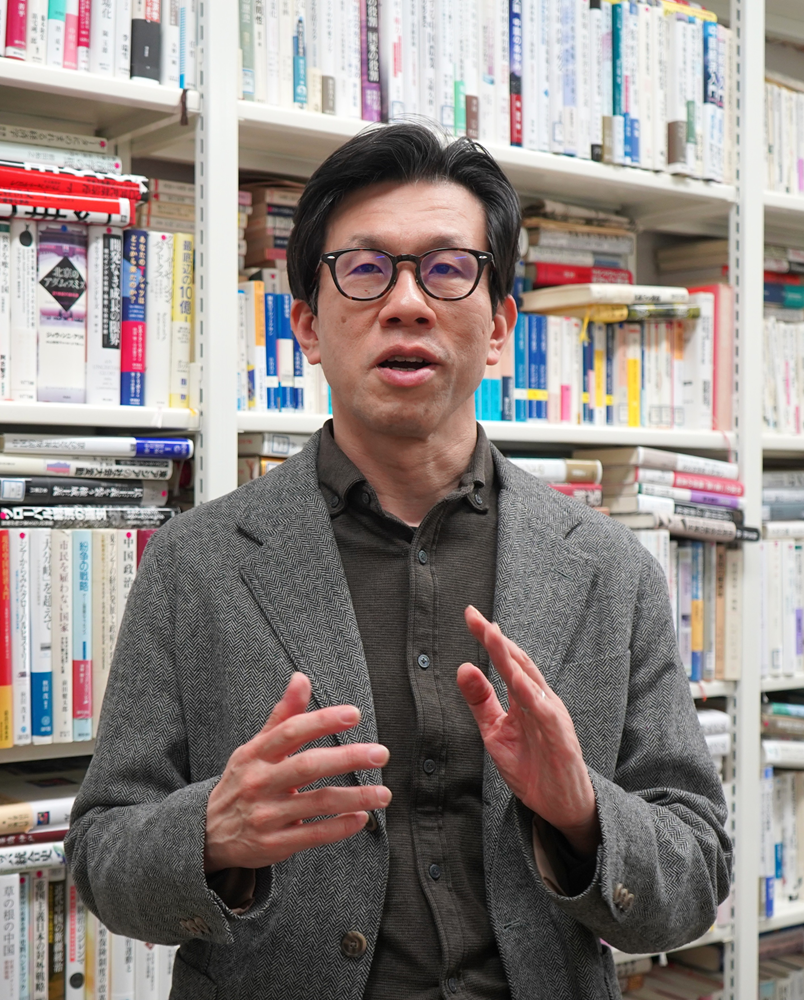
It’s impossible to talk about global economics without considering the existence of China. Since the 1990s, China has experienced rapid growth as the “workshop of the world,” now boasting the 2nd largest global economy. However, that growth has slowed, and the country now faces serious issues such as a bursting real estate bubble and a long-standing trade war with the United States. We spoke with Professor KAJITANI Kai, an expert in modern Chinese economics at the Graduate School of Economics and co-author of last year’s book entitled China Peaking Out, on the present and future of China’s economy.
The Chinese real estate recession is different than Japan’s bubble burst
First of all, how do you see the current state of the Chinese economy?
Kajitani:
For about 20 years since the early 1990s, the value of real estate had continued to rise in China. However, following the COVID-19 pandemic, this value has begun to decrease, which has brought with all kinds of aftereffects.
Many people bought condominiums under the assumption that real estate value would continue to rise, buying things like cars and making plans for their futures. However, with the fall of real estate value came big changes in people’s life plans, and now they’re becoming more inclined to refrain from making such purchases. Initially, this was seen as a problem that was limited to regional cities, but the past two years or so have seen a decrease in real estate value in major cities as well.
In order to analyze the present situation, we need to think about why real estate value had continued to increase. A big reason for this increase was that buying real estate was thought of as a type of security for one’s later years. Insecurities about the pension system and continued employment led more and more people to think that if they buy real estate, they can sell it back later if they need to, and as values continued to rise, more and more people rushed to buy. There were plenty of people buying two or even three condominiums.
However, despite expectations, there was no evidence that these prices would continue to rise. The real estate recession was set off by a blow to the economy caused by the COVID-19 pandemic, but afterwards, regulations by the government placed on the real estate industry as well as monetary restrictions had even more serious effects. As real estate firms continued development despite the lack of abundant funding in the first place, management came to a halt, and the entire real estate market froze.
Is that a similar situation to the bursting of Japan’s bubble economy?
Kajitani:
Japan’s bubble economy was largely affected by the investment activity of corporations. Investments and commercial development by corporations drove land prices up, and stocks rose with it. On the other hand, Chinese land is primarily owned by the government, so the bubble mostly affected the condominiums themselves, and since consumers were purchasing them as an investment for their later years, this made the situation different than the bubble in Japan.
The changes happening in China aren’t as dramatic as the bursting of the Japanese bubble. While consumption has frozen due to the real estate recession, production capacity in the manufacturing industry is alive and well. The effects aren’t even really widespread outside of the real estate industry. That said, it’s become difficult to sell things domestically due to unbalanced supply and demand, which means corporations have to look to overseas markets as a means of survival.
There is also still some financial strength among the wealthy in urban areas. That money, which is no longer being used to invest in domestic real estate, is now flowing into overseas investments.
China as a world leader in the electric vehicle market
What are Chinese corporations doing now specifically?
Kajitani:
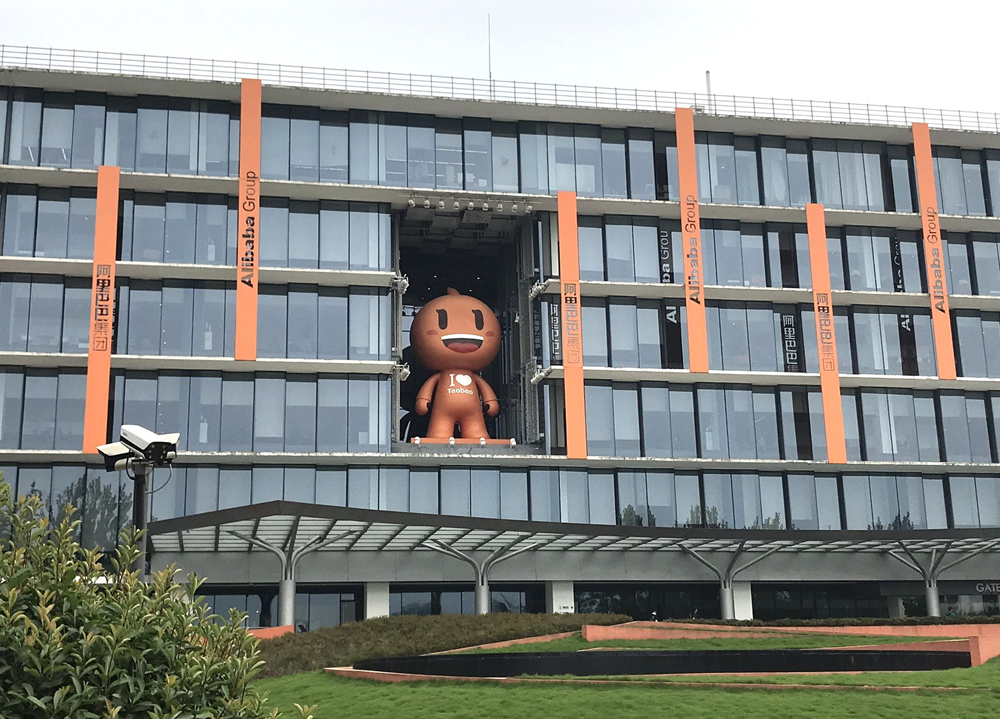
Exports like electric vehicles (EVs), solar panels and lithium batteries are all strong. While sales for BYD, the world’s largest EV manufacturer, aren’t great in Japan, its sales numbers are growing in Southeast Asia, where Japanese cars had previously boasted an overwhelming market share.
Xiaomi, known for its smartphones and smart appliances, has now also begun selling EVs within China. Chinese companies like Xiaomi are quick to make the decision to jump into new areas and, if things don’t work out, are just as quick to pull out. Since not only battery performance but also expertise in fields such as electronics play a major role in EVs, a manufacturer like Xiaomi finds it relatively easy to enter this market. Another characteristic of China is their highly skilled technicians and their energy to take the ideas of those technicians and turn them into businesses.
Japanese companies also require a shift in strategy.
Kajitani:
Previously, many Japanese companies moved into China looking for cheap labor, but from the 2000s, they faced competition from Chinese companies and are now on a remarkable downturn, particularly appliance manufacturers. Now that wages for Chinese workers have gone up, Japanese companies are looking to move their manufacturing hubs to other regions of Asia. This shift is also in consideration of risks involving economic security.
That said, this doesn’t mean that these companies have completely departed from China. The biggest reason for this is that the Chinese market is enormous. Another reason is that the Chinese market is on the forefront of many different fields. In particular, in the EV market, if you can’t make it in China, you won’t make it anywhere else. If you pull out of China, you risk losing access to the cutting-edge information and networking. Even Toyota is partnering with BYD to enhance their competitiveness in China.
Many Japanese companies have long been active in China and have thus accumulated a certain level of know-how. Even if head offices in Japan find business in China risky, I often hear from the workers on-site that “it’s easy to do business” and “the science engineers here are great, so discussions go smoothly.” It’s not always obvious, but there are plenty of companies that are putting up high performance numbers in niche areas.
The biggest issue between the US and China isn’t high tariffs, it’s the struggle for technological dominance
How do you feel about China’s relationship with the US in what is being called the “China-United States trade war”?
Kajitani:
A big issue is the struggle for technological dominance, particularly involving semiconductors. Both countries have a strong sense that they can’t afford to fall behind in areas like the AI development race. Those well-versed on the topic say that one of the objectives of America’s attack on Venezuela was to deal a blow to China’s energy security, and China is certainly not in a position to overlook that.
Another issue is the Trump administration’s policies involving high tariffs; however, China isn’t the only one being targeted. America has placed tariffs on many different countries, including its allies, and there have even been illegal judgements made in the US Supreme Court, so I don’t think this is a huge cause for concern at the moment. China’s even got a bargaining chip with the US in the form of rare earth.
The Xi Jinping administration has strengthened its influence on developing nations through the Belt and Road Initiative, but it’s also been pointed out that the countries that receive assistance incur large amounts of debt. What is the current state of the initiative?
Kajitani:
Started around 2013, the Belt and Road Initiative was in response to the relatively low demand compared to high production capacity, a chronic issue within China. Since there aren’t enough investment destinations within China, the country has expanded its development assistance to emerging countries in Africa, the Middle East and Central Asia. Then, China anticipated that once it imports the resources developed in these countries, they’ll become wealthy and buy products made in China. These investments in emerging countries are positioned as new growth engine.
However, on top of some sloppy planning like inefficient development projects, this initiative was criticized for the debt incurred by the developing countries, so development cooled down from around 2018. Then the COVID-19 pandemic began, which put China in a situation in which they were forced to waive those debts, with new investors all but disappearing.
On the other hand, rather than the government, lately there has been a shift toward companies making investments directly, such as through constructing factories. Xi Jinping has adopted the “High-quality Belt and Road Initiative,” a shift which has seen changes in the nature of investments, such as active investments related to global warming countermeasures.
The challenge of constructing a safety net for social security
I understand that issues within China include low birth rates, an aging population and inequality. What is the current situation regarding these, and what is the government doing to respond?
Kajitani:
Low birthrates and an aging population are big issues, without a doubt. The government is also aware of issues such as declining growth rates and a growing financial burden. In the past, China had an interest in Japan’s countermeasures for declining birthrates and aging population, particularly in its nursing care insurance system and nursing homes. This is because in China, traditionally, there is a strong sentiment that families should be the ones to take care of their elderly, resulting in a lack of experience in managing facilities like nursing homes. Lately, exchange between Japan and China has become difficult, so efforts to learn from Japanese initiatives have faded, but there has been an increase in nursing homes for the wealthy.
Welfare policies for seniors in Japan begin with providing public pension, and recently, these measures have even called for them to take care of the rest by themselves through personal asset management such as a Nippon Individual Savings Account, commonly known as NISA. On the other hand, it’s clear that in China, they’ve called for citizens to make use of private services from the get-go. While there is a public pension system, only white-collar workers living in cities can get enough from that system to live off. The Chinese government has come up with measures to make it mandatory for young gig workers in cities to enter the pension system, but a drop in take-home pay has stifled these measures.
As far as resolving inequality, under the slogan of “mutual wealth,” the overly profitable IT sector is being made to cough up some of their profits to quell public dissatisfaction, though this hasn’t led to any quality of life improvements for low income households. The social security system for residents of rural areas and migrant non-regular workers is also insufficient, so the challenge moving forward is figuring out how to construct a system to serve as a safety net.
What are some challenges involved with your research, and what kind of research would you like to conduct in the future?
Kajitani:
The amount of data released by the Chinese government has decreased under the Xi Jinping administration, so even purchasing financial data from corporations has become difficult. It’s not uncommon for China’s macroeconomic statistics to have calculation methods or definitions changed midway through or have values edited after they’ve been published. That doesn’t mean, however, that none of this data can be trusted, so it’s important for us to look at and consider the data very carefully. Recently, research facilities in China have begun publishing more microdata such as household surveys, so there are things we can analyze from that data as well.
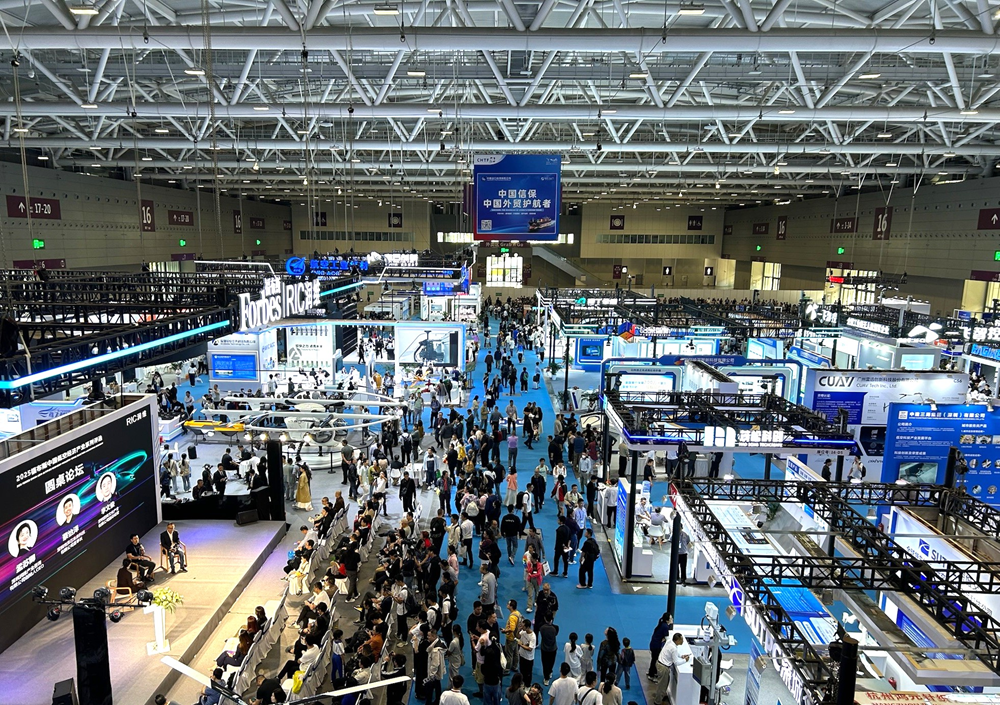
Interview surveys within China have been getting more difficult by the year; surveys in rural areas have become basically impossible. However, I try to get as much of a grasp on the situation in China as possible by participating in exhibits showcasing the latest technology, talking with corporate representatives and, when possible, visiting their offices.
Currently, along with analyzing the current state of the Chinese economy, I’m also conducting research on how that connects with its history. I’m examining China’s social systems, land ownership structure and the relationship between the government and private corporations all the way back to the Ming and Qing dynasties. This should allow us to get a clearer picture of the origin and background of China’s current systems.
Resume
In 1994, graduated from the Faculty of Economics and in 1996, completed the master’s program at the Graduate School of Economics, Kobe University. From 1996-1998, studied abroad at Renmin University of China. In 2001, received his doctorate in economics from Kobe University. After serving as associate professor at the Faculty of Economics, Kobe Gakuin University, in 2010, became associate professor and in 2014, became professor at the Graduate School of Economics, Kobe University. His literary works include The Fiscal and Financial System in Modern China: The Economics of Globalization and Central-Local Relations (winner of the 29th Masayoshi Ohira Memorial Prize), Japan and Chinese Economy, Lecture on Chinese Economy, and China, the Happy Surveillance State (as co-author).