


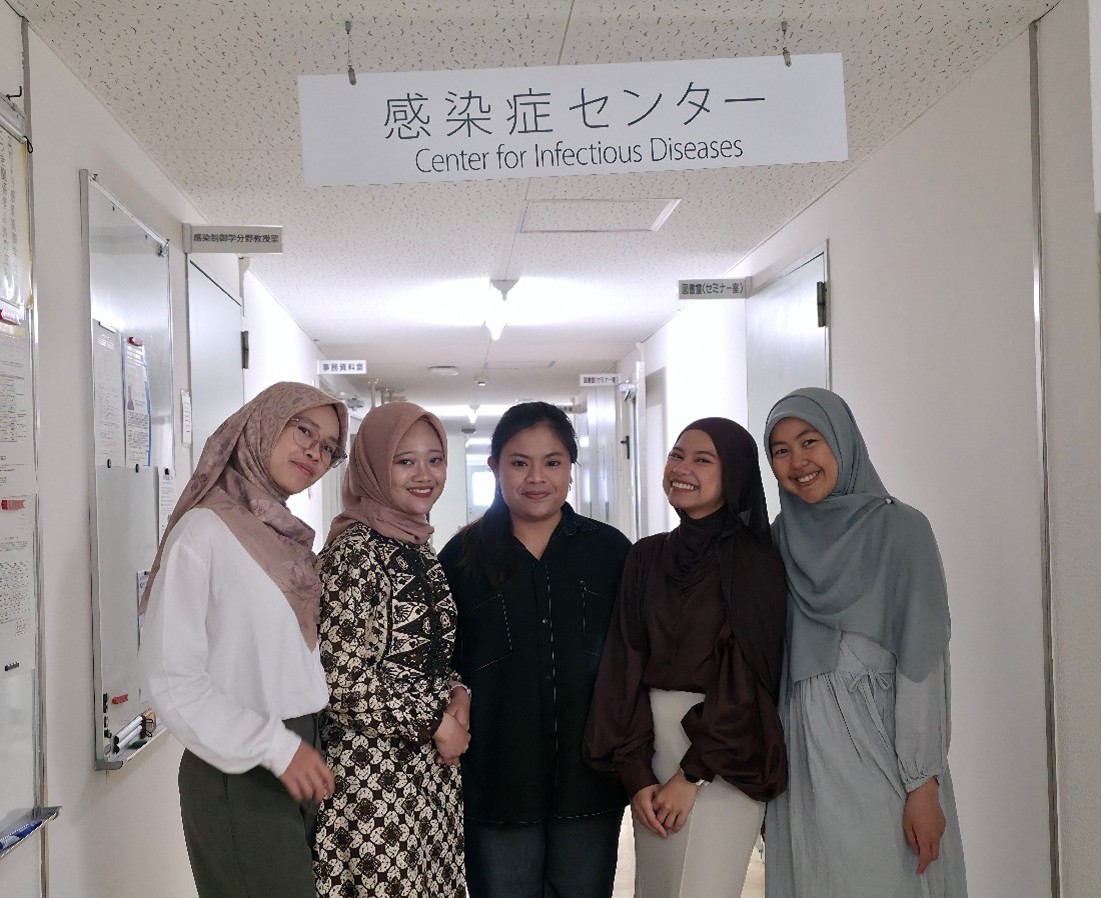
From left: Delis, Fransisca, Aulia, Hifdza and Safira
Moving abroad to study is a big step. What brings students to Japan, what are their lives like and what are their plans for their futures? In a short series of articles, five MEXT scholars from Indonesia whose journeys brought them together at the Center for Infectious Diseases at the Graduate School of Medicine talk about their experiences studying abroad at Kobe University. First up, let’s hear about their thoughts about what made them come here.
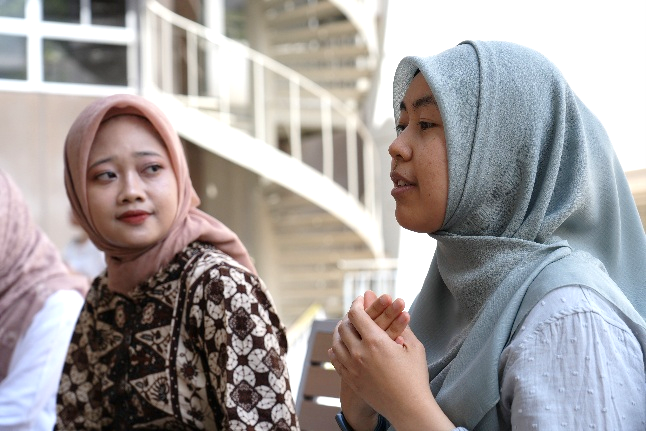
Not the least among the reasons was Japan’s academic prestige, especially in the field of medicine. Hifdza, a virology researcher, told us, “I heard that Kansai is the best place for drug discovery in Japan, mainly Kobe.”

Veterinary researcher Safira said, "After receiving my bachelor's degree, I began working at the Institute of Tropical Disease at Airlangga University, which has a collaborative research center with Kobe University called the Cooperative Research Center for Emerging and Reemerging Infectious Diseases (CRC-ERID). I was really influenced and highly motivated with the Japanese environment and research culture, so that was my starting point."
However, the choice to come to Japan isn’t always just about academics. Just like many past, present and future international students to Japan, popular culture also played a role in their choice. “I was interested in Japan because of my childhood memories about cartoons, manga and food, so that’s why I loved it and decided to go to school here,” said Aulia, who specializes in neuro-oncology. “Everyone says Japan is the dream country to visit,” added Delis, who worked as a pharmacist while in Indonesia.

Japan wasn’t always the goal for everyone, though. Delis was met with a chance opportunity from a professor of her friend. “To be honest, at first, I didn’t have any plans to come to Japan. But after I received my master's degree at my university, my friend just walked up to me and said, ‘Do you want to come to Japan to continue your research?’ I hadn’t planned for it, but I said, ‘Okay, let’s try it.’” Kobe University seems to have made a great first impression, as she told us, “Now I see that Kobe University is really welcoming to international students and very comfortable. I think the region is unique because it has traditional and modern culture at the same time.”
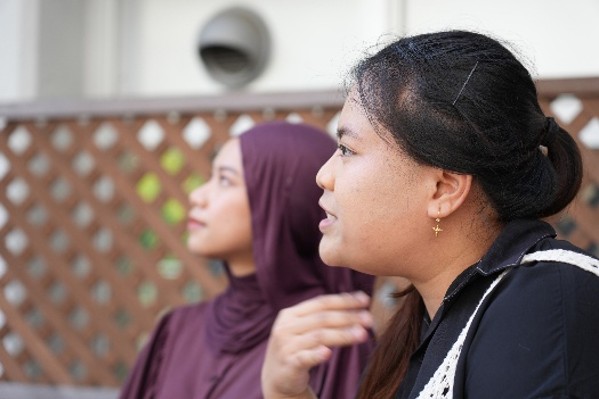
In fact, despite their different backgrounds and areas of expertise, a common thread among these students’ paths to Japan was recommendations from those around them, often their peers and professors. Aulia said: “My senior graduated from Kobe University and became a professor at my university. The research that they do at the university is impactful for my university and my homeland, so I’m motivated to be just like them.” Fransisca, a biologist, was in a similar situation, saying: “A professor from Airlangga University recommended to me to come here and learn new things about viruses.”
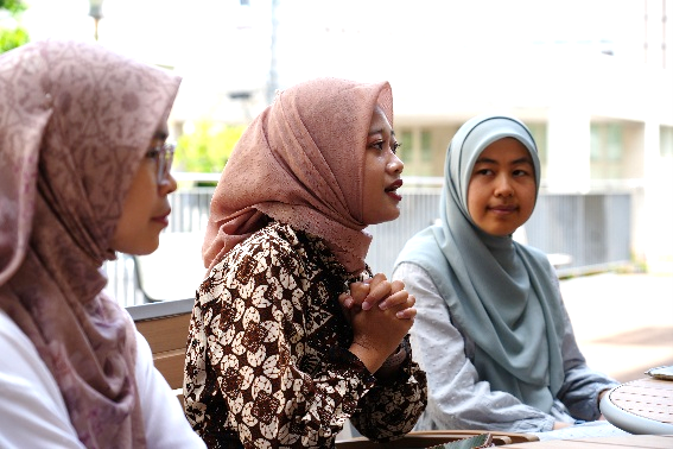
“Today, I am also wearing a traditional batik with the Kawung motif, symbolizing purity, sincerity, wisdom, and self-control in Javanese philosophy, which I feel is closely connected to my journey and my decision to study at Kobe University,” Aulia added. “Moving to another country to pursue research and academic life has taught me the importance of humility, discipline, patience and continuous self-improvement while reminding me to stay grounded and adaptable while continuing to follow the natural flow of life and learning.”
Now that they’ve made the jump from Indonesia to continue their studies in Japan, how is life treating them? In the second of this three-part series, we’ll hear more about what it’s really like to live in Japan as an international student.