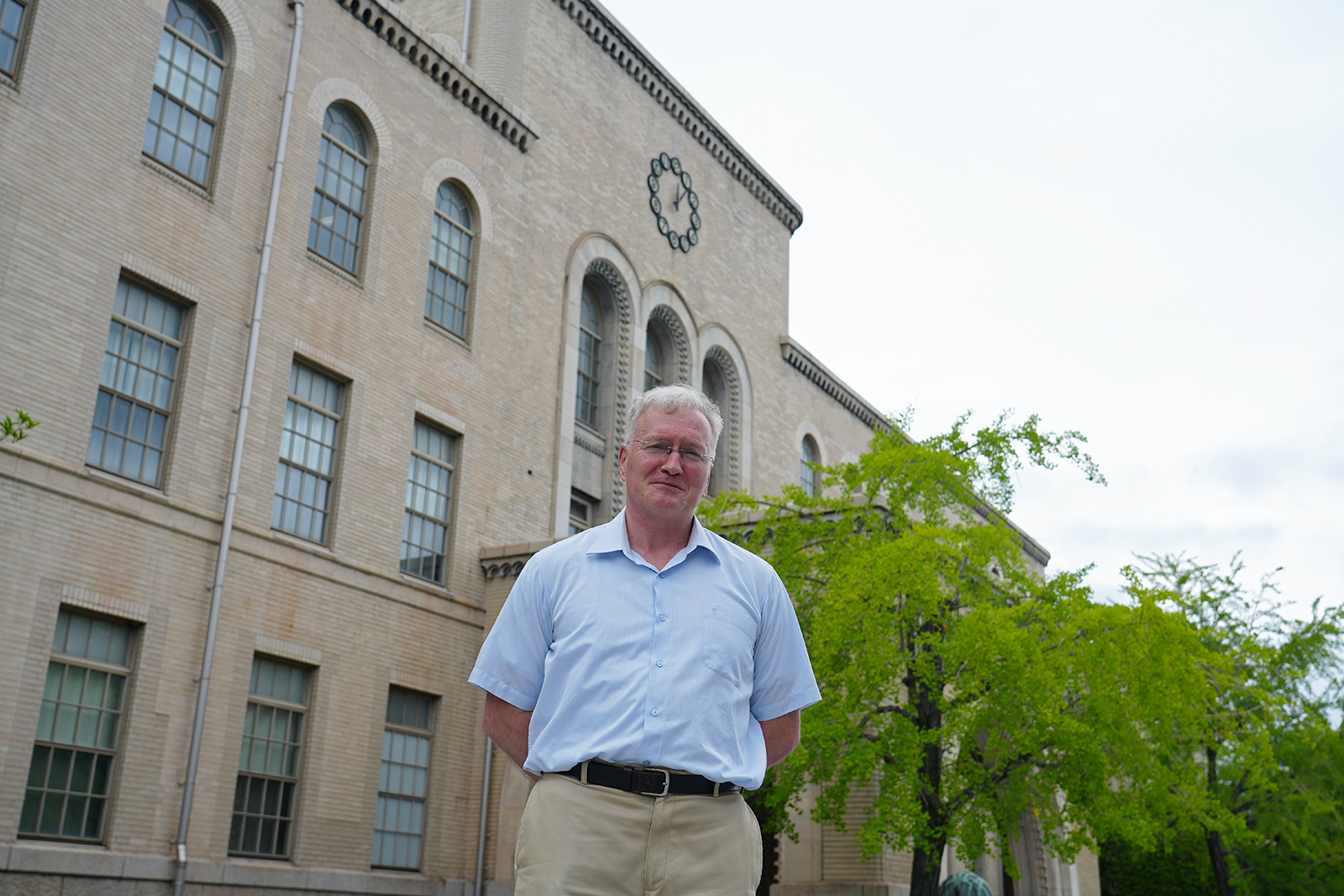
Sometimes, all it takes is a brief moment to alter the course of one’s life. Such is the story of Ralf Bebenroth, professor at Kobe University’s Research Institute for Economics and Business Administration (RIEB), who, through some fortunate encounters and a whole lot of perseverance, has built a research career at the university that spans over two decades. He sat down with us to talk about his life and career, including the fateful episodes that shaped it.
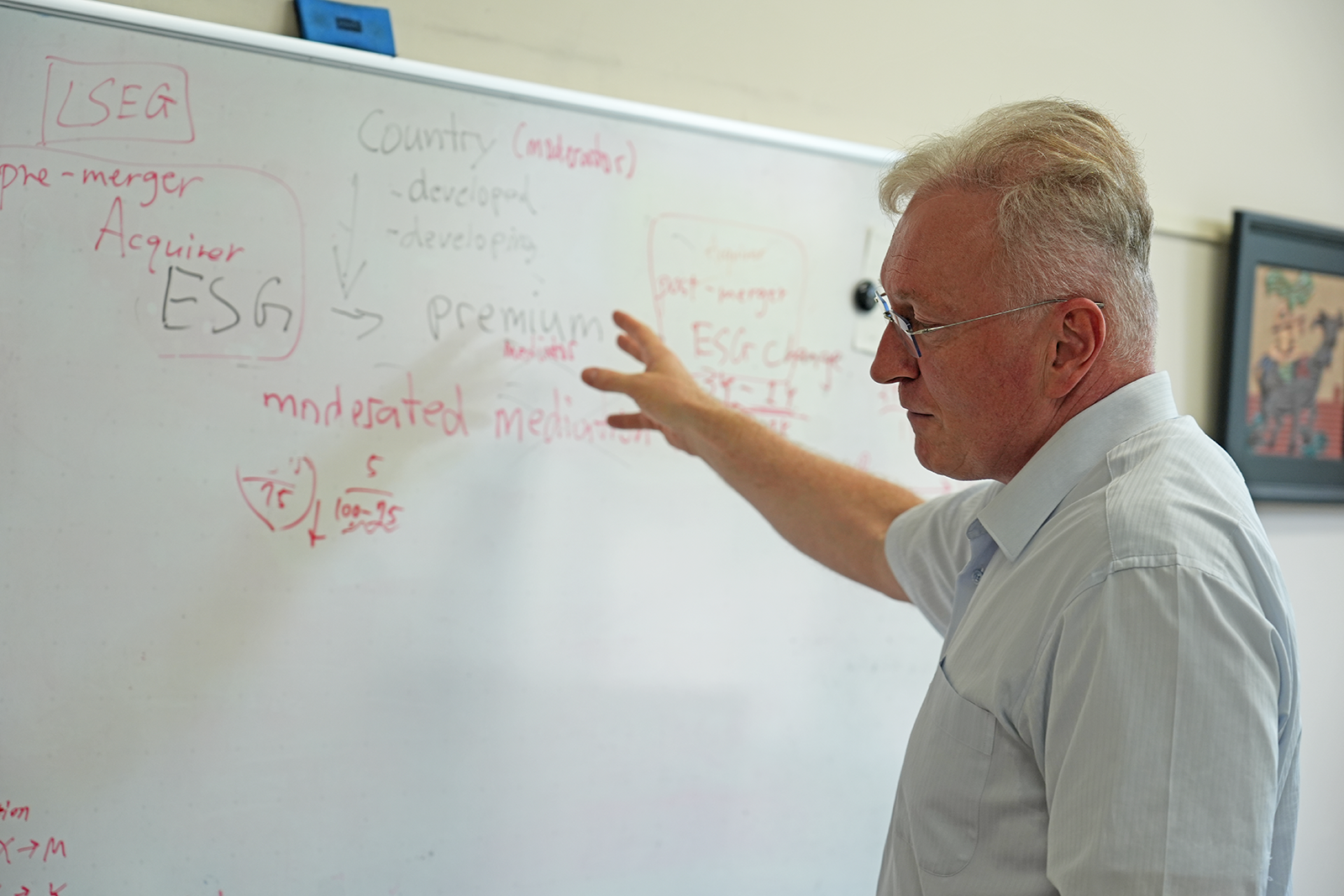
Before coming to Japan, Bebenroth was just about to get started as a locksmith in his hometown of Kassel, Germany, after successfully completing a three-year vocational program. However, something compelled him to look for something more. “I became increasingly motivated to engage in analytical and theoretical work, leading me to transition from a predominantly manual profession to an academic environment,” he told us. This, along with the bubbling Japanese economy and his interest in martial arts stemming from his background in wrestling, led him to turn his gaze to Japan, where he participated in a four-week study abroad program for his doctoral research in 1998. The trip, which featured sunny weather and even sunnier personalities, left a huge impression on Bebenroth, and he aspired to build his life and career there.
“The conversation couldn’t have lasted more than 30 seconds.”
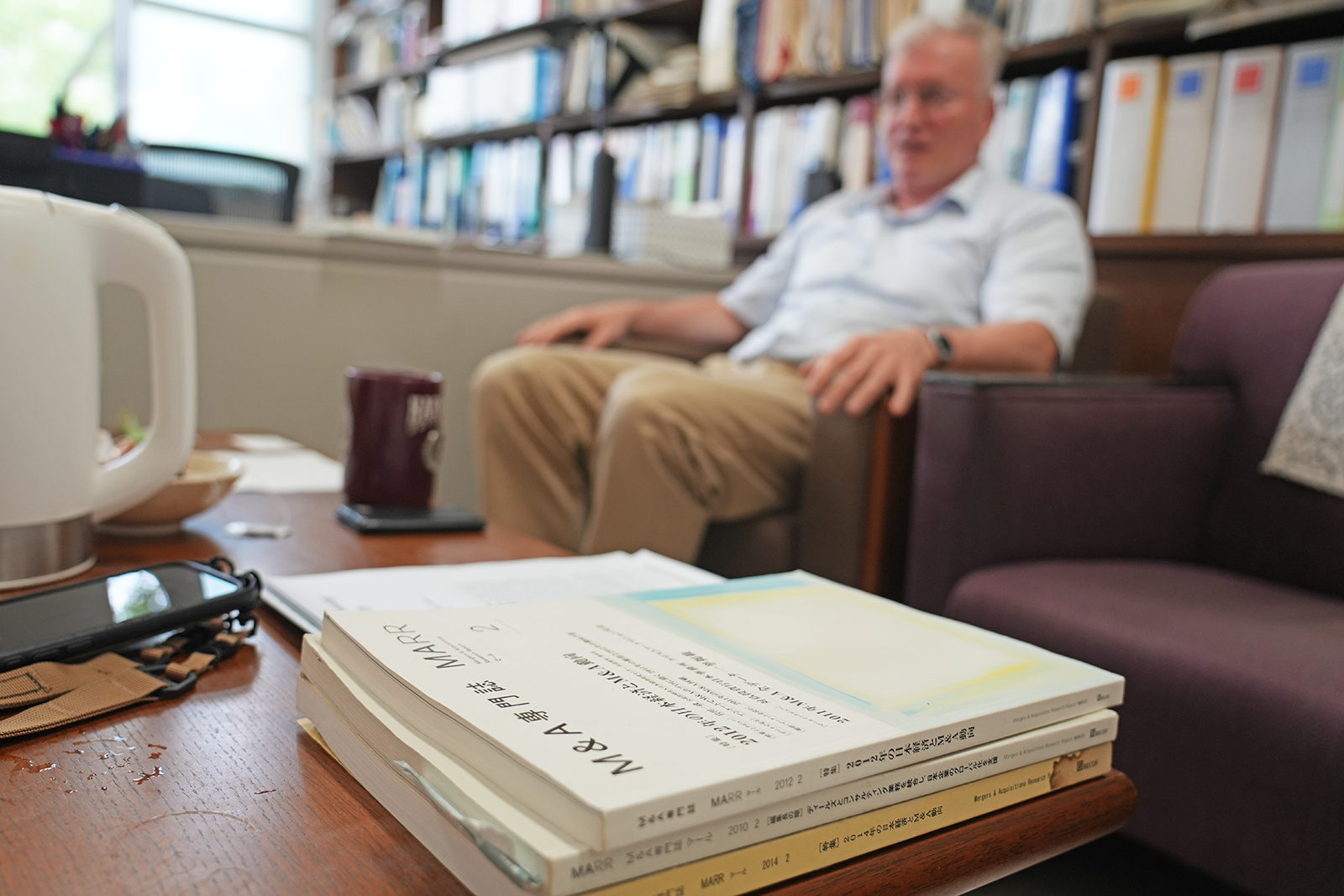
After successfully defending his PhD thesis in 2001, Bebenroth held positions briefly at Tokyo Institute of Technology and Osaka University of Economics, when one day, he shared an elevator with a certain professor at the university where he was conducting his research. As it turns out, that professor was the wife of the director of Kobe University’s RIEB, and as luck would have it, that very same director was looking for a scholar who could teach subjects related to Europe and international business. “The conversation couldn’t have lasted more than 30 seconds,” Bebenroth told us. But that was just long enough to leave an impression, as later, he was invited for an interview and subsequently appointed to a position at the institute.
During his first four years at Kobe University, Bebenroth continued to improve his Japanese language proficiency through teaching and daily interaction with students and colleagues, all the while securing competitive JSPS Kakenhi research grants (Kaken-C). “These enabled me to further develop my research agenda and establish a stronger academic profile within Japan,” he explained.
These successes also garnered recommendations from his colleagues to consider a long-term career at Kobe University, culminating in his appointment as tenured professor at the institute in 2009.
“Their encouragement showed me that not only was this feasible, but it was also the next natural step in my research career.”
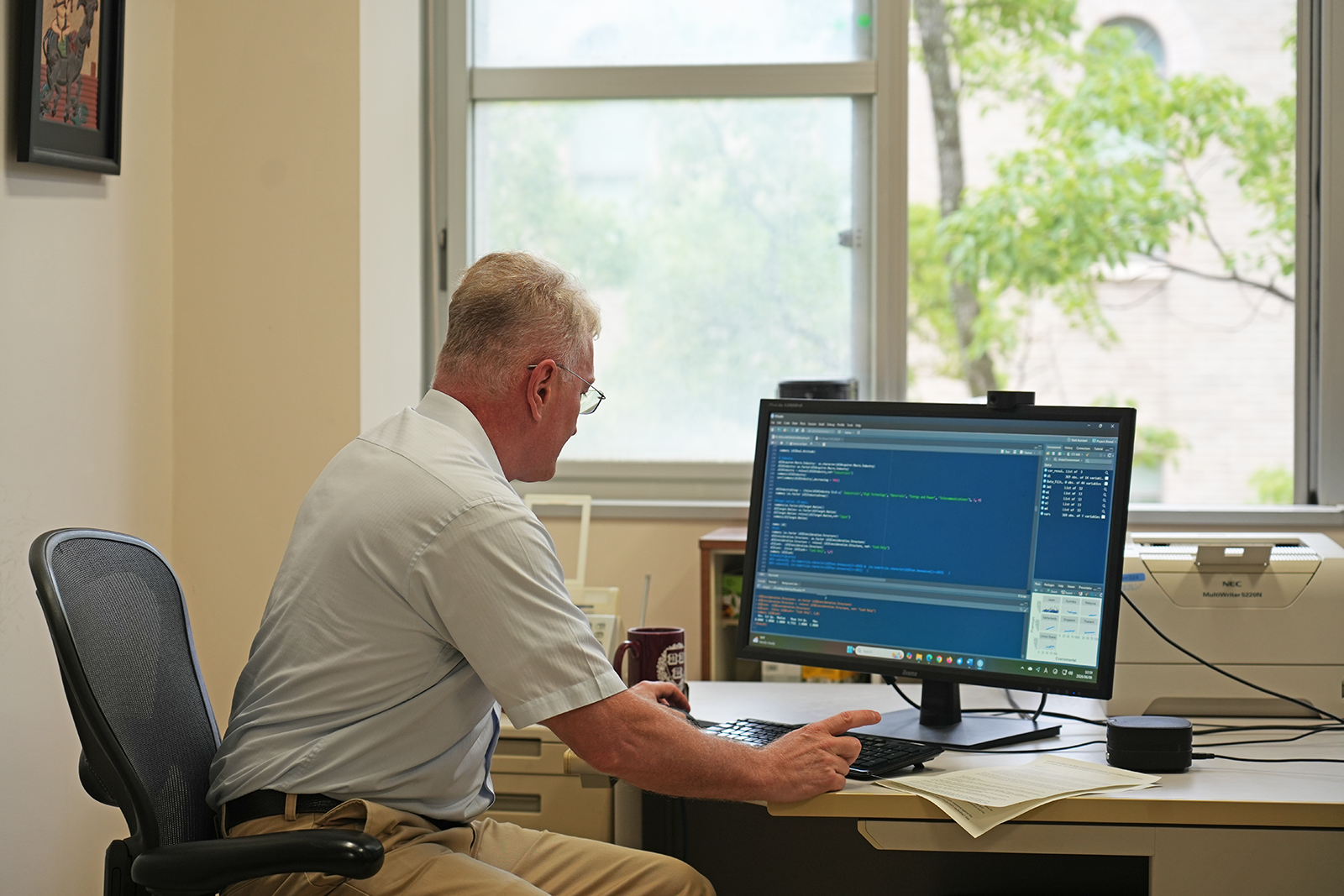
Bebenroth’s primary focus at the university had always been conducting research and publishing scholarly work, especially in his field of mergers and acquisitions, but he was reluctant to pursue larger grants-in-aid (Kaken-B). That was until he had another unexpected encounter, this time with Kobe University’s university research administrators, a team of specialists in supporting research activities. Known as URAs for short, they approached him for a consultation at his office to more deeply explore the possibilities of his research. “The URA team argued that I should pursue larger funding opportunities rather than limiting myself to smaller grants,” Bebenroth told us. “Their encouragement showed me that not only was this feasible, but it was also the natural next step in my research career.”
“There is a need to get good, productive talent from overseas to connect Japan and the world.”
Now over 20 years into his career at Kobe University, Bebenroth told us that some things never change. “I've been sitting in the same room for 20 years. Even the telephone number on my card is the same.” That doesn’t mean he’s sitting still, however, as his career frequently takes him overseas to places like the US and the UK. Through it all, his affiliation remains at Kobe University: “I remain deeply grateful for the opportunities I have received here and will continue to contribute to research, education, and international academic exchange.”
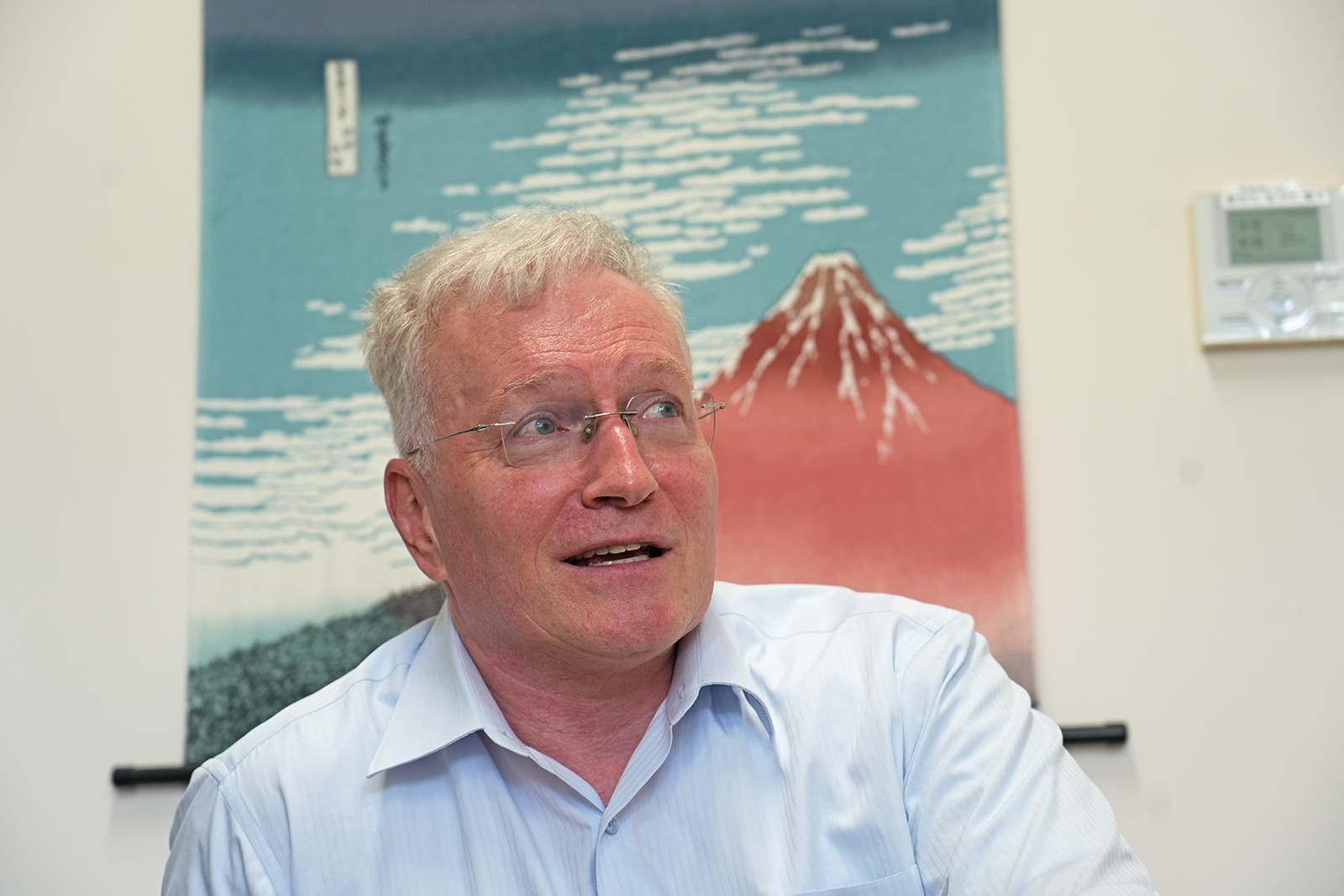
When asked for a message to prospective students and researchers, Bebenroth kept it brief: “Come to Kobe.” Of course, that wasn’t all he had to say. “There is a need to get good, productive talent from overseas to connect Japan and the world.” In an era in which interacting with people from around the globe has become easier than ever, it’s the facilitators of these interactions that are in demand. And what better place to do so than Kobe, a city that prides itself on its openness to diverse people and ideas from all over the world.