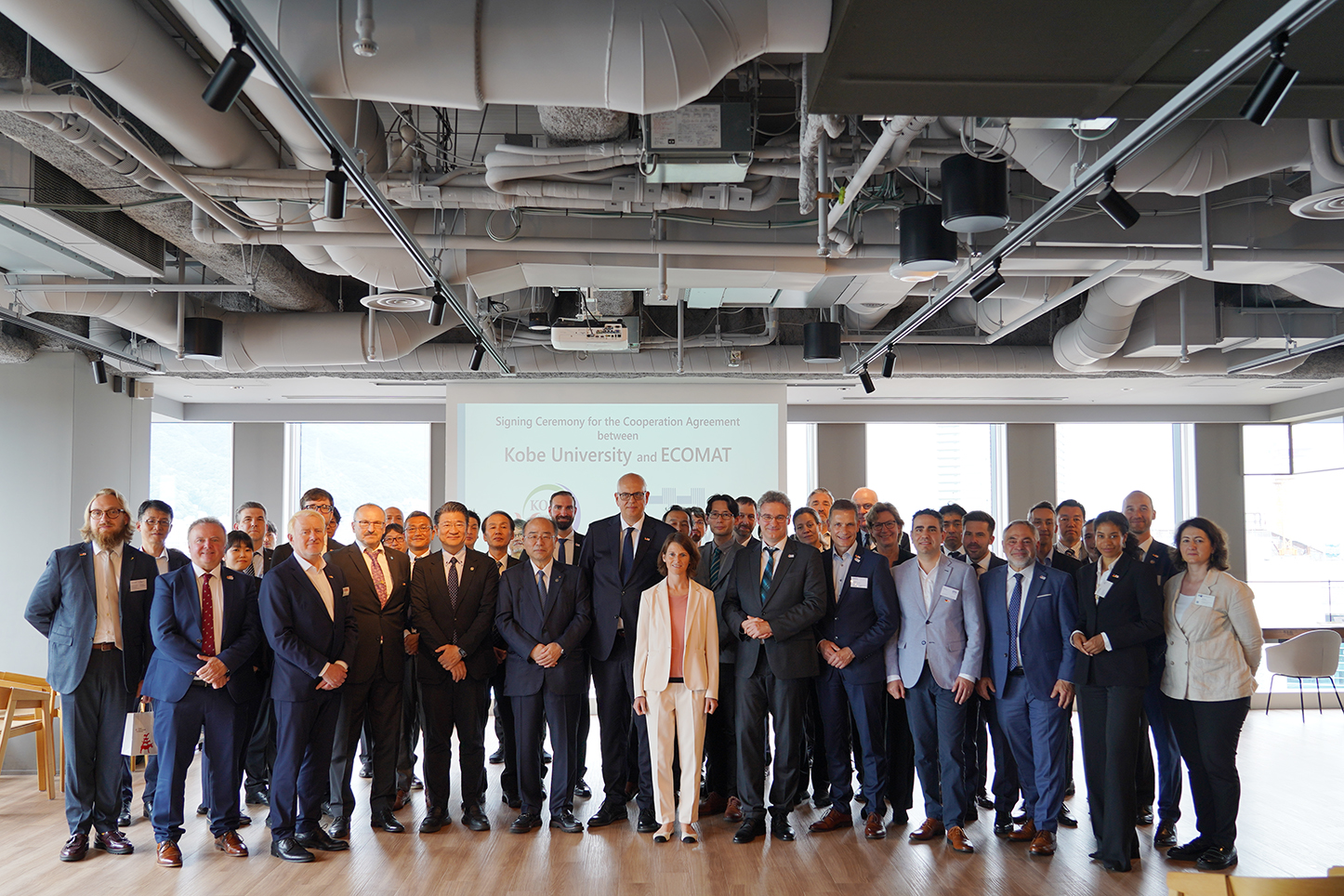


On May 28, 2026, Kobe University signed an international collaboration agreement with the Center for Eco-efficient Materials and Technologies (ECOMAT), a leading German research and development hub specializing in advanced materials, under the framework of the Japan Science and Technology Agency (JST)’s “Program on Open Innovation Platforms for Industry-Academia Co-Creation (COI-NEXT).”
The signing ceremony took place during an event held at ANCHOR KOBE in conjunction with a visit to Japan by an aerospace industry delegation from the German State of Bremen. The event aimed to further strengthen business exchange and collaboration between Bremen and Kobe.
The ceremony was attended by numerous distinguished guests, including Dr. Andreas Bovenschulte, president of the senate and mayor of the Free Hanseatic City of Bremen, who led the Bremen delegation; Mr. Hubertus Lohner, Chairman of ECOMAT; Mr. IMANISHI Masao, vice mayor of Kobe City; and Professor FUJISAWA Masato, president of Kobe University.
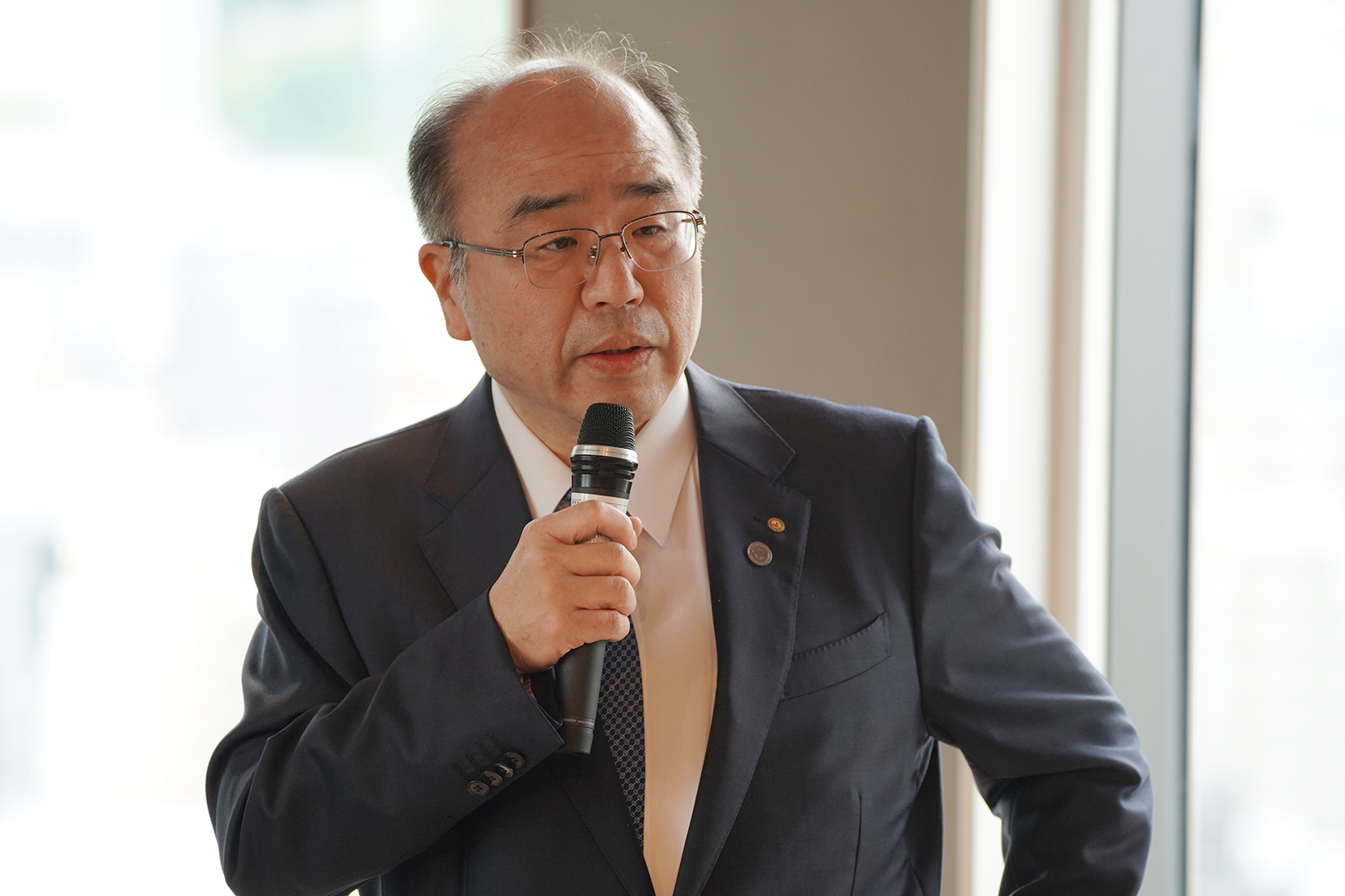
Prior to the signing ceremony, President Fujisawa emphasized Kobe University’s commitment to promoting international industry-academia collaboration through its COI-NEXT project, “Center of Co-Creation for Environmental Future Cities Regenerated by Nanocoating,” aimed at addressing global challenges and fostering industrial innovation. He also highlighted the significance of the partnership between Kobe University and ECOMAT in advancing collaboration in advanced materials, expressing his expectation that the partnership would contribute to the sustainable development of Bremen, Kobe and the broader international community.
Following the signing ceremony, Associate Professor SUGIMOTO Hiroshi of the Graduate School of Engineering, who serves as project leader (PL) of the COI-NEXT project, introduced the future prospects of applying the innovative nanoparticle paint developed by his research team to the aerospace industry.
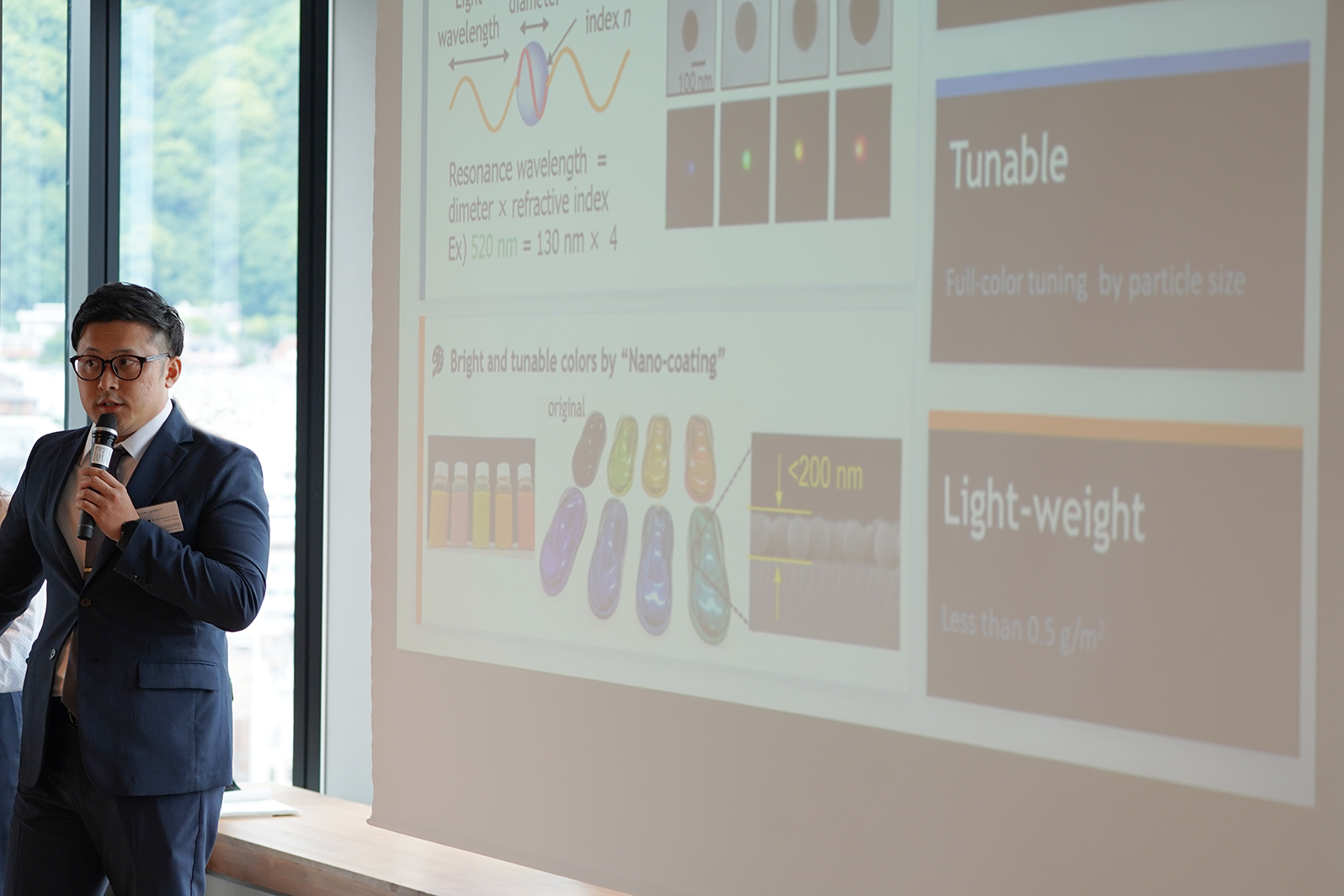
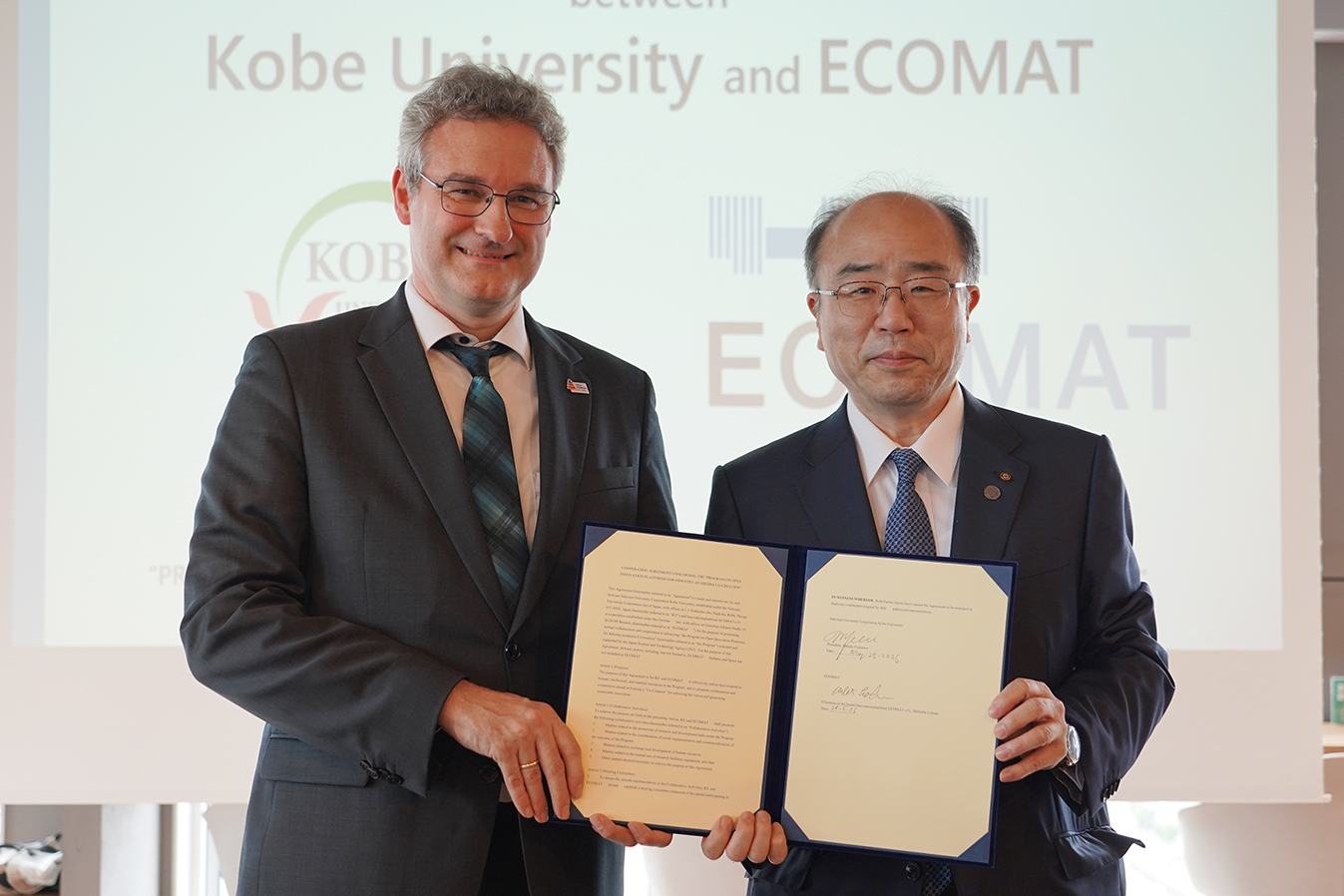
Under the agreement, Kobe University and ECOMAT will begin collaborative research on aircraft applications of the coating technology. The technology has attracted considerable attention both in Japan and internationally for its potential to improve aircraft performance while reducing environmental impact and is expected to contribute not only to next-generation aerospace technologies but also to a wide range of industrial fields.
In addition, photocatalytic materials and thermoelectric nanomaterials and devices being developed within the COI-NEXT project are also expected to contribute to future aerospace applications.
Through this agreement with ECOMAT, Kobe University will further accelerate international collaboration among academia, industry and government and contribute to the economy of the region as well as the sustainable development of the global community.