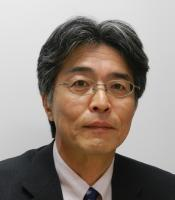


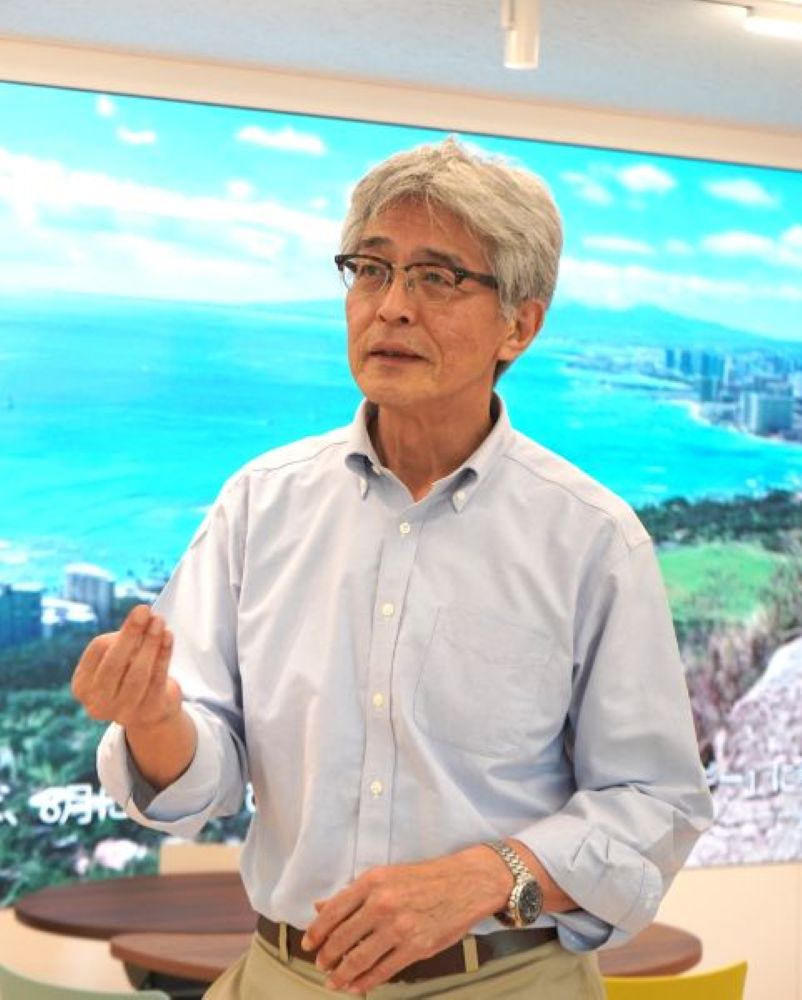
In April 2026, Kobe University established its Office for Promoting International Cooperation, an organization under the direct supervision of the president. This organization promotes the enhancement of international networks in education and research as well as the cultivation of true global talent that will lead to the establishment of more systematic global strategies. The keyword that forms the nucleus of these efforts is “co-creation.” Kobe University aims to become a university that acts as a global hub for diverse individuals to connect and create new value. We spoke with Executive Vice President TAMAKI Hisashi, who serves as director of the office, about the future of international strategy at Kobe University.
Globalization means diverse values and broad perspectives
Why is Kobe University placing such an emphasis on the concept of “international co-creation”?
Tamaki:
Kobe University operates under its vision of becoming a “global hub for the multidisciplinary co-creation of research and education that cultivates profound knowledge and outstanding innovators.” Globalization isn’t simply about sending students and researchers overseas for international exchange, but rather, we think it should be about sending them to learn about the diverse values of the world and obtain broader perspectives. In other words, it’s globalizing perspectives and ways of thinking.
The predecessor to the Office for Promoting International Cooperation was an organization called the Institute for Promoting International Partnerships. As part of its activity, the institute was active in promoting collaboration between organizations via agreements with overseas universities and research institutes. On the other hand, this new organization has been dubbed one of “international cooperation” with the expectation that we will connect with diverse individuals, including students, for the co-creation of new things and ideas. Some examples of these are collaborating to make educational programs and promoting joint research in specific fields. Things like cooperative agreements between organizations will serve as the fundamental infrastructure for promoting this international co-creation.
Projects at the Office for Promoting International Cooperation focus on developing global talent, particularly students. As for methods of going about this, in addition to study abroad and exchange overseas, there are also endeavors to turn the university itself into a global environment by inviting people from overseas to Kobe University. We also think it’s important to build mechanisms and support systems that will allow students to immerse themselves in the global environment abroad.
Collaborating with international alumni associations and expanding overseas centers
What sorts of tactics are you considering specifically?
Tamaki:
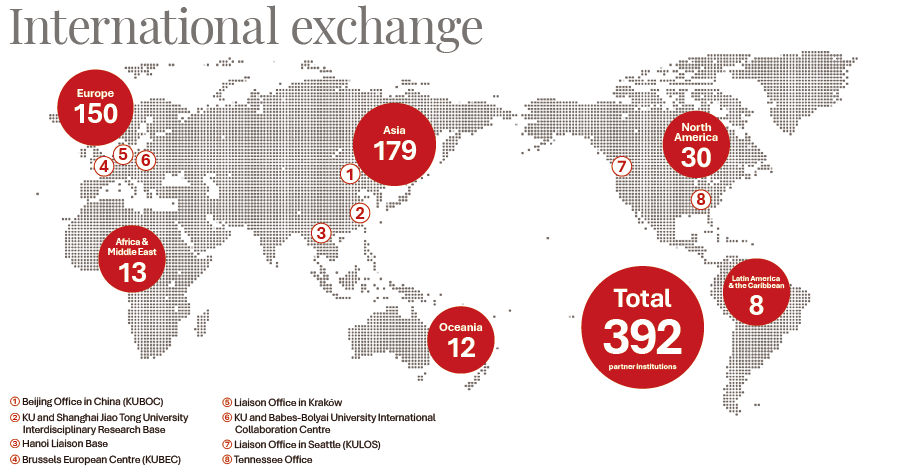
Currently, Kobe University has eight overseas offices. Among these, three are comprehensive offices (Belgium, Beijing (China) and Seattle (USA)) while the remaining five (Poland, Romania, Vietnam, Shanghai (China) and Tennessee (USA)) promote joint research and academic exchange.
In addition to these permanent offices, as one of our strategies moving forward, We’d like to create more offices that are a bit more loosely connected. We hope to open these as places for international students who want to study abroad at Kobe University as well as students from Kobe University who are going abroad to stop by and utilize these as a foothold through services like information sharing and intercultural collaborative learning.
All over the world, Kobe University has overseas alumni associations where alums active overseas can gather together and interact, which have become a huge boon for the university. If we can get those former international students and alums to help us out, we may be able to have them serve as liaisons to places like embassies and international institutes and express the appeal of Kobe University to local students.
We’d like to expand such loosely connected centers to avoid having them concentrate in a specific region. We should be able to enhance Kobe University’s international presence by increasing the number of these centers over the next year or two and building a repertoire at the centers. This should also serve as a mechanism to strengthen the bonds between the university and its alums. We expect these efforts to reinvigorate student exchange between Kobe University and universities overseas.
How will you support researchers’ international collaboration?
Tamaki:
International collaboration in research has now become the norm, with researchers themselves collaborating in the field. Of course, Kobe University also provides things like financial aid and support for early-career researchers, promoting all kinds of projects with organizations such as the Institute for Advanced Research at the core of these efforts.
In addition, Kobe University is putting its efforts into the Digital Bio Life Science Research Park (DBLR). DBLR consists of six areas that highlight the university’s unique strengths, such as biomanufacturing and medical engineering, to form a world-class organization that is gathering attention from around the world. When considering international strategy moving forward, how we portray these strengths to the rest of the world will be of utmost importance.
Constructing international strategy to be a globally competitive university
I hear that students aren’t looking to go overseas as of late.
Tamaki:
We’ve spoken with officials from other universities and generally speaking, that’s the trend. Kobe University is no exception. Nowadays, students are able to study in a fairly globalized environment without even leaving Japan, which likely has something to do with it as well.
On top of that, as COVID-19 spread, there was a decrease in overseas travel and improvements in systems for taking classes and interacting online, which may have had an impact as well. The number of international students coming to study at Kobe University is gradually returning to pre-COVID numbers, but now we’d like to get more Kobe University students to study overseas. We may need to think about making overseas study compulsory in the future.
Right now, international students from Asia are quite motivated. We think the limited education in their own countries might be behind this, which is similar to what was happening in Japan during its economic miracle.
Moving forward, it’s crucial that we continue to increase the number of students coming to study here. As far as university globalization is concerned, coexistence between individuals from around the world will diversify the viewpoints of students and researchers, which will in turn expand the scope of research. Taking Japan’s declining population into consideration, another important aspect of this is ensuring that we maintain the scale of our operations as a research university.
In order to further diversify values in research and education, it’s also crucial to increase the number of international faculty members. We hope to expand opportunities for international faculty members and students to, for example, interact by making use of the cross-appointment system, in which faculty members share affiliation between Kobe University and another organization, along with short-term stays.
What kinds of efforts are you making to establish future international strategies?
Tamaki:
Currently, we’re going to start by organizing and analyzing the data on international relations we’ve collected internally. This will give us a clear picture of the collaborative agreements we’ve concluded with overseas universities and research institutes, as well as the activity that resulted from said agreements, so that we can reformulate our strategies. We’re planning to hammer out the university’s global strategies in the first half of academic year 2026.
There are many researchers at Kobe University whose strengths lie in international fields. At the Graduate School of International Cooperation Studies and Graduate School of Intercultural Studies, we’ve made contributions to developing nations, built relationships with international institutes and performed research on the politics, economies and cultures of countries around the world. We even have a number of graduates and former international students who have been hired at international institutions and taken prominent posts in the governments of their respective countries.
However, there have also been many cases in which researchers and research groups have carried out activities, including international joint research, independently, so we feel that horizontal collaboration and development as a university have been lacking thus far.
Moving forward, we have to aim to become a university that can compete globally in all sorts of research areas. We must get a solid grasp on what the world needs and nurture the type of talent who can figure out what they can do to respond to those needs.
Even if the university is active in Japan or the surrounding area, the real competition lies on the world stage. We’d like to formulate new global strategies while making use of the foundation we’ve cultivated at Kobe University.
Resume
In 1990, withdrew with research guidance approval from the doctoral program, Graduate School of Engineering, Kyoto University and obtained his doctorate in engineering. After serving as a lecturer and assistant professor, in 2006, became professor at the Faculty of Engineering, Kobe University. In 2010, became professor at the Graduate School of System Informatics, Kobe University, and served as its dean from 2016-2020. In 2022, became director of Value School and vice president of Kobe University. In 2024, became executive vice president of Kobe University in charge of education and internationalization. In 2026, became director of the Office for Promoting International Cooperation.