


Development of a Platform for the Industrial Utilization of Marchantia: Functional Vegetables and Value-Added Compound Production
Modern agriculture relies heavily on substantial inputs of energy, water, and fertilizers. To mitigate potential crises in food and resource security, there is an urgent need to establish zero-emission agricultural systems with minimal environmental impact.
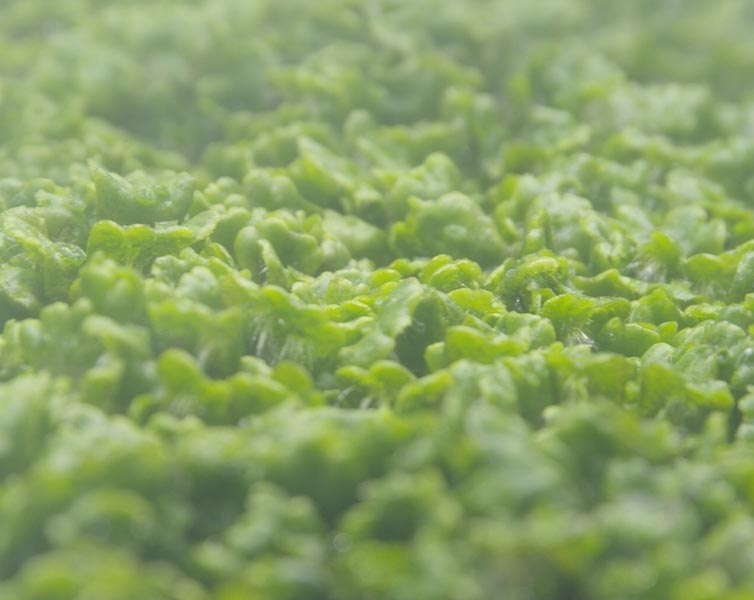
We focus on the unique biological characteristics of Marchantia (liverwort) and are developing technologies to utilize it as a next-generation food source, biological resource, and platform for producing valuable compounds. We believe that Marchantia has the potential to be a game changer for sustainable agriculture.
Recently, we established a novel cultivation method for Marchantia using aeroponics. By growing plants in a nutrient mist, this system reduces water and fertilizer use, minimizes plant waste, and offers a clean, efficient, and low-energy cultivation environment. By identifying the key factors governing Marchantia growth and applying our proprietary techniques, we have achieved both high productivity and superior quality.
At Kobe University, we are also developing improved Marchantia strains and exploring its potential as a functional food. By integrating these efforts with advanced cultivation technologies, we aim to facilitate the practical implementation of Marchantia-based systems. Furthermore, we are investigating its potential as a bioproduction platform that utilizes CO2, thereby contributing to the advancement of sustainable biological resource production.
Watch the short version on YouTube
For a playlist of all videos in this series, follow the links below:
Project period
2025.04.01 ~ 2027.03.31
SDGs



SHARE


Researchers




Similar projects
- Regional Revitalization through Agri-Bio Innovation Leveraging Data Science
- Creating an international innovation hub for engineering biology
- Establishing and advancing the global “photosynthesis and oxygen” consortium and catalyzing its societal implementation
- Establishing sustainable food production systems under climate change and infectious disease risks
- Development of Taxon-Agnostic Environmental DNA Analysis Technologies and the Establishment of Nature-Positive Indicators
- Kobe University Bright Aging Project