


Development of Taxon-Agnostic Environmental DNA Analysis Technologies and the Establishment of Nature-Positive Indicators
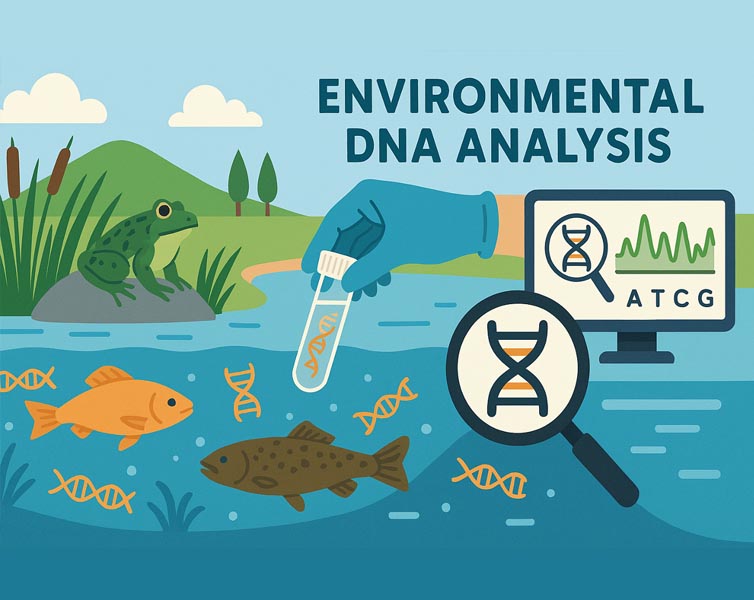
In recent years, “Nature Positive”—the objective of halting and reversing biodiversity loss—has been internationally recognized as a critical global goal. Achieving this goal requires the scientific visualization of biodiversity and an accurate understanding of ecological dynamics.
We aim to develop taxon-agnostic environmental DNA (eDNA) analysis technologies capable of comprehensively detecting all biological taxa within an ecosystem. This approach enables an integrated assessment of biodiversity at the ecosystem level and is expected to contribute significantly to achieving Nature Positive outcomes.
Kobe University is a global leader in eDNA research. For instance, we have developed highly sensitive detection methods that leverage DNA modification states. Because these modification patterns vary according to an organism’s behavior and physiological condition, this approach can provide insights not only into species presence but also into the functional roles and interactions of organisms within their environments.
Furthermore, we collaborate with academic societies across Japan, North America, Europe, and Oceania to promote the global standardization of eDNA methodologies. Looking ahead, we aim to establish an international eDNA consortium, with Kobe University serving as a central hub, thereby contributing to the resolution of global environmental challenges.
Watch the short version on YouTube
For a playlist of all videos in this series, follow the links below:
Project period
2025.04.01 ~ 2027.03.31
SDGs
SHARE


Researchers



Similar projects
- Development of a Platform for the Industrial Utilization of Marchantia: Functional Vegetables and Value-Added Compound Production
- Regional Revitalization through Agri-Bio Innovation Leveraging Data Science
- Establishing and advancing the global “photosynthesis and oxygen” consortium and catalyzing its societal implementation
- Establishing sustainable food production systems under climate change and infectious disease risks
- Creating an international innovation hub for engineering biology
- Kobe University Bright Aging Project