


Creating a New Paradigm in Autism Therapeutics through Medical–Engineering Collaboration
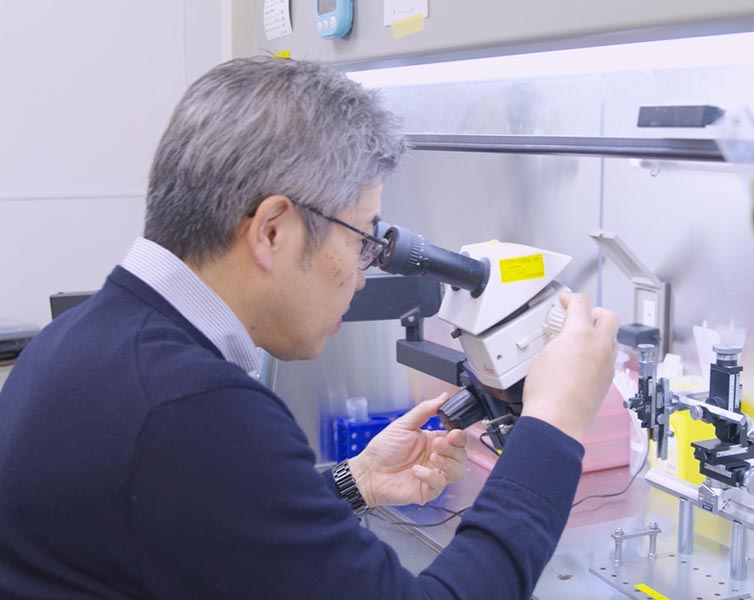
This interdisciplinary project aims to elucidate the neural basis of atypical central sensory information processing and to develop novel therapeutic approaches for neurodevelopmental disorders, with a particular focus on autism spectrum disorder (ASD). In addition to impairments in social communication, individuals with ASD often exhibit sensory hypersensitivity or hyposensitivity; abnormalities in sensory processing during development are thought to play a critical role in its pathogenesis. Our research unit seeks to uncover the fundamental mechanisms of sensory processing from a basic science perspective while exploring the therapeutic potential of artificial sensory modulation.
The principal investigator, Tachibana (Medicine), utilizes ASD mouse models to analyze neural activity—particularly in the insular cortex, which integrates exteroceptive and interoceptive information—using multicellular recording techniques to elucidate ASD pathophysiology.
Jinno (Engineering) develops piezoelectric devices for the manipulation of the peripheral and central nervous systems and is advancing noninvasive neuromodulation using ultrasound. Aihara (Agriculture) focuses on the gut–brain axis, investigating how diet-induced alterations in the microbiota affect the immune and nervous systems to ameliorate autism-like behaviors. Recent evidence suggests pathways through which the gut environment influences the insular cortex via the vagus nerve, making this a key component of our multifaceted approach.
Finally, Kitada (International Studies) leverages expertise in tactile psychophysics to validate these findings in clinical ASD populations.
Watch the short version on YouTube
For a playlist of all videos in this series, follow the links below:
Project period
2025.04.01 ~ 2027.03.31
SDGs


SHARE


Researchers



Similar projects
- Kobe University Bright Aging Project
- Development of a global-standard, minimally invasive, functional brain network mapping technique for brain surgery
- Development of a Platform for the Industrial Utilization of Marchantia: Functional Vegetables and Value-Added Compound Production
- Regional Revitalization through Agri-Bio Innovation Leveraging Data Science
- Establishing an international research hub for health biology: leading the future of health sciences and public health
- Development of Taxon-Agnostic Environmental DNA Analysis Technologies and the Establishment of Nature-Positive Indicators