


Development of a global-standard, minimally invasive, functional brain network mapping technique for brain surgery
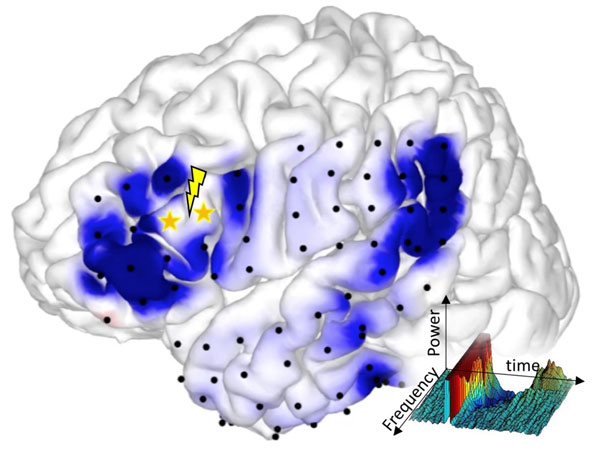
Higher brain functions such as language and movement are expressed in a coordinated manner by a network of cortical areas. This network is formed by the interconnection of various cortical regions. The research group has developed a unique method called cortico-cortical evoked potential (CCEP), which electrically traces brain networks by injecting minimal electric currents into the cortex and recording the electrical activity that propagates to other brain regions. The group is using CCEP to track networks involved in epileptic seizures and to explore important brain function networks such as language. Through international collaborations, the group aims to further develop CCEP and to develop a minimally invasive brain function mapping method that will become a new global standard.
Project period
2022.04.01 ~ 2025.03.31
SDGs

SHARE


Researchers


Related articles
Similar projects
- Kobe University Bright Aging Project
- Establishing an international research hub for health biology: leading the future of health sciences and public health
- Creating a New Paradigm in Autism Therapeutics through Medical–Engineering Collaboration
- Creating an international innovation hub for engineering biology
- Building a Biosynthetic Reaction Atlas for advanced biomanufacturing
- Establishing and advancing the global “photosynthesis and oxygen” consortium and catalyzing its societal implementation